
Header Image - Gluten Light

Tag Archives

2 Articles

Integrated approach to reducing low-grade chronic inflammation in light of 2026 scientific research

by luciano

Scientific verification document: which elements of the Approach are supported by the most recent literature and with what degree of evidence
This article is part of a three-part series:
1. Integrated approach to reducing low-grade chronic inflammation — the operational document: which behaviors and strategies to adopt.
2. Integrated approach to reducing low-grade chronic inflammation in light of 2026 scientific research — the scientific verification document: which elements of the Approach are supported by the most recent literature and with what degree of evidence.
3. Low-grade chronic inflammation: the topic in science communication in the international press in 2026 — the communication analysis document: how the topic is presented, interpreted, and communicated by the international scientific and general press.
Introduction
The Integrated Approach to reducing low-grade chronic inflammation considers this phenomenon not as the result of a single factor, but as the expression of the interaction among nutrition, metabolism, body composition, physical activity, muscle function, gut microbiota, sleep, circadian rhythms, stress, and the biological processes of aging.
Scientific research published in 2026 provides several points of support for this framework. In particular, recent literature on inflammaging describes low-grade chronic inflammation as a systemic and multifactorial process in which cellular senescence, mitochondrial dysfunction, metabolic alterations, changes in immune function, microbiota, nutrition, physical activity, and environmental and behavioral factors converge [1].
Not all elements of the Integrated Approach have the same level of evidence, and it would not be correct to interpret the convergence among different studies as experimental proof of the entire model. What is relevant is that numerous components of the Approach are supported, separately and sometimes jointly, by the most recent scientific literature. This chapter therefore distinguishes among direct support, mechanistic support, and general consistency with the evidence.
1. Low-grade chronic inflammation as a systemic phenomenon
Support for the Integrated Approach
One of the fundamental premises of the Integrated Approach is that low-grade chronic inflammation should not be interpreted exclusively as a local phenomenon or as the consequence of a single disease. Instead, it may represent a systemic biological state arising from the interaction of multiple mechanisms.
2026 Research
Andrea Cossarizza’s review, “Inflammaging: Experimental Insights and Translational Advances,” published in the European Journal of Immunology, defines inflammaging as persistent, sterile, low-grade inflammation associated with aging and analyzes a network of mechanisms including cellular senescence, the senescence-associated secretory phenotype (SASP), mitochondrial dysfunction, immune-cell senescence, hyperactivation of innate immunity, defective resolution of inflammation, and dysregulation of nutrient-sensing systems [1].
Assessment of the evidence
The support is strong. The work directly supports the systemic and multifactorial conception adopted in the Integrated Approach: low-grade chronic inflammation emerges as the result of interconnected biological networks rather than as the linear consequence of a single causal element.
2. Nutrition as a modulator of inflammation
Support for the Integrated Approach
The Integrated Approach assigns nutrition an important but not exclusive role. Diet is considered one of the main modifiable factors capable of influencing chronic inflammation through different metabolic, oxidative, immune, and microbiota-related pathways.
2026 Research
The review “Dietary Bioactive Compounds and Inflammaging: Pro- and Anti-Inflammatory Effects” analyzes both dietary components capable of promoting the activation of inflammatory pathways — including advanced glycation end products, lipid peroxidation products, oxysterols, and trans fats — and bioactive compounds with potentially modulatory effects, including polyphenols, omega-3 fatty acids, carotenoids, vitamins, and certain micronutrients. The authors describe multiple molecular pathways involved, including NF-κB, Nrf2, sirtuins, and inflammation-resolution systems [2].
Assessment of the evidence
The support is strong at the biological level and consistent with an essential point of the Approach: not attributing to a single food the ability to “switch off” inflammation, but interpreting nutrition as a modulator of a complex biological network. The effect must be assessed within the context of the overall dietary pattern and the individual’s other physiological and behavioral conditions.
3. Physical activity and control of inflammatory pathways
Support for the Integrated Approach
In the Integrated Approach, physical activity is not considered simply a tool for increasing energy expenditure. Exercise modifies the functioning of numerous metabolic and immune systems and may contribute to regulation of the inflammatory state.
2026 Research
The review “Exercise-Mediated Modulation of the NLRP3 Inflammasome” analyzes one of the mechanisms through which exercise may influence inflammation: modulation of the NLRP3 inflammasome. The authors report that physical activity can reduce NLRP3 activation through different interconnected biological pathways, within a framework in which mitochondrial dysfunction, oxidative stress, and metabolic alterations contribute to inflammaging [3].
Assessment of the evidence
The support is primarily mechanistic but important. It strengthens the decision to consider movement as an autonomous component of the Approach, closely connected with metabolism, body composition, and muscle function.
4. Skeletal muscle, myokines, and systemic communication
Support for the Integrated Approach
The Approach considers skeletal muscle a metabolically active organ and not merely a structure responsible for movement. During and after exercise, muscle produces signaling molecules capable of interacting with other organs and systems.
2026 Research
The review “The Myokine Adaptome in Health and Disease: Exercise-Induced Cellular Signaling, Muscle–Organ Crosstalk, and Therapeutic Plasticity” proposes the concept of the myokine adaptome, namely a context-dependent signaling network through which skeletal muscle translates contractile, metabolic, mechanical, and inflammatory stimuli into systemic effects. Myokines and exerkines participate in communication with other organs and influence glucose and lipid metabolism, immune regulation, vascular function, neuroplasticity, and tissue regeneration [4].
Assessment of the evidence
The support is strong for the general concept of muscle as an endocrine and metabolic organ. Prudence is nevertheless required regarding the clinical effects attributed to individual myokines, because part of the evidence remains experimental or context-dependent.
5. Metabolism and inflammation
Support for the Integrated Approach
Another central element of the Approach is the bidirectional relationship between metabolic alterations and inflammatory status. Insulin resistance, visceral adiposity, alterations in glucose and lipid metabolism, and mitochondrial dysfunction do not necessarily represent phenomena independent of inflammation, but may interact with it.
2026 Research
Cossarizza’s review includes mitochondrial dysfunction and dysregulation of cellular nutrient-sensing and nutrient-utilization systems among the mechanisms of inflammaging [1]. A further 2026 paper, “Inflammaging: Immune–Metabolic Crosstalk Between the Prostate–Testis and Musculoskeletal System,” describes circuits in which inflammation, oxidative stress, metabolism, mitochondrial function, and the endocrine system can mutually reinforce one another [5].
Assessment of the evidence
The support is strong at the level of pathophysiological integration. It supports the decision not to observe a single metabolic parameter in isolation, but to assess metabolic and inflammatory indicators together and, above all, their evolution over time.
6. Gut microbiota, barrier, and immunity
Support for the Integrated Approach
The Integrated Approach considers the intestine and microbiota as one of the components of systemic immune regulation, while avoiding attribution to the microbiota of an exclusive role in the origin of chronic inflammation.
2026 Research
The review “From Primates to People: Mapping Host-Microbiome-Health Relationships in Aging,” published in Ageing Research Reviews, links age-associated dysbiosis with inflammaging and systemic decline. The microbiome is described as an important modulator of physiology, metabolism, and immune function; however, the authors emphasize that causality and mechanisms are not yet fully clarified and highlight the limitations of human studies and experimental models [6].
Assessment of the evidence
The support is strong for inclusion of the microbiota within the network, but does not justify a monocausal explanation. Diet, age, physical activity, medications, environment, and individual characteristics can modify the microbiota; in parallel, the microbiota can influence metabolism, the intestinal barrier, and the immune response. The relationship is therefore dynamic and bidirectional.
7. Sleep, circadian rhythms, and immunometabolic regulation
Support for the Integrated Approach
In the Integrated Approach, sleep is not considered merely a period of rest, but a component of metabolic, endocrine, circadian, and immune regulation.
2026 Research
The review “Sleep Deterioration as a Systems-Level Readout of Aging Biology: Integrating Metabolic, Inflammatory and Circadian Mechanisms,” published in Ageing Research Reviews, interprets deterioration of sleep during aging as an expression of the progressive alteration of interconnected metabolic, inflammatory, and circadian systems [7].
The review “Circadian–Immune Crosstalk in Insomnia Disorder: Mechanisms and Therapeutic Implications” specifically analyzes the interaction among circadian rhythms, melatonin, endocrine function, and immune-inflammatory activity, highlighting the role of low-grade inflammation in chronic insomnia [8].
Assessment of the evidence
The support is strong for inclusion of sleep and chronobiology in the model. The bidirectional nature of the relationship must nevertheless be maintained: persistent alterations in sleep and circadian rhythms may be accompanied by metabolic and immune changes, while diseases, stress, metabolic dysfunction, and inflammation may in turn impair sleep.
8. Chronic stress and neuroendocrine regulation
Support for the Integrated Approach
The Integrated Approach includes chronic stress among the factors potentially capable of maintaining neuroendocrine and metabolic conditions favorable to inflammation. The central point is not the single episode of stress, which constitutes a normal adaptive response, but the persistent alteration of physiological regulation and recovery systems.
Relationship with 2026 evidence
The 2026 reviews on sleep, circadian rhythms, and inflammaging show the close communication among neuroendocrine, metabolic, and immune systems [1,7,8]. However, among the works selected for this chapter there is no single 2026 study sufficiently general to demonstrate that every form of chronic stress directly causes low-grade chronic inflammation.
Assessment of the evidence
The support is therefore primarily systemic and mechanistic. The inclusion of stress in the Approach is consistent with contemporary physiology, but must avoid the simplistic equation “stress = inflammation.”
9. Inflammaging and biological aging
Support for the Integrated Approach
The Approach assigns particular importance to biological age and considers low-grade chronic inflammation one of the processes that may contribute to the progressive loss of efficiency of physiological systems.
2026 Research
Cossarizza’s review represents the most important general reference among those examined because it places persistent low-grade inflammation within the biological processes of aging and age-related diseases [1]. The work by Bossio and colleagues also interprets inflammaging through a network of immunometabolic, endocrine, and muscular interactions [5].
Assessment of the evidence
The support is strong. Chronological age cannot be modified; numerous factors that interact with the aging process can, at least in part, be modified. The realistic objective of the Approach is therefore not to “eliminate” inflammaging, but to act on modifiable factors that may contribute to its intensity and evolution.
10. Convergence of factors: why an integrated approach
The perhaps most significant aspect of the 2026 scientific research examined is not the support for a single element of the Approach, but the growing representation of chronic inflammation and aging as multidimensional phenomena [1–8].
Nutrition, physical activity, muscle, metabolism, microbiota, sleep, circadian rhythms, stress, and aging do not act as completely independent variables. Physical activity modifies metabolism and inflammatory signaling; muscle participates in endocrine communication through myokines; diet interacts with metabolism and microbiota; the microbiota communicates with the immune system; sleep and circadian rhythms are linked to metabolic, endocrine, and immune regulation; aging acts transversally across all these systems.
The 2026 literature does not demonstrate the existence of a single protocol capable of globally controlling low-grade chronic inflammation. It does, however, provide important conceptual support for a strategy that simultaneously observes multiple modifiable factors and follows their evolution over time.
From this perspective, the Integrated Approach to reducing low-grade chronic inflammation appears consistent with the tendency of recent research to interpret inflammaging and the regulation of inflammation through interconnected biological networks, rather than through a single causal factor or a single intervention.
Conclusion
Comparison with the 2026 scientific literature shows that the general framework of the Integrated Approach finds significant support in contemporary research. The strongest support concerns the systemic and multifactorial nature of inflammaging, the interaction between metabolism and inflammation, the role of physical activity and muscle, the participation of the microbiota, and the integration among sleep, circadian rhythms, and immunometabolic function [1–8].
The convergence of evidence does not, however, amount to clinical validation of a specific therapeutic protocol. Many of the cited works are reviews and integrate results from different studies; some mechanisms are better demonstrated than others, and individual responses to interventions remain variable.
The value of the Integrated Approach therefore currently lies above all in its consistency with an increasingly systemic view of the biology of aging: acting on modifiable factors, avoiding monocausal explanations, and monitoring over time the evolution of clinical, metabolic, and inflammatory parameters.
Bibliographic references
[1] Cossarizza A. Inflammaging: Experimental Insights and Translational Advances. European Journal of Immunology. 2026;56(7):e70239. DOI: 10.1002/eji.70239.
[2] Moskalev A, et al. Dietary Bioactive Compounds and Inflammaging: Pro- and Anti-Inflammatory Effects. 2026. PubMed PMID: 42425421.
[3] Zhang Y, et al. Exercise-Mediated Modulation of the NLRP3 Inflammasome. 2026. PubMed PMID: 42557399.
[4] Mănescu DC, Plastoi CD, Pîrvan A, Dîrnu R, Floroiu EA, Popescu A. The Myokine Adaptome in Health and Disease: Exercise-Induced Cellular Signaling, Muscle–Organ Crosstalk, and Therapeutic Plasticity. Cells. 2026;15(14):1236. DOI: 10.3390/cells15141236.
[5] Bossio S, Russa D, Rago V, Di Dio M, Aversa A, Perri A. Inflammaging: Immune–Metabolic Crosstalk Between the Prostate–Testis and Musculoskeletal System. International Journal of Molecular Sciences. 2026;27(8):3612. DOI: 10.3390/ijms27083612.
[6] Olmo-Fontánez A, Reveles KR, Sharan R, Cheeseman I, Phillips KA, Wolford KL, Ross CN. From Primates to People: Mapping Host-Microbiome-Health Relationships in Aging. Ageing Research Reviews. 2026;121:103278. DOI: 10.1016/j.arr.2026.103278.
[7] Murillo-Cancho AF, Lozano-Paniagua D, Martín-Latorre MDM, Ramírez-Santos J, Nievas-Soriano BJ. Sleep Deterioration as a Systems-Level Readout of Aging Biology: Integrating Metabolic, Inflammatory and Circadian Mechanisms. Ageing Research Reviews. 2026;118:103084. DOI: 10.1016/j.arr.2026.103084.
[8] Huang Y, Wang X, Chen X, Liu Y. Circadian–Immune Crosstalk in Insomnia Disorder: Mechanisms and Therapeutic Implications. Frontiers in Neuroscience. 2026;20:1881195. DOI: 10.3389/fnins.2026.1881195.
Methodological note
The works cited do not all have the same nature or the same evidentiary value. Several are reviews and therefore synthesize knowledge produced by previous studies rather than constituting new clinical experiments. Their value for the purposes of this article lies primarily in showing how different strands of contemporary scientific research converge on the existence of interactions among inflammation, metabolism, muscle function, microbiota, biological rhythms, and aging. This convergence represents scientific support for the general framework of the Integrated Approach, but should not be interpreted as clinical validation of a specific therapeutic protocol.

← Previous article: Integrated approach to reducing low-grade chronic inflammation, August 18, 2026 update
Continue → Low-grade chronic inflammation: the topic in science communication and the international press in 2026
 

Aging of the immune system

by luciano

Overview of the latest research on the aging immune system and its relationship with inflammation

Highlights
1 – Aging is a multifactorial process driven by various intrinsic and extrinsic factors, including genomic instability, telomere shortening (DNA sequence changes) [A], epigenetic alterations, loss of proteostasis, impaired macroautophagy, altered nutrient sensing [B], mitochondrial dysfunction, cellular senescence, stem cell exhaustion, altered intercellular communication, chronic inflammation, and dysbiosis. These factors are closely related to aging, and research has shown that inducing them can accelerate aging, while modifying them can slow, halt, or even reverse the aging process.
2 – Molecules secreted by senescent cells (senescence-associated secretory phenotype SASP [C]) promote chronic inflammation and can induce senescence in normal cells. At the same time, chronic inflammation accelerates the senescence of immune cells, resulting in weakened immune function and the inability to eliminate senescent cells and inflammatory factors, creating a vicious cycle of inflammation and senescence.

3 – Inflammaging [D] (chronic, low-grade, and persistent inflammation) is a recognized hallmark of aging, linked to morbidity and mortality. Inflammaging is so closely intertwined with the aging process that highly accurate aging clocks, predictive of morbidity and mortality, can be constructed using inflammatory markers.

4 – Although coniderable variability in aging exists among individuals, the aging process generally involves chronic inflammation, tissue homeostasis disorders, and dysfunction of the immune system and organ homeostasis disorders, and dysfunction of the immune system and organ functions, functions, readily causing cardiovascular, metabolic, autoimmune, and neurodegenerative diseases associated with aging.

5 – Gerotherapeutic interventions such as caloric restriction, ketogenic diet, or exercise may support healthspan in part by attenuating immune aging through unified immunometabolic mechanisms.

Researches

1 – The immune system offers a window into aging. 2025 Nature Aging.
The immune system permeates and regulates organs and tissues across the body, and has diverse roles beyond pathogen control, including in development, tissue homeostasis and repair. The reshaping of the immune system that occurs during aging is therefore highly consequential.
During aging, the ability of the immune system to efficiently and precisely respond to new antigenic, infectious or neoplastic challenges wanes, and the reactivation and refinement of memory responses falters. One of the earliest manifestations of aging is the involution of the thymus (the site of T cell development), which occurs during puberty. In later life, the immune system increasingly shifts from its homeostatic and protective roles towards a state that is char acterized by heightened proinflammatory activity, with a propensity for autoreactivity. Rather than safeguarding the host, the aged immune system may contribute to systemic dysfunction and pathology.

In this Focus, Nature Aging introduces a series of reviews and opinions that cover recent advances in immune aging. Building on their studies defining immune aging as a driver of organismal aging, Delgado-Pulido and colleagues explore how aging transforms the immune system ‘from healer to saboteur’, and describe the deterioration of protective functions and the acquisition of pathogenic features of the aged adaptive immune system.
Majewska and Krizhanovsky zoom in on one of these protective immune functions that declines with age: namely, the clearance of senescent cells. Through surveying the interactions between senescent and immune cells (which may deteriorate during aging), the authors highlight the role of the aged immune system in facilitating the accumulation and propagation of senescent cells across tissues with age, and thereby fueling tissue dysfunction and disease pathogenesis.
The effects of immune aging on age-related diseases are far-reaching. The fatal consequences of immune aging were demonstrated by impaired infection control during the COVID-19 pandemic. Immune aging has also been implicated in the pathogenesis of non-infectious age-related diseases, including cardiovascular, fibrotic and metabolic diseases, cancer and dementia. Indeed, both peripheral immunity and central neuroinflammation are recognized as contributors to, markers of and potential therapeutic targets in neurodegenerative conditions, and inflammaging is a recognized hallmark of aging linked to morbidity and mortalityrk. Pa and colleagues call attention to resident tissue macrophages as particular culprits of inflammaging and propose that restoring resident tissue macrophages by targeting the niche or myelopoiesis in the bone marrow could attenuate their contribution to tumori- genesis and promote healthy aging.
Inflammaging is so closely intertwined with organismal aging that highly accurate aging clocks, predictive of morbidity and mortality, can be built using markers of inflammation. Tracking individual immune aging trajectories could inform on disease risks as well as contribute to the suits of biological age-predictive biomarkers. However, both aging and the immune system hold considerable complexity and diversity. Franceschi and colleagues survey immune aging clocks through the lens of personalized inflammaging. They highlight that each individual’s unique combination of genetics, lifetime exposures and lifestyle factors results in heterogeneous manifestations of inflammaging, pose that precision measures and interventions should be prioritized, and spotlight a potential role for artificial intelligence in navigating this complexity.
Research on the biological processes of aging is often conducted using model organisms or in vitro models, yet thanks to the ease of access to human blood samples, the immune system offers a window into aging in humans. Immune aging can also be leveraged in clinical trials of aging, by testing the strength of vaccine responses or infection control. Trials that test emerging tech nologies or gerotherapeutic interventions could not only identify strategies to improve immune responses but also stand to inform our understanding of the plasticity of aging in humans and offer important milestones in refining the design of trials conducted with older adults. Discussing strategies to boost immune responses to vaccination in aging, Hofer and colleagues highlight the potential of enhancing vaccines by using gerotherapies to attenuate immune aging.
As well as providing an overview of the hallmarks of immune aging, Kim and Dixit further explore gerotherapeutic interventions, through an immunometabolic lens. They explore how gerotherapeutic interventions such as calorie restriction, ketogenic diet adoption or exercise may sustain healthspan in part through attenuation of immune aging via unified immunometabolic mechanisms. They also highlight adipose as an immunological organ with considerable physiological influence on aging.
Across these articles, the immune system stands out as an early target during aging: the loss of its protective capacities facilitates tissue degeneration and pathology. Weyand and Goronzy, however, highlight the acquisition of autoreactive functions during immune aging, and reflect on recent data that unexpectedly report an increase in autoimmune conditions with age. They propose that autoimmunity during aging constitutes inappropriate immune youthfulness and suggest that wan ing immune activity during aging could be beneficial in calibrating autoreactivity.
As a tractable and targetable window into aging in humans, the aged immune system holds opportunities for translationally valuable discoveries and constitutes a potential broad target to extend healthspan. We are very grateful to the authors and reviewers who have contributed to this issue. Our goal for this Focus has been to stimulate interest and promote cross-pollination of ideas across disciplines. We look forward to supporting immune aging research and sharing exciting findings from this field in the years to come.
References
1. Yousefzadeh, M. J. et al. Nature 594, 100–105 (2021).
2. Desdín-Micó, G. et al. Science 368, 1371–1376 (2020).
3. Bartleson, J. M. et al. Nat. Aging 1, 769–782 (2021).
4. Sarazin, M. et al. Nat. Aging 4, 761–770 (2024).
5. López-Otín, C., Blasco, M. A., Partridge, L., Serrano, M. & Kroemer, G. Cell 186, 243–278 (2023).
6. Sayed N. et al. Nat. Aging 1, 598–615 (2021).
7. Conrad N. et al. Lancet 401, 1878–1890 (2023).
The immune system offers a window into aging. Volume 5; Agosto 2025 Nature Aging. https://doi.org/10.1038/s43587-025-00948-5

2 – Recent Advances in Aging and Immunosenescence: Mechanisms and Therapeutic Strategies. Shuaiqi Wang1 . Cell. 2025

Introduction
Population aging is currently one of the major global challenges [1]. With the intensification of population aging, delaying aging and improving the quality of life for elderly people have become important tasks. Aging is a multifactorial process driven by various intrinsic and extrinsic factors, including genomic instability, telomere attrition, epigenetic alterations, loss of proteostasis, disabled macroautophagy, deregulated nutrient sensing, mitochondrial dysfunction, cellular senescence, stem cell exhaustion, altered intercellular communication, chronic inflammation, and dysbiosis [2]. These factors are closely related to organismal aging, and research has shown that inducing them can accelerate aging, while intervening in them can slow down, halt, or even reverse the aging process [2]. Thoroughly studying these aging factors to elucidate the mechanisms of aging can help identify interventions to delay aging, such as caloric restriction, nutritional interventions, and gut microbiota transplantation, as well as clinical treatments for aging-related diseases, eases, including senolytics, stem cell therapy, and antioxidant and anti-inflammatory including senolytics, stem cell therapy, and antioxidant and anti-inflammatory treatments.
These approaches can mitigate aging and aging-related diseases, thereby achieving healthy achieving healthy aging and longevity [3–5].
Among these factors, cellular senescence is a key contributor to organismal aging. Targeting senescent cells (SCs) holds promise for developing novel and practical antiaging therapies [6]. Cellular senescence is an irreversible state of cell cycle arrest caused by varivarious factors, such as DNA damage and telomere shortening [7,8]. Additionally, the process whereby immune system function gradually declines or becomes dysregulated whereby immune system function gradually declines or becomes dysregulated with human aging is known as immunosenescence [E] [9]. Although coniderable variability in aging exists among individuals, the aging process generally involves chronic inflammation, tissue homeostasis disorders, and dysfunction of the immune system and organ homeostasis disorders, and dysfunction of the immune system and organ functions, [2] functions, [2] readily causing cardiovascular, metabolic, autoimmune, and neurodegenerative diseases associated with aging [5,10–13]. Existing research indicates that transplanting SCs into young mice induces bodily dysfunction, while transplanting them into aged mice exacerbates aging and increases the risk of death [6].
This suggests that SCs accelerate organismal aging. The specific reason is that SCs release the senescence-associated secretory phenotype (SASP) into the tissue, promoting chronic inflammation and inducing senescence in surrounding tissue cells and immune cells [14]. SCs and chronic inflammation interact and crosstalk, forming a vicious cycle of inflammation and aging.
Therefore, in-depth research into the key characteristics and underlying mechanisms of cellular senescence, immunosenescence, and inflammation, identifying drug intervention targets, and developing targeted interventions can help mitigate aging and aging-related diseases, thereby promoting healthy aging in the elderly. In recent years, based on the establishment of a series of aging-related cellular and animal models (Table 1), the latest research has revealed the molecular mechanisms of cellular senescence and immunosenescence and the body’s regulation of aging from an immune response perspective.
Moreover, based on new mechanisms, strategies targeting the elimination of SCs have become a promising treatment method for alleviating aging and age-related diseases.
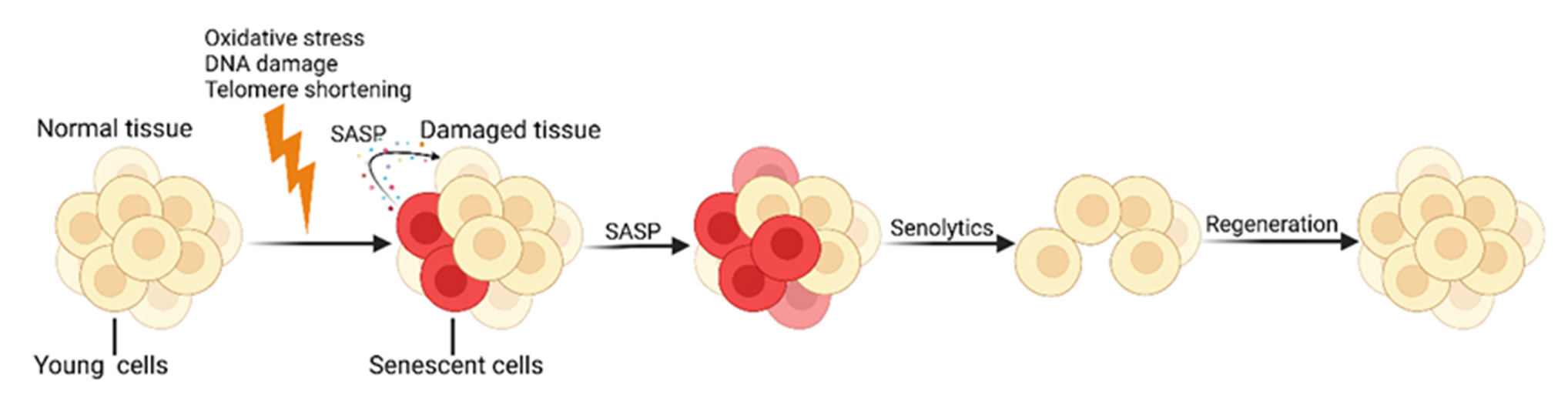
Later, it was discovered that some that small-molecule senolytic senolytic drugs target proteins in cell senescent antiapoptotic pathways (SCAPs) can selectively kill SCs (Figure 1).
Currently, effective, safe, and selective immunotherapy selective approaches targeting SCs are becoming promising a treatment method. Some teams research have teams have already already developed senolytic CAR T cells [19], senolytic vaccines [20], and immune checkpoint blockade (ICB) therapies to achieve the clearance of SCs [21].

Figure 1. 1. Cellular Cellular senescence and senolytics. SCs continuously produce numerous pro-inflammatory senescence and senolytics. SCs continuously produce numerous pro-inflammamolecules and tissue-remodeling molecules, known as the SASP, which further accelerates the aging tory molecules and tissue-remodeling molecules, known as the SASP, which further accelerates the process. Senolytics promote the regeneration of new healthy cells by identifying and clearing SCs. Created with BioRender.com (accessed on 10 May 2024).

…….omissis

Summary and Prospects
The global issue of population aging is becoming increasingly severe, with elderly individuals being more susceptible to infections and age-related diseases, leading to higher morbidity and mortality rates [5]. Cellular senescence and immunosenescence are closely linked to aging; therefore, this review focuses on immunotherapies targeting aging. It revisits significant recent discoveries in the mechanisms of cellular senescence and immunosenescence that have propelled the development of new treatment paradigms for aging and age-related diseases.
Recent Advances in Aging and Immunosenescence: Mechanisms and Therapeutic Strategies. Shuaiqi Wang1 . Cell. 2025
Department of Immunology, CAMS Key Laboratory T-Cell and Cancer Immunotherapy, Institute of Basic Medical Sciences, Chinese Academy of Medical Sciences and School of Basic Medicine, Peking Union Medical College, State Key Laboratory of Common Mechanism Research for Major Diseases, Beijing 100005, China; b2023005058@pumc.edu.cn (S.W.); huotong1998@pumc.edu.cn (T.H.); b2022005055@student.pumc.edu.cn (M.L.); s2022005053@student.pumc.edu.cn (Y.Z.); zhangjianmin@ibms.pumc.edu.cn (J.Z.). https://doi.org/10.3390/cells14070499

3 – Chronic Low-Grade Inflammation and Brain Structure in the Middle-Aged and Elderly Adults. 2024
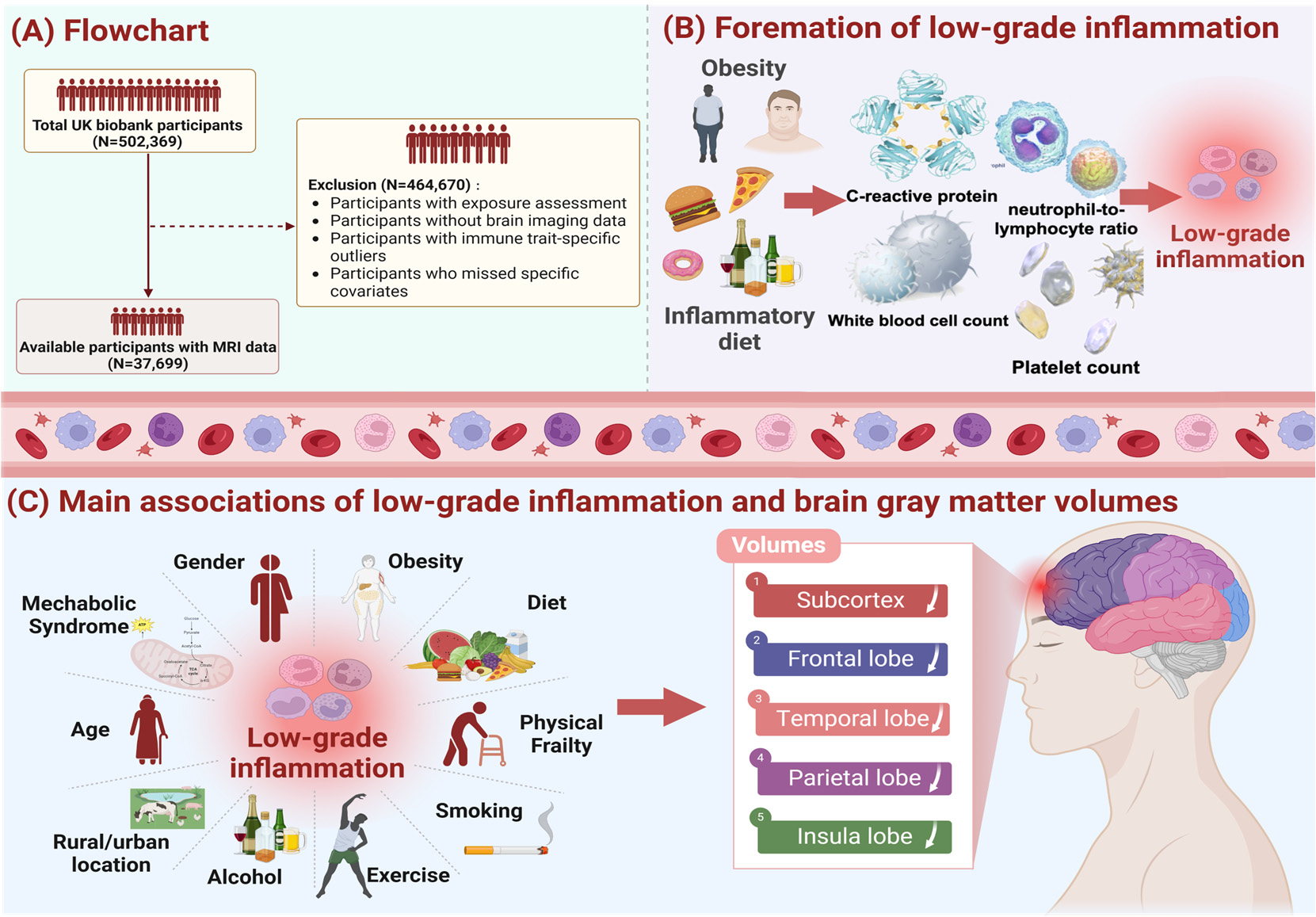
Abstract: Low-grade inflammation (LGI) mainly acted as the mediator of the association of obesity and inflammatory diet with numerous chronic diseases, including neuropsychiatric diseases. However, the evidence about the effect of LGI on brain structure is limited but important, especially in the context of accelerating aging. This study was then designed to close the gap, and we leveraged a total of 37,699 participants from the UK Biobank and utilized inflammation score (INFLA-score) to measure LGI. We built the longitudinal relationships of INFLA-score with brain imaging phenotypes using multiple linear regression models. We further analyzed the interactive effects of specific covariates. The results showed high level inflammation reduced the volumes of the subcortex and cortex, especially the globus pallidus ( β [95% confidence interval] = −0.062 [−0.083, −0.041]), thalamus (−0.053 [−0.073, −0.033]), insula (−0.052 [−0.072, −0.032]), superior temporal gyrus (−0.049 [−0.069, −0.028]), lateral orbitofrontal cortex (−0.047 [−0.068, −0.027]), and others. Most significant effects were observed among urban residents. Furthermore, males and individuals with physical frailty were susceptive to the associations. The study provided potential insights into pathological changes during disease progression and might aid in the development of preventive and control targets in an age-friendly city to promote great health and well-being for sustainable development goals.

Figure 1. Study workflow.Figure 1. Study workflow. We screened 37,699 UK Biobank participants to explore the effects of
We screened 37,699 UK Biobank participants to explore the effects of low-
grade inflammationlow-grade(LGI) oninflammation (LGI) on thd brain system, and the exclusion criteria of our study population
thd brain system, and the exclusion criteria of our study population is
shown in pane (A).is shownAdditionally,in pane we(A).usedAdditionally,the weINFLA-score,used thecharacterizedINFLA-score, bycharacterizedC-reactivebyprotein,C-reactive protein, white blood cell, plateletwhite bloodcounts,cell,andplateletneutrophil-to-lymphocytecounts, and neutrophil-to-lymphocyteratio, to measureratio,andto measurequantifyandthequantify the levels of LGI, and relevantlevels of LGI,informationand relevantas showninformationin paneas shown(B). Asinshownpane (B).inAspaneshown(C),intakingpane (C),influen-taking influential tial factors of LGI intofactorsaccount,of LGIweintofit theaccount,multiplewe fitlinearthe multipleregressionlinearmodelregressioncontrollingmodel forcontrollingcovariatesfor covariates (age, sex, IMD, WHR,(age,healthysex, IMD,lifestyle,WHR, healthyprevalencelifestyle,of hypertension,prevalence of hypertension, diabetes mellitus and stroke)
diabetes mellitus and stroke)
and conducted subgroupand conductedanalysis bysubgroupage, sex,analysisWHR,bymetabolicage, sex,syndrome,WHR, metabolicphysicalsyndrome,frailty. Thephysicalmainfrailty. The results demonstratedmaina significantresults demonstratedassociationa ofsignificantLGI withassociationatrophyofofLGIbrainwithregions,atrophy ofincludingbrain regions,sub- including cortex, frontal lobe,subcortex,temporalfrontallobe, parietallobe, temporallobe andlobe,insulaparietallobe.lobe and insula lobe.

…omissis

Conclusions
To sum up, the conceptual and design framework of our investigation is to characterize the associations between LGI and brain imaging phenotypes, thus showing that LGI may lead to subclinical cognitive decline or neuropsychic diseases partly via structural neural pathways. Moreover, our analyses revealed that more significant associations of LGI with the atrophy of brain structure among male or individuals with physical frailty. These findings not only contribute to the evolvement of clinical diagnosis and therapy, but also provide a novel perspective for the development of new preventive strategies, namely, when brain lesions are subclinical and without any apparent clinical sign, inflammatory intervention, such as diet therapy, is an early preventive strategy.
Chronic Low-Grade Inflammation and Brain Structure in the Middle-Aged and Elderly Adults. Yujia Bao et al. School of Public Health, Shanghai Jiao Tong University School of Medicine, Shanghai 200025, China; bubble-y@sjtu.edu.cn (Y.B.); c.cctx@sjtu.edu.cn (X.C.); melody321@sjtu.edu.cn (Y.L.); scp-173@sjtu.edu.cn (S.Y.). Nutrients 2024, 16, 2313. https:// doi.org/10.3390/nu16142313