Header Image - Gluten Light

Tag Archives

4 Articles

Chronic low-grade inflammation: what it is and how to reduce it through diet and lifestyle

by luciano

This guide gathers practical dietary and behavioral recommendations useful for reducing the factors that may promote a state of chronic low-grade inflammation.

Chronic low-grade inflammation refers to a mild but persistent inflammatory condition of the body, often not very evident or scarcely perceived. Unlike acute inflammation — which is intense, visible, and temporary (as in the case of an infection, injury, or illness) — this form is more silent and may persist over time. In recent years, numerous studies have highlighted how this inflammatory state may contribute to the development or worsening of several metabolic and immune conditions.

Introduction

The proposed diet consists of a set of dietary guidelines and practices aimed at maintaining the intestinal microbiota in balance and promoting the best possible functioning of the immune system.

To achieve this goal, it is useful to reduce or eliminate factors that may alter the balance of the intestinal microbiota and interfere with the efficiency of the immune system.

The microbiota is naturally dynamic: a certain variability is physiological and may depend, for example, on changes in diet, lifestyle, or environment. In response to these variations, the microbiota may adapt physiologically or develop less favorable responses.

Not all variations in the microbiota are therefore negative. However, when these changes lead to persistent imbalances in the intestinal ecosystem, they may promote conditions of microbiota alteration and contribute to the onset of chronic low-grade inflammation.

Reducing this condition is therefore one of the main objectives of the pathway.

Even in the presence of ongoing diseases, adopting dietary and behavioral recommendations that help reduce chronic low-grade inflammation may contribute to preventing further worsening of the clinical condition and to promoting a better overall balance of the organism.

The diet should also be accompanied by some lifestyle guidelines, particularly regarding:
stress and anxiety management

1. regular physical activity

2. balanced lifestyle habits

This aspect is far from marginal. Numerous studies on the gut–brain axis have in fact highlighted a close bidirectional relationship between the nervous system, the intestine, and the microbiota.

Consequently, prolonged stress conditions may negatively influence intestinal balance and may partially or completely compromise the positive effects of a correct and effective diet.

Finally, but no less important, it should be remembered that the great variability of individual psychophysical conditions and the heterogeneity of responses to therapies, treatments, and dietary regimens often require careful personalization of the diet, possibly supported by one’s physician or a specialist.

It should be emphasized from the outset that:

In a truly healthy subject*, the immune system and the organs responsible for regulating homeostasis are physiologically able to maintain the state of health and defend the organism from external agents, including those of dietary origin. This balance depends on the body’s ability to appropriately modulate inflammatory responses, preserve the integrity of the intestinal barrier, and maintain effective communication between the intestine, the immune system, and the nervous system.

The method: what to avoid and why

  1. Consuming too much food: the stomach should be able to work (digest) as efficiently as possible. It is better to eat several times rather than having one large meal. The most recent scientific literature suggests that the presence of food that is not completely digested in the intestinal lumen may contribute, in specific contexts [1], to processes of chronic low-grade inflammation and to increased intestinal permeability.
    By “specific contexts” we mean the coexistence of an inefficient gastric barrier (hypochlorhydria), slowed intestinal transit (stasis), and altered intestinal permeability (leaky gut), conditions that can transform undigested food residues into pro-inflammatory stimuli for the immune system.

  2. Meals composed of many different dishes [2]: the simpler the composition of a meal, the easier gastric digestion will be. A significant presence of fats [2.1] may slow the passage of food to the intestine, prolonging digestion and potentially causing sensations of heaviness and bloating. Simple sugars are digested very quickly, usually in the small intestine. However, if they are eaten after a complete meal (perhaps rich in proteins and fiber), they remain “trapped” in the stomach [2.3] while waiting for the rest of the food to be processed and may ferment [3].

  3. Industrial food products [4]: as little as possible; they contain additives which, if consumed individually only occasionally, do not usually cause problems but, when accumulated together, may have a more or less marked pro-inflammatory action depending on the individual’s health status. In summary, it is not necessary to rigidly eliminate every food containing additives, but favoring a diet based on minimally processed foods reduces overall exposure to mixtures of additives and represents a simple, safe, and potentially beneficial strategy for intestinal and systemic health.

  4. Industrial beverages: as little as possible; they generally contain large amounts of sugar, sweeteners, and additives.

  5. Foods for people with celiac disease: as little as possible when there is no real medical necessity. Many industrial gluten-free products may contain high amounts of sugars, fats, and additives, and often have a lower fiber content than traditional products. For this reason, it is preferable to limit their consumption when not strictly necessary. It should also be remembered that the additives contained in these products, when combined, may have a pro-inflammatory effect depending on the individual’s health condition.

  6. Wine/beer: with great moderation, because alcohol may interfere with liver metabolism, increase caloric intake, and, if consumed frequently, promote inflammatory processes and alterations of intestinal balance.

  7. Spirits: avoid except in occasional situations.

  8. Coffee: yes, in amounts compatible with individual tolerance to caffeine, but with attention to the overall sugar content that may accompany it.

  9. Spices: yes, favoring those with digestive and antioxidant properties (turmeric, ginger, cinnamon, cumin) and using more irritating ones (black pepper, chili pepper) more moderately.

  10. Fried foods: in moderation because frying increases the caloric content of foods and may produce oxidized compounds and irritating substances that, if consumed frequently, may promote inflammatory processes and make digestion more difficult.

  11. Fiber: essential. Preferably 3–4 times per day. Fiber represents the main and most important source of nourishment for the microbiota: through it the microbiota produces short-chain fatty acids (butyrate, acetate, propionate) that are beneficial for intestinal health.

  12. Processed meats: sparingly, because they generally contain high amounts of salt, preservatives (nitrites and nitrates), and fats—elements which, if consumed frequently, may promote inflammatory processes and metabolic imbalances.

  13. Cheese: yes, in amounts compatible with the individual (limited if intolerant to lactose or casein). They should not be completely eliminated when well tolerated, because they represent a good source of proteins, calcium, and other micronutrients useful for the body. It is nevertheless preferable to favor simple, good-quality cheeses consumed in moderation.

  14. Sweets: in amounts compatible with the individual. If there are problems with sugars (for weight or blood glucose), they should be consumed in appropriate quantities to avoid imbalances. However, it should not be forgotten that they can also represent a compensatory source of pleasure in many situations of stress or anxiety: moderation yes, but without eliminating them completely.

  15. Gluten [5][5.1]: if possible, choose whole or semi-whole wheat pasta; bread: preferably semi-whole or whole made from durum wheat or einkorn/emmer varieties. Soft wheat contains a component of gluten that is very difficult to digest (33mer). Whenever possible, include products made with grains whose gluten is less strong and more tolerable (many ancient grains have these characteristics).

  16. Non-celiac gluten sensitivity (NCGS). This type of intolerance is “dose-dependent.” Once it has been established that a person is intolerant but not celiac, it is necessary to identify the quantity that can be tolerated without causing problems. In these cases, products made with grains whose gluten is less tenacious and more tolerable (many ancient grains have these characteristics) may help manage the issue better. It should also be emphasized that many products for people with celiac disease contain several additives: regarding this aspect, see what was stated in point 3 and note [4].

  17. Water: drink regularly during the day in adequate quantities. Water is essential for the proper functioning of metabolism, digestion, and waste elimination processes. (Doctors keep reminding us… 1.5–2 liters…)

  18. Green tea: because it contains polyphenols and antioxidant substances that may contribute to cellular protection and metabolic balance.

  19. Medications: only when truly necessary and under medical prescription.

  20. Supplements: to be used after consulting a specialist in order to define a “personalized” intake based on the existing disorder or condition. In addition, many supplements have not been sufficiently tested on large and well-characterized populations.

Specific behaviors:

  1. Engage in physical activity, even at a moderate level.

  2. If working, try to avoid situations where work leads to excessive stress.

  3. If in the post-working phase of life, engage in activities that require concentration and, if possible, creativity. Developing projects is highly beneficial for keeping cognitive functions active.

  4. Do not smoke.

  5. With your physician, define the routine general check-ups necessary for proper monitoring of your health, in addition to specific examinations for already diagnosed medical conditions.

*It is also important to clarify that the concept of a “healthy subject” does not simply coincide with the absence of clinically diagnosed diseases. In a more rigorous physiological sense, a person can be defined as truly healthy when they do not present ongoing diseases and are not in a state of chronic low-grade inflammation. This distinction is far from marginal, since in clinical practice the term “healthy” is often used in a reductive sense, coinciding only with the absence of formal diagnoses.

Notes:

[1] Undigested food

Low-grade inflammation is not caused by food itself, but by the disruption of the balance between digestion, microbiota, and the intestinal barrier. In particular:

1. Enzymatic and acid failure: If the stomach (due to stress or medications) does not break proteins down into small amino acids, long peptide chains remain that the body may mistake for threats.

2. Biochemical transformation: Undigested residues, when stagnating, undergo processes of putrefaction (proteins) or excessive fermentation (sugars), producing toxic metabolites (ammonia, phenols, gases) that irritate the intestinal mucosa.

3. The immune breach: In the presence of a “permeable” intestinal mucosa, these macromolecules and toxins cross the cellular wall and come into direct contact with the immune system, keeping it in a constant state of alert (release of inflammatory cytokines).

[2] Simplicity and enzymatic “load”

Each macronutrient (carbohydrates, proteins, fats) requires different enzymes and breakdown times. When we mix too many different foods:

  • The stomach must manage a complex chemical mixture.

  • The body struggles to optimize gastric pH for each food.

Result: A faster and “cleaner” digestion occurs when meals consist of a few well-combined ingredients.

[2.1] The role of fats

Fats are the slowest nutrients to digest. Their presence sends hormonal signals (such as cholecystokinin) that tell the stomach to slow the emptying toward the duodenum.

The positive side: They provide a prolonged sense of satiety.

The negative side: If the meal is excessively fatty, food stagnates in the stomach. This process of stagnation or fermentation is what causes the sensation of a “brick in the stomach” and abdominal bloating.

[2.3] Tips for a balanced but light meal

To avoid heaviness without giving up taste, you could follow these small precautions:

  • Prefer simple cooking methods: steaming, grilling, or baking rather than frying or prolonged sautéing.

  • Limit different protein sources: avoid mixing eggs, cheese, and meat in the same meal.

  • Add fats raw: use extra virgin olive oil at the end of cooking to preserve its properties and facilitate digestion.

In summary

The fewer “obstacles” we give our digestive system in the form of complex combinations and heavy fats, the more energy we will have available after a meal instead of feeling sleepy and bloated.

[3] Sugars

While fats slow digestion for reasons of “biochemical management” (the stomach closes the valve to take more time), simple sugars consumed at the end of a meal (here quantity plays an important role) create a sort of digestive “queue” in the stomach.

3.1. The “plug” effect and fermentation

Simple sugars are digested very quickly, usually in the small intestine. If they are consumed after a complete meal (perhaps rich in proteins and fiber), they remain “trapped” in the stomach while waiting for the rest of the food to be processed.

Consequence: In that warm and humid environment, sugars begin to ferment.

Result: Gas production, immediate abdominal bloating, and a sensation of acidity.

3.2. Fluid attraction (Osmosis)

Sugars are “osmotic” substances, meaning they attract water into the stomach and intestines in order to be diluted.

This influx of fluids can cause a sensation of abdominal distension and, in some cases, cramps or accelerated intestinal transit (not necessarily in a beneficial sense).

3.3. The impact on insulin

Unlike fats, which do not significantly stimulate insulin, a dessert at the end of a meal (again, quantity plays an important role) may cause a significant glycemic spike.

If the preceding meal was already rich in carbohydrates (pasta or bread), the dessert becomes the “last drop that makes the cup overflow.”

This spike is often followed by a crash (reactive hypoglycemia) that makes you feel tired and lacking energy shortly after eating.

Characteristic

High Fat

Sugars (Sweets)

Main action

Slow gastric emptying.

Ferment while waiting to be digested.

Sensation

Heaviness, “stone in the stomach”.

Bloating, gas in the abdomen, drowsiness.

Hormonal effect

Prolonged feeling of satiety.

Insulin spike followed by fatigue.

3.4. Fermentation in the stomach

Irritable Bowel Syndrome (IBS) and Intestinal Permeability

by luciano

Abstract
Irritable bowel syndrome (IBS) is a complex and multifactorial disorder that cannot be explained by a single pathogenic mechanism. In recent years, increased intestinal permeability (“leaky gut”) has received considerable attention as a potential contributor to IBS pathophysiology. However, current scientific evidence indicates that barrier dysfunction affects only a subset of patients rather than representing a universal feature of the condition. Increased intestinal permeability is more frequently observed in diarrhea-predominant IBS (IBS-D) and post-infectious IBS (PI-IBS), whereas many patients exhibit a structurally intact intestinal barrier. In these cases, symptoms are more accurately attributed to alterations in the gut–brain axis, visceral hypersensitivity, disordered intestinal motility, and gut microbiota dysbiosis. An integrated understanding of these mechanisms is essential to move beyond reductionist models and to guide personalized therapeutic strategies.

Keywords
irritable bowel syndrome, IBS, intestinal permeability, leaky gut, IBS-D, post-infectious IBS, gut barrier, tight junctions, gut-brain axis, visceral hypersensitivity, gut microbiota, functional gastrointestinal disorders, chronic abdominal pain, low-grade inflammation, personalized IBS treatment

1. Introduction
Irritable bowel syndrome (IBS) is one of the most common functional gastrointestinal disorders, characterized by recurrent abdominal pain associated with changes in bowel habits, in the absence of identifiable structural abnormalities. Over the past two decades, the traditional view of IBS as a purely “functional” disorder has been progressively replaced by a more comprehensive model that integrates neurobiological, immune, microbial, and mucosal barrier factors.
Within this evolving framework, increased intestinal permeability—commonly referred to as “leaky gut”—has been proposed as a central mechanism in IBS pathogenesis. While this hypothesis has gained substantial attention, accumulating evidence suggests a more nuanced reality: increased permeability is present only in a subset of IBS patients and does not constitute a defining feature of the syndrome as a whole.

2. Evidence of Altered Intestinal Permeability in IBS
Numerous clinical and experimental studies have assessed intestinal barrier function in IBS using permeability tests (e.g., lactulose/mannitol ratio), urinary and plasma biomarkers, mucosal biopsies, and molecular analyses of tight junction proteins.
Collectively, these studies demonstrate that:
A significant but non-majority proportion of IBS patients exhibits increased intestinal permeability;
Barrier dysfunction is more commonly observed in the colon, although small intestinal involvement may occur in specific subgroups;
Increased permeability is not stable over time and may fluctuate in response to prior infections, dietary factors, psychological stress, and microbiota composition.
These findings indicate that intestinal barrier dysfunction represents an important pathogenic mechanism in IBS, but not an exclusive or universal one.

3. Differences Among IBS Subtypes
The heterogeneity of IBS becomes particularly evident when examining its clinical subtypes:
IBS-D (diarrhea-predominant IBS): This subtype is most frequently associated with increased intestinal permeability. Alterations in tight junction proteins and enhanced immune exposure to luminal antigens have been consistently reported.
Post-infectious IBS (PI-IBS): PI-IBS represents one of the strongest models linking IBS to barrier dysfunction. Following acute gastroenteritis, some patients develop chronic symptoms associated with increased permeability, low-grade mucosal inflammation, and mast cell activation.
IBS-C (constipation-predominant IBS): In most studies, intestinal permeability in IBS-C patients is comparable to that of healthy controls.
IBS-M (mixed subtype): Barrier function appears most consistently preserved in this group.
These differences underscore the absence of a single biological phenotype underlying IBS.

4. Molecular Mechanisms of Barrier Dysfunction
In IBS patients with increased permeability, several structural and functional alterations of the intestinal epithelial barrier have been documented, including:
Reduced expression or disorganization of tight junction proteins such as ZO-1, occludin, and claudins;
Increased paracellular passage of luminal molecules and antigens;
A correlation between the degree of barrier impairment and the severity of abdominal pain.
Loss of epithelial integrity facilitates contact between luminal antigens (bacterial or dietary) and the mucosal immune system, contributing to low-grade inflammatory responses.

5. Interaction Between Intestinal Permeability, Immune System, and Microbiota
In IBS subgroups characterized by barrier dysfunction, increased permeability may initiate a pathogenic cascade involving:
Activation of mast cells and other immune cells within the lamina propria;
Release of inflammatory and neuroactive mediators;
Sensitization of enteric nerve endings.
The gut microbiota plays a central role in this process. Qualitative and functional alterations of microbial communities can both contribute to barrier dysfunction and amplify immune and neural responses. Nevertheless, these mechanisms are not present in all IBS patients, reinforcing the concept of biological heterogeneity.

6. IBS Without Increased Intestinal Permeability
A crucial and often underestimated aspect of IBS is that many patients exhibit a structurally intact intestinal barrier. This is well documented in IBS-C and IBS-M subtypes, but also applies to a proportion of IBS-D patients.
In such cases, the leaky gut model alone is insufficient to explain symptom generation.

7. Alternative Mechanisms Independent of Permeability
7.1 Gut–Brain Axis Dysfunction
IBS is currently classified as a disorder of gut–brain interaction. Altered bidirectional communication between the enteric nervous system and the central nervous system can generate pain, urgency, and bowel habit changes in the absence of mucosal damage.
7.2 Visceral Hypersensitivity
Many IBS patients exhibit a reduced pain threshold to physiological intestinal stimuli. This phenomenon is attributed to:
Peripheral neural sensitization;
Central amplification of nociceptive signaling.
7.3 Altered Intestinal Motility
Disruptions in intestinal motor patterns may account for diarrhea, constipation, or alternating bowel habits without involving epithelial barrier dysfunction.
7.4 Dysbiosis Independent of Barrier Damage
Gut microbiota alterations may influence fermentation, gas production, bile acid metabolism, and neuroendocrine signaling even when intestinal permeability remains normal.

8. Clinical and Therapeutic Implications
Recognizing the heterogeneity of IBS has important clinical consequences:
In IBS-D and PI-IBS patients with documented increased permeability, interventions targeting barrier function (e.g., low-FODMAP diet, microbiota modulation, mucosal protective strategies) may be particularly beneficial;
In patients with normal permeability, therapeutic approaches focused on the gut–brain axis, visceral sensitivity modulation, and stress management are likely more appropriate.
A personalized approach is therefore essential.

9. Conclusions
IBS is a multifactorial and biologically heterogeneous condition. Increased intestinal permeability represents a documented and clinically relevant pathogenic mechanism, but it is not universal. In many patients, symptoms arise from neurofunctional, motor, or microbial alterations in the presence of an intact intestinal barrier.
An integrated perspective allows clinicians and researchers to move beyond reductionist models and to develop more effective diagnostic and therapeutic strategies.
The inflammatory, neurofunctional, microbial, and barrier-related mechanisms discussed here are explored in greater detail in the related articles referenced below.

Commented Bibliographic References (for Further Reading)
1. Camilleri M. et al. – Review on IBS and intestinal barrier function
A critical analysis of permeability alterations across IBS subtypes, emphasizing their non-universality.
2. Bischoff S.C. et al. – Intestinal permeability: mechanisms and clinical relevance
A foundational reference on molecular mechanisms of barrier function and clinical implications.
3. Spiller R., Garsed K. – Post-infectious IBS . Describes PI-IBS as a key model linking low-grade inflammation and increased permeability.
4. Barbara G. et al. – Mast cells and IBS. Seminal work on mast cell involvement in visceral pain and hypersensitivity.
5. Ford A.C. et al. – Systematic reviews on IBS pathophysiology
Integrated overview of microbiota, motility, and gut–brain axis mechanisms.
6. Drossman D.A. – Disorders of gut–brain interaction. A cornerstone reference framing IBS within modern gut–brain interaction paradigms.

The different mechanisms discussed—inflammatory, neuro-functional, microbial, and barrier-related—are examined separately in the related articles.

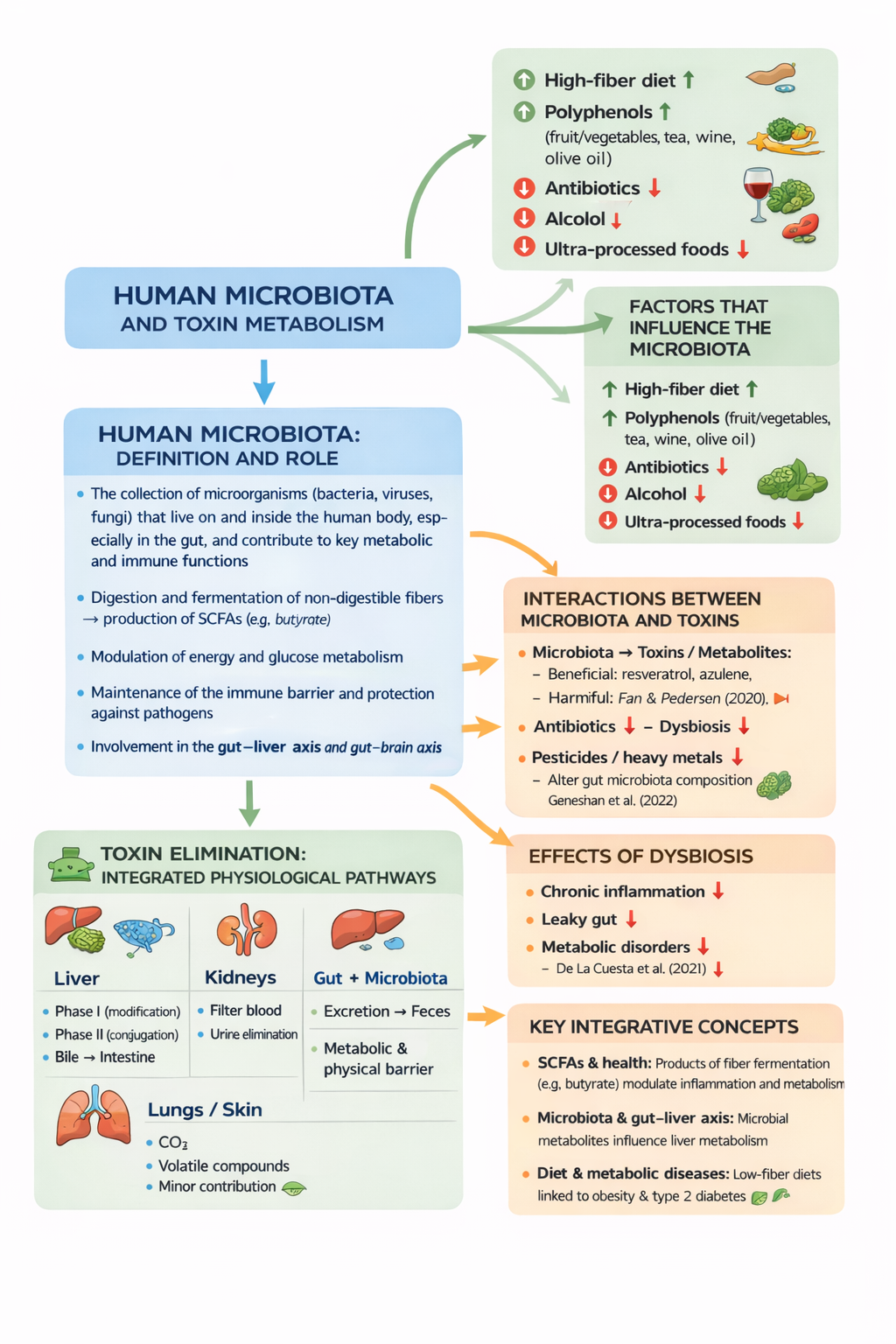
Human Microbiota and Toxin Metabolism

by luciano

Abstract
The human gut microbiota is a complex ecosystem of microorganisms that plays a central role in digestion, immune function, metabolic regulation, and the handling of dietary and environmental toxins. Through the fermentation of non-digestible carbohydrates and fibers, gut bacteria produce short-chain fatty acids (SCFAs) such as butyrate, acetate, and propionate, which act as key metabolic mediators between the microbiota and the host. These metabolites serve as essential energy substrates for intestinal epithelial cells, support gut barrier integrity, and modulate inflammatory responses and systemic metabolism.
In addition to carbohydrate fermentation, the gut microbiota is involved in the biotransformation of xenobiotics, including environmental toxins, drugs, and food-derived compounds, influencing their bioavailability and toxicity. Conversely, exposure to antibiotics, pollutants, alcohol, and ultra-processed foods can disrupt microbial balance, leading to dysbiosis, increased intestinal permeability, inflammation, and metabolic disorders.
This article explores the bidirectional interactions between the gut microbiota and toxins, the different types of bacterial fermentation (saccharolytic versus proteolytic), and the concept of energetic symbiosis between microbes and the human host. Understanding these mechanisms highlights the crucial role of diet—particularly dietary fiber—in maintaining microbiota functionality, metabolic health, and resilience against toxic and inflammatory challenges.

Keywords
Gut microbiota; Short-chain fatty acids (SCFAs); Dietary fiber; Butyrate; Fermentation; Metabolic health; Inflammation; Gut barrier; Dysbiosis; Toxin metabolism; Gut–liver axis; Energetic symbiosis
1) Human microbiota: definition and role
Definition
The human microbiota is the collection of microorganisms (bacteria, viruses, and fungi) that live on and within the human body, particularly in the gut, and contribute to critical metabolic and immune functions. (Nature)
Main functions
Digestion and fermentation of non-digestible fibers → production of short-chain fatty acids (SCFAs), such as butyrate. (MDPI)
Modulation of energy and glucose metabolism. (Nature)
Maintenance of the immune barrier and protection against pathogens. (Nature)
Involvement in the gut–liver and gut–brain axes. (Atti dell’Accademia Lancisiana)

2) Interactions between the microbiota and toxins
2A – Microbiota → toxins/metabolites
The microbiota:
Ferments dietary fibers [1], producing beneficial metabolites (SCFAs). (MDPI)
Metabolizes xenobiotics (environmental toxins, drugs, additives), influencing their chemical form and toxicity. (MDPI)
Contributes to the intestinal barrier, limiting the absorption of harmful substances. (Atti dell’Accademia Lancisiana)
Recent research:
1. Fan & Pedersen (2020): link the gut microbiota to the metabolism of food-derived compounds and toxins in humans. (Nature)
2. Tu et al. (2020): review on the microbiome and environmental toxicity (concept of gut microbiome toxicity). (MDPI)

2B – Toxins → microbiota
Some agents negatively impact the microbiota:
Antibiotics → intestinal dysbiosis
Pesticides/heavy metals → alteration of microbial diversity
Alcohol and ultra-processed foods → emerging negative effects
Evidence examples:
Environmental and dietary factors can alter microbial balance and increase inflammation. (ScienceDirect)

2C – Effects of dysbiosis
Dysbiosis (microbiota imbalance) may lead to:
Intestinal inflammation
Increased intestinal permeability (leaky gut)
Metabolic disorders (obesity, insulin resistance)
Recent scientific evidence:
Reviews linking microbiota composition to metabolism and human health. (Nature)

3) Factors influencing the microbiota
Factor
Effect
High-fiber diet
↑ diversity and SCFA production (MDPI)
Polyphenols (fruit/vegetables, tea, wine, olive oil)
Positive modulation of the microbial community
Antibiotics
↓ biodiversity, ↑ dysbiosis
Alcohol
May damage the mucosa and promote permeability
Ultra-processed foods
Associated with dysbiosis (mechanisms still under investigation)
Key research:
1. Charnock & Telle-Hansen (2020): effects of fiber on the microbiota and metabolic health. (MDPI)
2. PubMed reviews (2023–2024): fiber and microbiota modulation with clinical implications in metabolic diseases. (PubMed)

4) Toxin elimination: integrated physiological pathways
Liver
Phase I: structural modification of toxins (oxidation)
Phase II: conjugation → increased solubility
Elimination via bile → intestine
The microbiota may modify these metabolites and influence their recirculation
Kidneys
Filter the blood
Eliminate water-soluble toxins through urine
Intestine + microbiota
Excretion of toxins via feces
Physical and metabolic barrier against the absorption of harmful compounds
Lungs and skin
Elimination of CO₂ and volatile compounds
Minor role in the detoxification of more complex molecules

5) Integrative key concepts
SCFAs and health
Products of bacterial fiber fermentation (e.g., butyrate) not only provide substrates for intestinal cells but also modulate inflammation and systemic metabolism. (MDPI)
Microbiota and the gut–liver axis
Microbial metabolites influence hepatic metabolism, with potential effects on toxin handling and lipid metabolism. (Nature)
Diet and metabolic diseases
Microbiota changes associated with low fiber intake are linked to obesity and type 2 diabetes. (PubMed)

Mini-summary
1. The gut microbiota is an ecosystem of microorganisms that supports digestion, immunity, and metabolism; its alteration (dysbiosis) is associated with metabolic diseases. (Nature)
2. Non-digestible dietary fibers are fermented by gut microbes into beneficial compounds (SCFAs). (MDPI)
3. Microbiota and toxins influence each other: the microbiota can degrade or transform xenobiotics, while substances such as antibiotics and pollutants can alter microbial composition. (MDPI)
4. The body eliminates toxins through the liver, kidneys, intestine (with microbiota involvement), lungs, and skin.

The Gut Microbiota and Inflammation: An Overview

by luciano

Highlighted

“Role of the Gut Microbiota in Immunity and Inflammation
Microbes possess a variety of functions that influence their ability to grow and colonise, whilst bringing about downstream effects for the host that may be beneficial or otherwise [61]. Humans are not capable of digesting some components of dietary fibre due to the lack of the required enzymes to break down and harness the energy of these carbohydrates [62]. Certain species of microbes produce specific enzymes that enable fermentation of nutrients into absorbable forms, including that of indigestible carbohydrates into short-chain fatty acids (SCFAs) [62,63]. These SCFAs may have anti-inflammatory and immunomodulatory effects [63]. SCFAs are only a small part of the bigger picture as, in addition to enzymes and other metabolites produced, components of the bacteria themselves, including lipopolysaccharides, cell capsule carbohydrates and other endotoxins, may also be released and result in secondary effects to the host. These effects include maintenance of gut epithelium (and thereby integrity of the gut wall), production of vitamins, and interactions with several key immune system signalling molecules and cells, activating and inhibiting specific responses [1]. In addition to nutrient metabolism, gut microorganisms affect aspects of pharmacokinetics as they carry out drug metabolism [64]. They provide a natural defence against pathogenic species through competition and maintenance of the mucosa. It is through their contact with the immune system that the microorganisms occupying the gut can elicit or prevent inflammation. They may be associated with anti-inflammatory mechanisms, stimulating regulatory cells of the immune system to inhibit inflammation [65]. On the other hand, as bacteria regulate the permeability of the intestines, certain species can promote a “leaky gut”, where metabolites associated with the microbes leave the gut and enter the bloodstream. In response, the body produces cytokines and other mediators, effectively launching an inflammatory response [66]. Similarly, cells within the epithelial tissue of the gut deliver bacterial metabolites to immune cells, promoting inflammation on both a local and systemic scale. The persistence of this condition may lead to subacute or chronic inflammation, which may subsequently drive the development of diseases such as inflammatory bowel disease, diabetes or cardiovascular disease [65].”