
Header Image - Gluten Light

Tag Archives

2 Articles

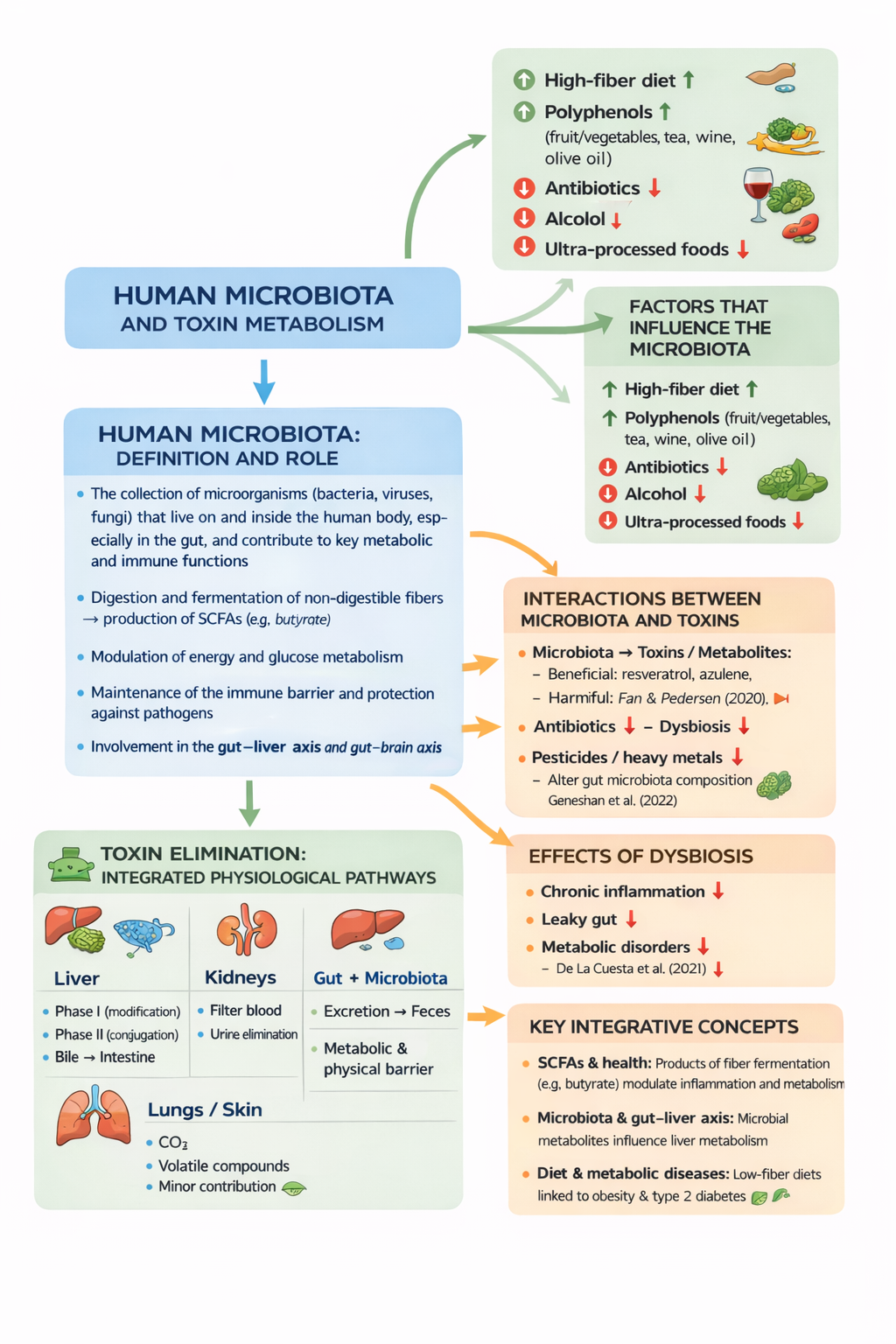
Human Microbiota and Toxin Metabolism

by luciano

Abstract
The human gut microbiota is a complex ecosystem of microorganisms that plays a central role in digestion, immune function, metabolic regulation, and the handling of dietary and environmental toxins. Through the fermentation of non-digestible carbohydrates and fibers, gut bacteria produce short-chain fatty acids (SCFAs) such as butyrate, acetate, and propionate, which act as key metabolic mediators between the microbiota and the host. These metabolites serve as essential energy substrates for intestinal epithelial cells, support gut barrier integrity, and modulate inflammatory responses and systemic metabolism.
In addition to carbohydrate fermentation, the gut microbiota is involved in the biotransformation of xenobiotics, including environmental toxins, drugs, and food-derived compounds, influencing their bioavailability and toxicity. Conversely, exposure to antibiotics, pollutants, alcohol, and ultra-processed foods can disrupt microbial balance, leading to dysbiosis, increased intestinal permeability, inflammation, and metabolic disorders.
This article explores the bidirectional interactions between the gut microbiota and toxins, the different types of bacterial fermentation (saccharolytic versus proteolytic), and the concept of energetic symbiosis between microbes and the human host. Understanding these mechanisms highlights the crucial role of diet—particularly dietary fiber—in maintaining microbiota functionality, metabolic health, and resilience against toxic and inflammatory challenges.

Keywords
Gut microbiota; Short-chain fatty acids (SCFAs); Dietary fiber; Butyrate; Fermentation; Metabolic health; Inflammation; Gut barrier; Dysbiosis; Toxin metabolism; Gut–liver axis; Energetic symbiosis
1) Human microbiota: definition and role
Definition
The human microbiota is the collection of microorganisms (bacteria, viruses, and fungi) that live on and within the human body, particularly in the gut, and contribute to critical metabolic and immune functions. (Nature)
Main functions
Digestion and fermentation of non-digestible fibers → production of short-chain fatty acids (SCFAs), such as butyrate. (MDPI)
Modulation of energy and glucose metabolism. (Nature)
Maintenance of the immune barrier and protection against pathogens. (Nature)
Involvement in the gut–liver and gut–brain axes. (Atti dell’Accademia Lancisiana)

2) Interactions between the microbiota and toxins
2A – Microbiota → toxins/metabolites
The microbiota:
Ferments dietary fibers [1], producing beneficial metabolites (SCFAs). (MDPI)
Metabolizes xenobiotics (environmental toxins, drugs, additives), influencing their chemical form and toxicity. (MDPI)
Contributes to the intestinal barrier, limiting the absorption of harmful substances. (Atti dell’Accademia Lancisiana)
Recent research:
1. Fan & Pedersen (2020): link the gut microbiota to the metabolism of food-derived compounds and toxins in humans. (Nature)
2. Tu et al. (2020): review on the microbiome and environmental toxicity (concept of gut microbiome toxicity). (MDPI)

2B – Toxins → microbiota
Some agents negatively impact the microbiota:
Antibiotics → intestinal dysbiosis
Pesticides/heavy metals → alteration of microbial diversity
Alcohol and ultra-processed foods → emerging negative effects
Evidence examples:
Environmental and dietary factors can alter microbial balance and increase inflammation. (ScienceDirect)

2C – Effects of dysbiosis
Dysbiosis (microbiota imbalance) may lead to:
Intestinal inflammation
Increased intestinal permeability (leaky gut)
Metabolic disorders (obesity, insulin resistance)
Recent scientific evidence:
Reviews linking microbiota composition to metabolism and human health. (Nature)

3) Factors influencing the microbiota
Factor
Effect
High-fiber diet
↑ diversity and SCFA production (MDPI)
Polyphenols (fruit/vegetables, tea, wine, olive oil)
Positive modulation of the microbial community
Antibiotics
↓ biodiversity, ↑ dysbiosis
Alcohol
May damage the mucosa and promote permeability
Ultra-processed foods
Associated with dysbiosis (mechanisms still under investigation)
Key research:
1. Charnock & Telle-Hansen (2020): effects of fiber on the microbiota and metabolic health. (MDPI)
2. PubMed reviews (2023–2024): fiber and microbiota modulation with clinical implications in metabolic diseases. (PubMed)

4) Toxin elimination: integrated physiological pathways
Liver
Phase I: structural modification of toxins (oxidation)
Phase II: conjugation → increased solubility
Elimination via bile → intestine
The microbiota may modify these metabolites and influence their recirculation
Kidneys
Filter the blood
Eliminate water-soluble toxins through urine
Intestine + microbiota
Excretion of toxins via feces
Physical and metabolic barrier against the absorption of harmful compounds
Lungs and skin
Elimination of CO₂ and volatile compounds
Minor role in the detoxification of more complex molecules

5) Integrative key concepts
SCFAs and health
Products of bacterial fiber fermentation (e.g., butyrate) not only provide substrates for intestinal cells but also modulate inflammation and systemic metabolism. (MDPI)
Microbiota and the gut–liver axis
Microbial metabolites influence hepatic metabolism, with potential effects on toxin handling and lipid metabolism. (Nature)
Diet and metabolic diseases
Microbiota changes associated with low fiber intake are linked to obesity and type 2 diabetes. (PubMed)

Mini-summary
1. The gut microbiota is an ecosystem of microorganisms that supports digestion, immunity, and metabolism; its alteration (dysbiosis) is associated with metabolic diseases. (Nature)
2. Non-digestible dietary fibers are fermented by gut microbes into beneficial compounds (SCFAs). (MDPI)
3. Microbiota and toxins influence each other: the microbiota can degrade or transform xenobiotics, while substances such as antibiotics and pollutants can alter microbial composition. (MDPI)
4. The body eliminates toxins through the liver, kidneys, intestine (with microbiota involvement), lungs, and skin.
Emulsifiers and Hydrocolloids

by luciano

Premise

Hydrocolloids and emulsifiers are both food additives, but they have different functions. Hydrocolloids are substances that thicken, gel or stabilize food, while emulsifiers help mix immiscible substances such as oil and water.

Hydrocolloids

They are substances that, in aqueous solution, form a colloidal system, increasing viscosity or forming gels.

Their main function is to modify the consistency of foods, making them denser, creamier or gelatinous.

They can also stabilize emulsions or suspensions, preventing phase separation.

Some examples of hydrocolloids: agar-agar, modified starches, beta-glucans, carrageenin, pectin, carob seeds, bamboo fibers, potato fibers, pea fibers, gelatins, gum arabic, xanthan gum, guar, inulin. In which products is it easier to find them: bakery and pastry products, biscuits, ice cream, yogurt, sports drinks (especially maltodextrins).

Emulsifiers:

They are molecules that have a hydrophobic part (fat lover) and a hydrophilic part (water lover).

This structure allows them to stabilize emulsions, i.e. mixtures of immiscible liquids such as oil and water.

The emulsifiers are arranged between the two phases, reducing the surface tension and preventing separation.

Common examples include lecithin, mono- and diglycerides of fatty acids and polysorbates.

In summary, while hydrocolloids modify the general consistency of a food, emulsifiers work specifically to keep the emulsions stable, avoiding the separation of oil and water. Some hydrocolloids, such as lecithin, may also have emulsifying properties.

Emulsifiers

Highlighted:
A recent study, published in The Lancet Diabetes & Endocrinology, evaluated for the first time the association between emulsifiers and the risk of developing type 2 diabetes

I – Emulsifiers and diabetes risk: Lancet’s study

Although the Health Authorities consider their use in defined quantities safe, based on criteria of cytotoxicity and genotoxicity, recently, evidence is emerging of their negative effects on the intestinal microbiota, which in turn trigger inflammation and metabolic alterations.

After being accused of contributing to the risk of obesity, cancer and cardiovascular diseases, a recent analysis (Seven emulsifiers incriminated for potential increased risk of type 2 diabetes SID, Italian Society of Diabetology 07-05-2024) conducted on the prospective study of NutriNet Santé cohort identifies them as factors that increase the risk of type 2 diabetes.
The study, published in The Lancet Diabetes & Endocrinology [1] evaluated for the first time the association between emulsifiers and risk of developing type 2 diabetes. The Authors analyzed the data of over 104 thousand adults enrolled from 2009 to 2023 who were asked to fill out 24-hour dietary records every 6 months. The objective was to evaluate the exposure to emulsifiers.
1% of the sample developed type 2 diabetes during the 6-8 year follow-up.

Of the 61 identified additives, seven are ‘attention’ emulsifiers associated with a potential increase in the risk of diabetes (eyes, therefore, on the labels!):

E407 (total carrageenan);
E340 (polyglycerol esters);
E472e (fatty acid esters);
E331 (sodium citrate);
E412 (guar gum);
E414 (gum arabic);
E415 (xanthan gum);

In addition to a group called ‘carrageenine’.

Emulsifier additives were taken in 5% from ultra-processed fruits and vegetables (such as canned vegetables and fruit in syrup), in 14.7% from cakes and biscuits, in 10% from dairy products.

Three consequences highlighted by prof. Angelo Avogaro, President of SID

1. The need to contain the consumption of ultra-processed foods;

2. The call for greater attention to labels;

3. The need to call for stricter regulation in order to protect consumers.

“Although further long-term studies are needed, changes in the intestinal microbiota suggest that RDAs (Recommended Daily Allowance) may need to be reviewed. Previous evidence linking carrageenan intake to intestinal inflammation has led JECFA to limit its use in formulas and infant foods. We are witnessing a worrying increase in type 2 diabetes even among children and adolescents” underlines Prof. Raffaella Buzzetti, President-elect of the ISD.

Notes

[1] Food additive emulsifiers and the risk of type 2 diabetes: analysis of data from the NutriNet-Santé prospective cohort study. The Lancet Diabete and Endocrinology, volume 12, issue 5, p339-349, May 2024.

2 – Direct impact of commonly used dietary emulsifiers on human gut microbiota
Abstract.
Background: Epidemiologic evidence and animal studies implicate dietary emulsifiers in contributing to the increased prevalence of diseases associated with intestinal inflammation, including inflammatory bowel diseases and metabolic syndrome. Two synthetic emulsifiers in particular, carboxymethylcellulose and polysorbate 80, profoundly impact intestinal microbiota in a manner that promotes gut inflammation and associated disease states. In contrast, the extent to which other food additives with emulsifying properties might impact intestinal microbiota composition and function is not yet known.
….omissis.
Conclusions: These results indicate that numerous, but not all, commonly used emulsifiers can directly alter gut microbiota in a manner expected to promote intestinal inflammation. Moreover, these data suggest that clinical trials are needed to reduce the usage of the most detrimental compounds in favor of the use of emulsifying agents with no or low impact on the microbiota. Direct impact of commonly used dietary emulsifiers on human gut microbiota. Sabrine Naimi. et al. Microbiome (2021) 9:66 https://doi.org/10.1186/s40168-020-00996-6

3 – Dietary Emulsifiers Alter Composition and Activity of the Human Gut Microbiota in vitro, Irrespective of Chemical or Natural Emulsifier Origin.
……..omissis
Discussion
We found dietary emulsifiers to significantly alter human gut microbiota toward a composition and functionality with potentially higher pro-inflammatory properties. While donor-dependent differences in microbiota response were observed, our in vitro experimental setup showed these effects to be primarily emulsifierdependent. Rhamnolipids and sophorolipids had the strongest impact with a sharp decrease in intact cell counts, an increased abundance in potentially pathogenic genera-like Escherichia/Shigella and Fusobacterium, a decreased abundance of beneficial Bacteroidetes and Barnesiella, and a predicted increase in flagellar assembly and general motility. The latter was not substantiated through direct measurements, though. The effects were less pronounced for soy lecithin, while chemical emulsifiers P80 and CMC showed the smallest effects. Short chain fatty acid production, with butyrate production, in particular, was also affected by the respective emulsifiers, again in an emulsifier‐ and donordependent manner.

….omissis. One of the most profound impacts of emulsifier treatment toward gut microbiota was the decline in intact microbial cell counts. The degree of microbiome elimination in this study seems comparable to what has been observed for antibiotic treatments (Francino, 2016; Guirro et al., 2019). Since antibiotics are considered detrimental for gut ecology, this may serve as a warning sign with respect to emulsifier usage. Emulsifiers also act as surfactants, which are known for their membrane solubilizing properties (Jones, 1999). The fact that the observed decline in microbial viability was dependent on emulsifier dose and on the emulsifying potential of the supplemented compound, as measured by the aqueous surface tension reduction (Table 1), leads us to conclude that the dietary emulsifiers attack the bacterial cells principally at the level of the cell membrane.

………….omissis. A last important element in the putative health impact from dietary emulsifiers concern’s interindividual variability. An individual’s unique microbiota and metabolism are important determinants of the potential health effects dietary emulsifiers could cause. While the overall effects from the different emulsifiers toward microbiota composition and functionality were quite consistent in our study, important interindividual differences in susceptibility of the microbiota were noted. Understanding what underlying factors and determinants drive this interindividual variability will be crucial to future health risk assessment of novel and existing dietary emulsifiers. Dietary Emulsifiers Alter Composition and Activity of the Human Gut Microbiota in vitro, Irrespective of Chemical or Natural Emulsifier Origin. Lisa Miclotte et al. Front. Microbiol., 05 November 2020. Sec. Microbial Symbioses
Volume 11 – 2020 | https://doi.org/10.3389/fmicb.2020.577474