Abstract
The low-FODMAP diet represents an established dietary strategy for the management of irritable bowel syndrome (IBS). However, it should be considered an evidence-based strategy for symptom control rather than a curative therapy for the disease. In recent years, numerous clinical studies, systematic reviews and meta-analyses have confirmed the effectiveness of this approach in reducing gastrointestinal symptoms and improving patients’ quality of life.
The dietary approach is based on limiting poorly absorbed fermentable carbohydrates (FODMAPs), including oligosaccharides (fructans and galacto-oligosaccharides), disaccharides (lactose), monosaccharides (fructose in excess of glucose), and polyols (sorbitol and mannitol).
The development of the low-FODMAP diet required not only detailed data on food composition but also the definition of cutoff values to classify foods as low in FODMAPs. In recent years, the expansion of food composition databases and the analysis of new industrial and regional products have improved the international standardization of the diet.
Recent studies indicate that approximately half, and in some cases up to two-thirds of patients with IBS experience improvement in symptoms after applying the low-FODMAP diet, particularly abdominal pain, bloating and abdominal distension [1,2,3]. However, the modern approach to the diet emphasizes a temporary restriction followed by a phase of food reintroduction and personalization.
1. Food Composition and Classification of FODMAPs
FODMAPs (Fermentable Oligo-, Di-, Mono-saccharides And Polyols) include short-chain carbohydrates that are poorly absorbed in the small intestine and easily fermented in the colon.
These molecules present two main characteristics:
-
Poor intestinal absorption
-
High fermentability by the intestinal microbiota
Fermentation produces gas and osmotic compounds that can cause intestinal distension, pain, and alterations in intestinal motility [7].
The main categories of FODMAPs include:
1 – oligosaccharides (fructans and galacto-oligosaccharides)
2 – disaccharides (lactose)
3 – monosaccharides (fructose in excess of glucose)
4 -polyols (sorbitol and mannitol)
These carbohydrates are widely present in commonly consumed foods, including fruit, vegetables, cereals, dairy products and legumes [5]. Recent studies indicate that the average daily intake of FODMAPs in the general population is approximately 20 g per day, without substantial differences between healthy individuals and patients with functional gastrointestinal disorders [4].
2. Definition of FODMAP Cutoff Values
To apply the low-FODMAP diet it is necessary to define threshold values useful for classifying foods as low (“low FODMAP”) or high (“high FODMAP”) in fermentable carbohydrates.
In the initial development of the diet, these values were established considering several factors:
the specific FODMAP content in foods typical portion sizes consumed in a single meal
clinical observations of the frequency with which certain foods induced symptoms in patients with irritable bowel syndrome (IBS).
Based on these criteria, conservative threshold values were proposed with the aim of allowing the combined consumption of several foods classified as low-FODMAP within the same meal without exceeding levels generally associated with the onset of symptoms.
In early controlled dietary studies on the low-FODMAP diet it was suggested that a total intake of approximately 0.5 g of FODMAPs per meal (excluding lactose) was generally well tolerated during the initial restriction phase.
However, in more recent clinical applications this value should be interpreted as an operational reference derived from experimental studies rather than as a universally applicable threshold, since individual tolerance to FODMAPs may vary significantly among patients.
More recent clinical evidence nevertheless supports the overall effectiveness of the low-FODMAP approach. Numerous systematic reviews and meta-analyses of randomized trials have shown that the low-FODMAP diet significantly reduces the severity of IBS symptoms, particularly abdominal pain, bloating and distension, and contributes to improving patients’ quality of life [1,2].
In a review of meta-analyses including more than 3,700 patients with IBS, the low-FODMAP diet showed a significant reduction in the severity of gastrointestinal symptoms compared with other dietary interventions or standard dietary recommendations [1].
These results confirm that defining cutoff values of FODMAPs in foods represents a useful tool for designing the diet, although flexible and personalized application is required in clinical practice.
3. Coexistence of Gluten and FODMAPs in Cereal Foods
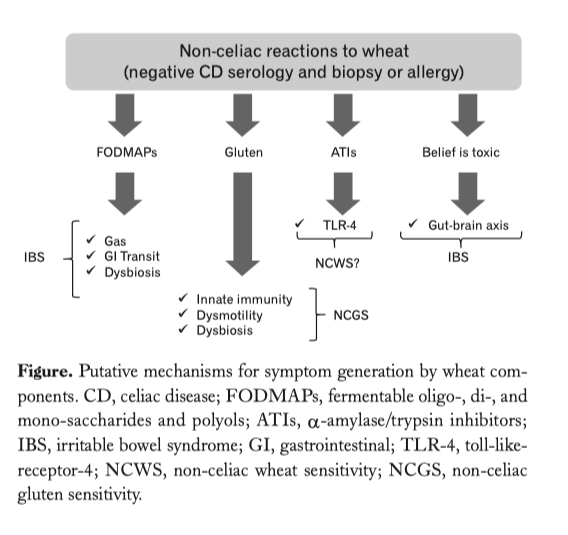
Many foods containing gluten also contain high levels of FODMAPs, particularly fructans. Consequently, the reduction in symptoms observed in patients who eliminate gluten may in fact be attributable to reduced FODMAP intake rather than to the removal of gluten itself. Recent studies indicate that the low-FODMAP diet often proves more effective than a simple gluten-free diet in controlling IBS symptoms [6]. However, not all gluten-free products are necessarily low in FODMAPs. Their final composition depends on:
1 -the ingredients used
2 -industrial food processing techniques.
4. Effect of Food Processing Technologies
The final FODMAP content of foods can be significantly modified by technological processing.
Among the processes that most influence FODMAP levels are:
1 – fermentation
2 – cooking
3 – hydration and thermal treatment
4 -lactic fermentation.
A relevant example is sourdough bread, in which lactic acid bacteria metabolize part of the fructans present in flour, reducing the final FODMAP content. Similarly, some processing techniques can reduce the galacto-oligosaccharide content in legumes. These findings highlight that the FODMAP composition of foods depends not only on the raw ingredient but also on the technological processing used.
5. Recent Developments in Low-FODMAP Diet Research
In recent years the low-FODMAP diet has been the subject of numerous clinical studies and meta-analyses.
Recent evidence indicates that:
1 – the low-FODMAP diet is one of the most effective dietary interventions for IBS [2]
2 – approximately 50–70% of patients experience symptom improvement [7]
3 – the main effects concern abdominal pain, bloating and distension [3].
In a network meta-analysis of randomized trials, the low-FODMAP diet was identified as the most effective dietary strategy for the overall control of IBS symptoms [2].
6. Effects on the Intestinal Microbiota
A topic of considerable interest in recent years concerns the impact of the low-FODMAP diet on the intestinal microbiota. A meta-analysis of randomized clinical studies showed that the diet may lead to a reduction in the abundance of bifidobacteria, without significantly altering the overall diversity of the intestinal microbiota [3]. This observation has led to the recommendation that the restrictive phase of the diet should be limited in time and followed by a controlled reintroduction phase.
7. Evolution of the Dietary Model: Restriction, Reintroduction and Personalization
The modern approach to the low-FODMAP diet is based on three phases:
-
restriction phase (2–6 weeks)
-
reintroduction phase of individual FODMAP groups
-
long-term personalization phase.
The goal is not the permanent elimination of FODMAPs but the identification of the specific categories that trigger symptoms in individual patients [9]. This approach allows patients to maintain a more varied and nutritionally balanced diet.
Conclusions
In recent years the low-FODMAP diet has become one of the most effective dietary approaches for the management of irritable bowel syndrome. Progress in the characterization of food composition, the expansion of international databases, and new clinical evidence have improved the understanding of the pathophysiological mechanisms associated with FODMAPs.
Recent evidence also highlights the importance of:
1 – applying the diet under professional supervision
2 – limiting the restrictive phase
3 – progressively personalizing dietary intake.
Main High-FODMAP Foods (to be reduced):
-
Fruit: Apples, pears, apricots, cherries, peaches, watermelon, plums.
-
Vegetables: Garlic, onion, asparagus, broccoli, cauliflower, mushrooms, artichokes.
-
Dairy: Milk, yogurt, and fresh cheeses containing lactose.
-
Legumes: Chickpeas, lentils, beans.
-
Grains: Wheat, rye, barley.
-
Sweeteners: Honey, high-fructose corn syrup, sorbitol, mannitol.
Veronesi Foundation
Main Low-FODMAP Foods (allowed):
-
Fruit: Bananas, blueberries, strawberries, kiwi, grapes, oranges, melon.
-
Vegetables: Carrots, green beans, cucumbers, lettuce, zucchini, potatoes, tomatoes.
-
Dairy: Lactose-free dairy products, aged cheeses (such as Parmesan).
-
Grains: Rice, oats, corn, quinoa, gluten-free pasta/bread.
-
Proteins: Meat, fish, eggs.
Bibliografia scientifica recente
[1] Black C.J., Staudacher H.M., Ford A.C.
Efficacy of a Low-FODMAP Diet in Irritable Bowel Syndrome: Systematic Review and Network Meta-analysis.
Gut. 2022;71(6):1117-1126.
DOI: 10.1136/gutjnl-2021-325214
[2] Whelan K., Martin L.D., Staudacher H.M., Lomer M.C.E.
The Low FODMAP Diet in the Management of Irritable Bowel Syndrome: Recent Advances and Clinical Applications.
Current Opinion in Gastroenterology. 2022;38(2):101-108.
DOI: 10.1097/MOG.0000000000000786
[3] So D., Staudacher H.M., Lomer M.C.E., Whelan K.
Effects of a Low-FODMAP Diet on the Colonic Microbiome in Irritable Bowel Syndrome: A Systematic Review and Meta-analysis.
American Journal of Clinical Nutrition. 2022;116(1):225-236.
DOI: 10.1093/ajcn/nqac164
[4] Zanzer Y.C., Whelan K., Staudacher H.M.
Habitual FODMAP Intake and Dietary Patterns: A Systematic Review and Meta-analysis.
Journal of Functional Foods. 2023;100:105914.
DOI: 10.1016/j.jff.2023.105914
[5] Skodje G.I., Sarna V.K., Minelle I.H. et al.
Fructan, Rather Than Gluten, Induces Symptoms in Patients With Self-Reported Non-Celiac Gluten Sensitivity.
Gastroenterology. 2018;154(3):529-539.
DOI: 10.1053/j.gastro.2017.10.040
[6] Loponen J., Gänzle M.G.
Use of Sourdough Fermentation to Reduce FODMAP Content in Wheat-Based Products.
Food Microbiology. 2018;72:93-101.
DOI: 10.1016/j.fm.2017.07.003
[7] Staudacher H.M., Whelan K.
Mechanisms and Efficacy of Dietary FODMAP Restriction in Irritable Bowel Syndrome.
Nature Reviews Gastroenterology & Hepatology. 2023;20(3):165-182.
DOI: 10.1038/s41575-023-00742-9
[8] Varney J., Muir J.G., Gibson P.R.
Twenty Years of FODMAP Research: Progress and Future Directions.
Journal of Gastroenterology and Hepatology. 2024.
DOI: 10.1111/jgh.16523
[9] Halmos E.P., Gibson P.R.
Dietary FODMAP Reduction and Gastrointestinal Symptoms in Irritable Bowel Syndrome: Updated Evidence.
Clinical Gastroenterology and Hepatology. 2024.
DOI: 10.1016/j.cgh.2024.02.012
[10] Bogdanowska-Charkiewicz D., et al.
Low-FODMAP Diet in Irritable Bowel Syndrome: Umbrella Review of Meta-analyses.
Nutrients. 2025;17:1545.
DOI: 10.3390/nu17091545
Studi fondamentali del gruppo Monash
[11] Halmos E.P., Power V.A., Shepherd S.J., Gibson P.R., Muir J.G.
A Diet Low in FODMAPs Reduces Symptoms of Irritable Bowel Syndrome.
Gastroenterology. 2014;146(1):67-75.
DOI: 10.1053/j.gastro.2013.09.046
Abstract (summary)
-
Randomized controlled trial conducted by the Monash group comparing a typical Australian diet with a low-FODMAP diet in patients with IBS.
-
The results demonstrated a significant reduction in gastrointestinal symptoms, particularly abdominal pain, bloating, and flatulence, in patients following the low-FODMAP diet.
-
This study represents one of the most frequently cited clinical trials supporting the effectiveness of the diet.
[12] Varney J., Barrett J., Scarlata K., Catsos P., Gibson P., Muir J.
FODMAPs: Food Composition, Defining Cutoff Values and International Application.
Journal of Gastroenterology and Hepatology. 2017;32(S1):53-61.
DOI: 10.1111/jgh.13698
Abstract (summary)
-
Landmark article describing the development of methodologies for analyzing the FODMAP composition of foods and defining the threshold values used to classify foods as low-FODMAP.
-
The paper also discusses the implications of differences between national food systems and the importance of updated databases for the international application of the diet.
Final note
-
These two studies are among the most cited in the FODMAP literature.
-
Halmos 2014 → fundamental clinical trial.
-
Varney 2017 → definition of cutoff values and food composition.
Almost all recent reviews (including those from 2023–2024) continue to cite them.