
Header Image - Gluten Light

Tag Archives

3 Articles

The Role of Water in Reducing Low-Grade Inflammation

by luciano

(The Role of Water in Reducing Low-Grade Inflammation and Anti-Inflammatory Foods in Maintaining Physiological Homeostasis*)

(with references to the scientific section)

See: Practical vademecum (Why water helps extinguish inflammation)

1. Introduction
Low-grade inflammation is a condition of chronic and mild activation of the immune system, associated with numerous metabolic and pathological conditions, including obesity, metabolic syndrome, insulin resistance, and gut dysbiosis (studiolendaroeflorio.com). Emerging scientific evidence indicates that chronic dehydration and suboptimal dietary patterns are factors that not only affect metabolic function but also contribute to the persistence of a subclinical inflammatory state (PMC).

2. Water as an Essential Nutrient: Physiology and Hydric Homeostasis
Water is the most abundant component of the human body, accounting for approximately 50–65% of body weight in healthy adults (gabrielepelizza.com). This molecule is not merely a solvent but actively participates in metabolic processes, nutrient transport, waste elimination, regulation of cellular volume, and maintenance of body temperature (PMC).

2.1. Transport and Elimination of Metabolic Substances
Water forms the fluid medium in which the following processes occur:

transport of essential nutrients to cells,
mobilization and elimination of metabolic catabolic by-products,
transport of pro-inflammatory mediators to excretory organs (kidneys, liver).
Adequate plasma water volume facilitates glomerular filtration and enhances the kidneys’ ability to eliminate metabolic residues that may stimulate inflammation when accumulated (PMC).

2.2. Hydration and Systemic Inflammation
Studies investigating the effects of water restriction have shown that dehydration can contribute to metabolic imbalances and alterations in cellular function that promote systemic inflammatory responses (PMC).

A recent study on the gut microbiota indicates that water restriction disrupts intestinal homeostasis, leading to a reduction in local immune elements such as Th17 cells—key regulators of mucosal inflammation—suggesting a link between hydration status and immune response (ScienceDirect).

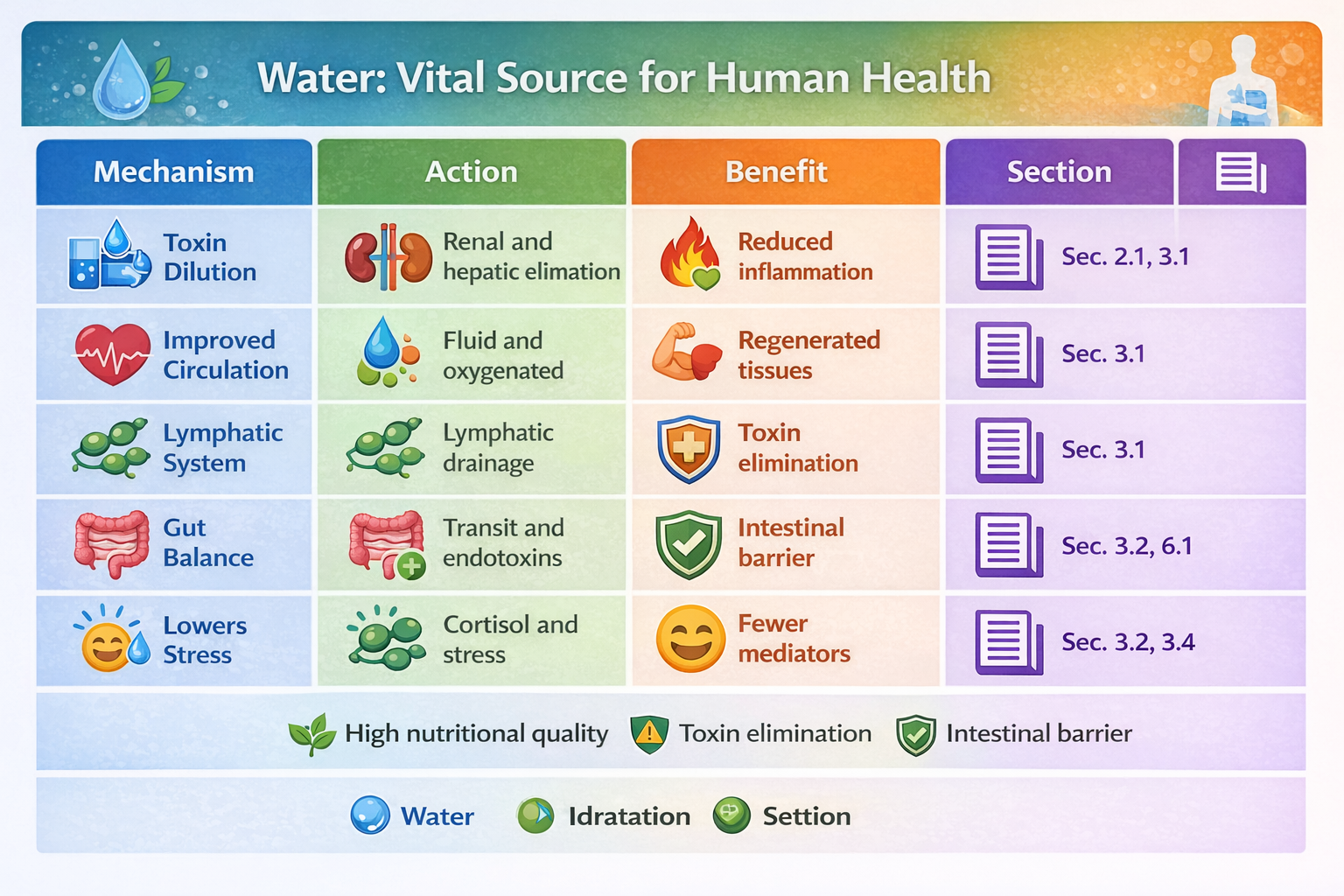
3. Specific Mechanisms Through Which Water Reduces Inflammation
3.1. Improved Circulation and Lymphatic Drainage
Adequate hydration maintains lower blood viscosity, improving fluidity and enhancing the transport of oxygen and nutrients to tissues while facilitating the removal of pro-inflammatory metabolites. Although no randomized controlled trials (RCTs) are specifically dedicated to this mechanism, basic cardiovascular physiology clearly describes these effects.

3.2. Effects on the Gut Microbiota
As previously mentioned, recent studies show that limited access to water alters the gut microbiota and reduces key immune cell populations in the colon, highlighting a connection between hydration and intestinal immune regulation (ScienceDirect).

3.3. Hydration and Reduction of Oxidative Stress
Adequate water intake is associated with lower circulating concentrations of free radicals and may reduce systemic inflammatory responses related to oxidative stress, at least indirectly through improved metabolic homeostasis and normal cellular function (limited but suggestive evidence from general clinical reviews) (Prevention).

4. Water as a Support to Immune Response
Hydration also affects general immune parameters. Preliminary evidence suggests that adequate water intake contributes to optimal immune system function, particularly under conditions of physiological stress or high antigenic load (ResearchGate).

5. Anti-Inflammatory Nutrition: Role of Specific Nutrients
An anti-inflammatory diet includes foods rich in:

Polyphenols (berries, green tea),
Omega-3 fatty acids (fatty fish, flaxseeds),
Antioxidants (colorful vegetables, spices such as turmeric and ginger),
Dietary fiber (legumes, vegetables), which nourish the gut microbiota.
These components are associated with measurable reductions in pro-inflammatory mediators such as IL-6 and TNF-α in several observational and clinical studies, although the strength of evidence for specific nutrients varies from moderate to weak or preliminary (e.g., polyphenols) (ScienceDirect).

6. Synergy Between Hydration and Anti-Inflammatory Nutrition
The synergy between water intake and anti-inflammatory nutrition is based on two main physiological mechanisms:

6.1. Nutrient Absorption and Bioavailability
Water is the medium in which:

digestion occurs,
chylomicrons are formed and nutrients are transported,
bioactive anti-inflammatory compounds are absorbed.
A well-hydrated intestine promotes optimal transit time, reduces pathological fiber fermentation, and supports a more balanced microbiota, which in turn produces anti-inflammatory metabolites such as butyrate (ScienceDirect).

6.2. Elimination of Inflammatory By-Products
Hydration facilitates the elimination of pro-inflammatory molecules through:

urine (water-soluble metabolites),
bile (certain lipids and metabolic products),
thereby improving the efficiency of the body’s homeostatic response.
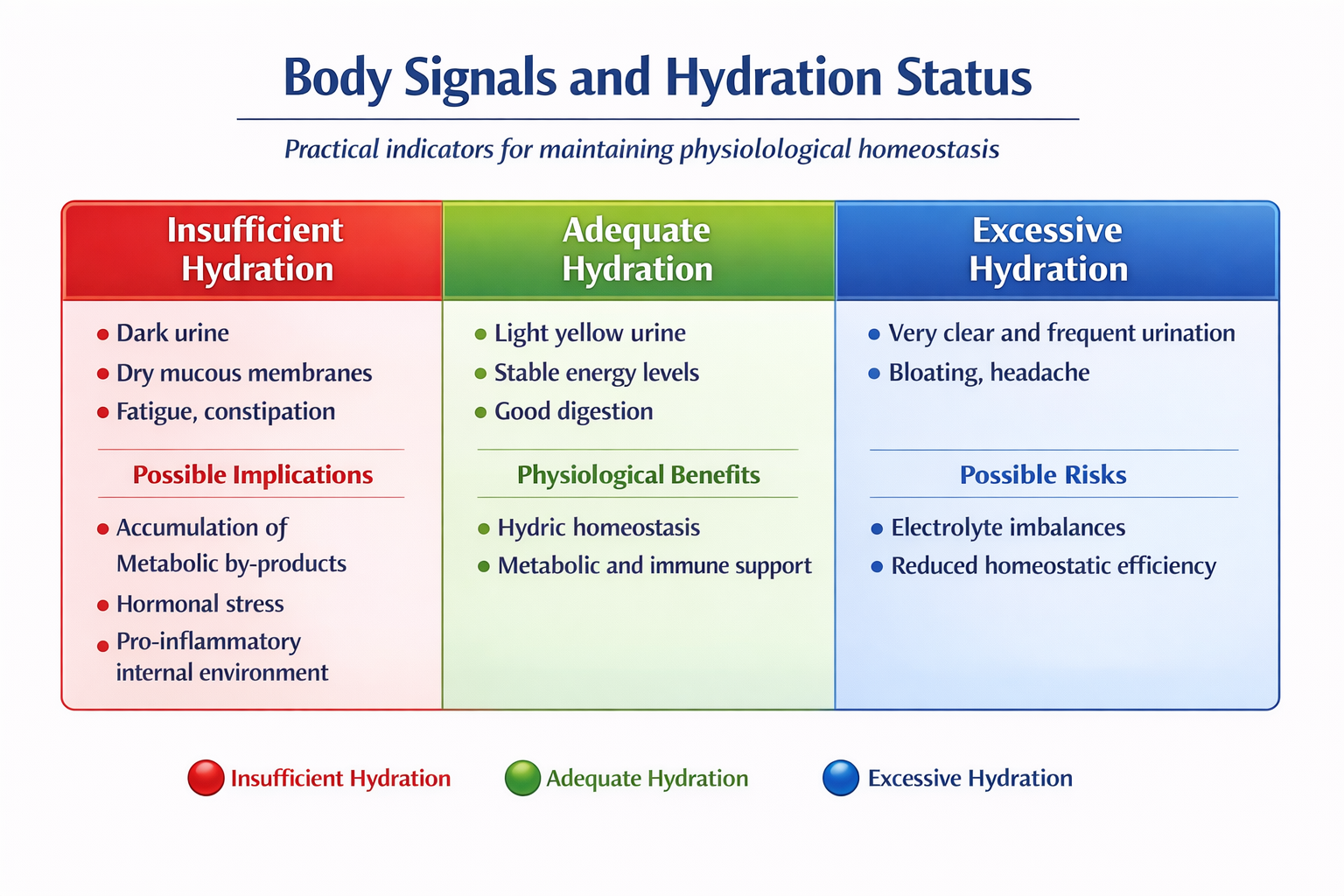
7. Clinical and Practical Applications
Although no unified guidelines based on robust RCT evidence exist for anti-inflammatory hydration protocols, physiological principles and emerging evidence suggest that optimal hydration combined with an anti-inflammatory diet may help maintain a favorable physiological state, reduce low-grade inflammation, and support immune homeostasis.

8. Conclusions
Water is a physiologically active element in the modulation of inflammation and maintenance of health, not merely a passive solvent. Its role extends from fluid homeostasis and nutrient transport to regulation of the gut microbiota and immune support.
When combined with a diet rich in anti-inflammatory foods, water acts synergistically to:

improve nutrient absorption,
facilitate the removal of inflammatory mediators,
optimize gut microbiota composition,
support a balanced immune response.

These mechanisms are supported by studies in physiology, microbiology, and emerging research on the effects of hydration on immune modulation.

*Homeostasis is the ability of living organisms to maintain a constant internal environment (temperature, pH, blood sugar, etc.) by self-regulating, despite external variations.

In-Depth Focus: Carbonated Water and Digestion
✅ Potential Benefits
May stimulate digestion
Carbon dioxide (CO₂) mildly stimulates the gastric mucosa, increasing gastric juice secretion.
Helpful in slow digestion
Some individuals find it beneficial after heavy meals.
Promotes satiety
It may help reduce food intake in certain dietary regimens.
⚠️ Potential Discomforts
Bloating and gas
CO₂ is gas and may cause abdominal distension and belching.
May worsen reflux or gastritis
In individuals with gastroesophageal reflux or sensitive stomachs, symptoms may worsen.
Not ideal for irritable bowel syndrome (IBS)
Gas can increase pain and abdominal distension.
Carbonated vs Still Water
Hydration level → equivalent
Digestive tolerance → still water is more neutral and generally better tolerated
General health → no issues if consumed in moderation
How Much to Drink?
For healthy individuals:

Suitable for daily consumption, preferably alternating with still water
Best avoided during meals in those prone to bloating
Summary
Carbonated water is not harmful to health but can influence digestion: it may facilitate digestion in some individuals while causing bloating or gastric discomfort in others. For this reason, alternating it with still water and tailoring consumption to individual digestive tolerance is recommended.
Selected References
Allen, M.D. et al. Suboptimal hydration remodels metabolism…, 2019 (PMC)
Sato, K. et al. Sufficient water intake maintains the gut microbiota…, 2024 (ScienceDirect)
Popkin, B.M. et al. Water, Hydration and Health, 2010 (PMC)
Özkaya, İ. & Yıldız, M. Effect of water consumption on the immune system…, 2021 (ResearchGate)
Clinical trial with anti-inflammatory implications (methodological limitations; further studies needed) (jamanetwork.com)
Undigested Food → Low-Grade Intestinal Inflammation → Increased Intestinal Permeability

by luciano

(Related Article No. 3 – Series: Irritable Bowel Syndrome (IBS) and Intestinal Permeability)
Introduction
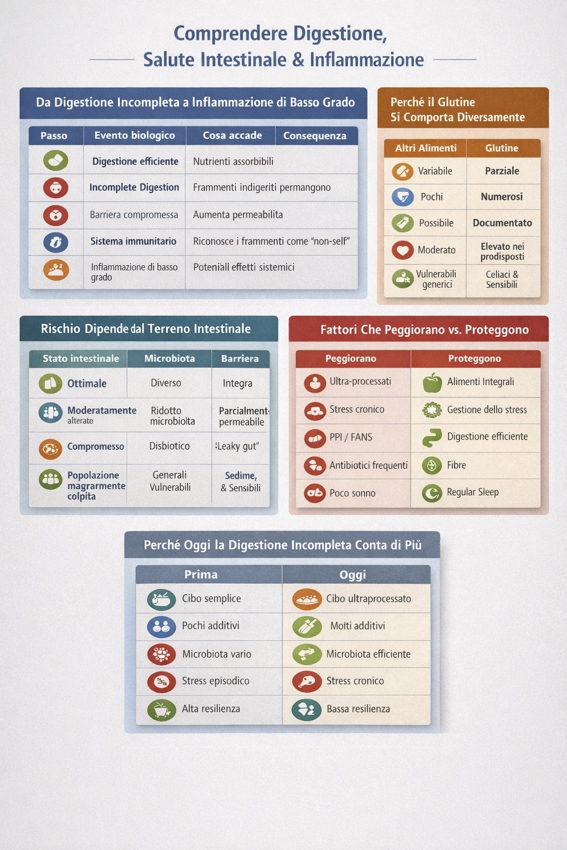
Recent scientific literature suggests that the presence of incompletely digested food within the intestinal lumen may, in specific contexts, contribute to low-grade chronic inflammatory processes and to increased intestinal permeability.
This relationship emerges particularly from the review by Riccio and Rossano (2019), which proposes that undigested food residues and the intestinal microbiota may cooperate in the pathogenesis of systemic inflammatory conditions, including those with possible neurological manifestations. In this model, loss of intestinal barrier integrity allows the passage of luminal molecules—food fragments, peptides, endotoxins, and microbial components—into the internal compartment, thereby promoting immune activation.
From this perspective, digestion is not merely a nutritional process, but also a fundamental biological defense mechanism.

The Concept of Dietary “Non-Self”
Before complete digestion, food retains a biological identity distinct from that of the host organism.
According to Riccio and Rossano:
Intact or partially digested food is biologically perceived as “non-self”
Only after complete breakdown into simple molecules (amino acids, monosaccharides, fatty acids) does it become “self”
The intestinal barrier therefore plays a crucial role in preventing the systemic passage of structurally complex material.
When this containment system weakens, partially digested food fragments may cross the epithelium and contribute to:
Intestinal inflammation
Chronic immune activation
Alterations of the microbiota
Potential systemic effects

Gastric Digestion as the First Level of Protection
Gastric digestion represents the first major filter against dietary antigenic load.
1. Protein Fragmentation
The acidic environment of the stomach:
Denatures proteins
Activates pepsin
Produces smaller, more manageable peptides
The more extensively proteins are hydrolyzed early, the smaller the amount of complex fragments reaching the small intestine.
This is relevant because: Macromolecular proteins are more immunogenic
Large peptides can interact with the mucosa
Excess protein residues increase intestinal digestive burden
2. Support of the Enzymatic Cascade
Adequate gastric acidity promotes efficient activation of pancreatic proteases (trypsin, chymotrypsin, elastase, carboxypeptidases).
If gastric digestion is inefficient:
Downstream enzymatic activity is reduced
The probability of incompletely degraded protein residues increases
Thus, the stomach functions as both a mechanical and chemical filter that reduces mucosal exposure to potentially immunogenic molecules.

Incomplete Digestion and Intestinal Permeability
When larger quantities of complex peptides reach the intestine:
Interaction with the epithelium increases
In the presence of a weakened barrier, the probability of translocation rises
Local immune activation is promoted
In “leaky gut” models, this is associated with:
Alterations of tight junctions
Increased paracellular permeability
Passage of peptides, endotoxins, and antigens
This may generate a vicious cycle:
Inefficient digestion → increased antigenic load → mucosal stress → increased permeability → increased inflammation

The Special Case of Gluten
Gluten represents a well-studied example of a partially digestible dietary protein.
Reviews by Cenni et al. (2023) and other studies show that:
Gluten is rich in proline and glutamine
Human digestion generates enzyme-resistant peptides
Some of these peptides can alter tight junctions via zonulin
In predisposed individuals (celiac disease, non-celiac gluten sensitivity):
Gluten peptides increase intestinal permeability
Facilitate bacterial translocation
Activate mucosal immune responses
It is important to emphasize that:
The human digestive system possesses proteases capable of degrading many gluten peptides
Nevertheless, some highly immunogenic fragments may persist
Therefore, gluten is not universally pathogenic, but may become clinically relevant in vulnerable contexts.


Irritable Bowel Syndrome (IBS) and Intestinal Permeability

by luciano

Abstract
Irritable bowel syndrome (IBS) is a complex and multifactorial disorder that cannot be explained by a single pathogenic mechanism. In recent years, increased intestinal permeability (“leaky gut”) has received considerable attention as a potential contributor to IBS pathophysiology. However, current scientific evidence indicates that barrier dysfunction affects only a subset of patients rather than representing a universal feature of the condition. Increased intestinal permeability is more frequently observed in diarrhea-predominant IBS (IBS-D) and post-infectious IBS (PI-IBS), whereas many patients exhibit a structurally intact intestinal barrier. In these cases, symptoms are more accurately attributed to alterations in the gut–brain axis, visceral hypersensitivity, disordered intestinal motility, and gut microbiota dysbiosis. An integrated understanding of these mechanisms is essential to move beyond reductionist models and to guide personalized therapeutic strategies.

Keywords
irritable bowel syndrome, IBS, intestinal permeability, leaky gut, IBS-D, post-infectious IBS, gut barrier, tight junctions, gut-brain axis, visceral hypersensitivity, gut microbiota, functional gastrointestinal disorders, chronic abdominal pain, low-grade inflammation, personalized IBS treatment

1. Introduction
Irritable bowel syndrome (IBS) is one of the most common functional gastrointestinal disorders, characterized by recurrent abdominal pain associated with changes in bowel habits, in the absence of identifiable structural abnormalities. Over the past two decades, the traditional view of IBS as a purely “functional” disorder has been progressively replaced by a more comprehensive model that integrates neurobiological, immune, microbial, and mucosal barrier factors.
Within this evolving framework, increased intestinal permeability—commonly referred to as “leaky gut”—has been proposed as a central mechanism in IBS pathogenesis. While this hypothesis has gained substantial attention, accumulating evidence suggests a more nuanced reality: increased permeability is present only in a subset of IBS patients and does not constitute a defining feature of the syndrome as a whole.

2. Evidence of Altered Intestinal Permeability in IBS
Numerous clinical and experimental studies have assessed intestinal barrier function in IBS using permeability tests (e.g., lactulose/mannitol ratio), urinary and plasma biomarkers, mucosal biopsies, and molecular analyses of tight junction proteins.
Collectively, these studies demonstrate that:
A significant but non-majority proportion of IBS patients exhibits increased intestinal permeability;
Barrier dysfunction is more commonly observed in the colon, although small intestinal involvement may occur in specific subgroups;
Increased permeability is not stable over time and may fluctuate in response to prior infections, dietary factors, psychological stress, and microbiota composition.
These findings indicate that intestinal barrier dysfunction represents an important pathogenic mechanism in IBS, but not an exclusive or universal one.

3. Differences Among IBS Subtypes
The heterogeneity of IBS becomes particularly evident when examining its clinical subtypes:
IBS-D (diarrhea-predominant IBS): This subtype is most frequently associated with increased intestinal permeability. Alterations in tight junction proteins and enhanced immune exposure to luminal antigens have been consistently reported.
Post-infectious IBS (PI-IBS): PI-IBS represents one of the strongest models linking IBS to barrier dysfunction. Following acute gastroenteritis, some patients develop chronic symptoms associated with increased permeability, low-grade mucosal inflammation, and mast cell activation.
IBS-C (constipation-predominant IBS): In most studies, intestinal permeability in IBS-C patients is comparable to that of healthy controls.
IBS-M (mixed subtype): Barrier function appears most consistently preserved in this group.
These differences underscore the absence of a single biological phenotype underlying IBS.

4. Molecular Mechanisms of Barrier Dysfunction
In IBS patients with increased permeability, several structural and functional alterations of the intestinal epithelial barrier have been documented, including:
Reduced expression or disorganization of tight junction proteins such as ZO-1, occludin, and claudins;
Increased paracellular passage of luminal molecules and antigens;
A correlation between the degree of barrier impairment and the severity of abdominal pain.
Loss of epithelial integrity facilitates contact between luminal antigens (bacterial or dietary) and the mucosal immune system, contributing to low-grade inflammatory responses.

5. Interaction Between Intestinal Permeability, Immune System, and Microbiota
In IBS subgroups characterized by barrier dysfunction, increased permeability may initiate a pathogenic cascade involving:
Activation of mast cells and other immune cells within the lamina propria;
Release of inflammatory and neuroactive mediators;
Sensitization of enteric nerve endings.
The gut microbiota plays a central role in this process. Qualitative and functional alterations of microbial communities can both contribute to barrier dysfunction and amplify immune and neural responses. Nevertheless, these mechanisms are not present in all IBS patients, reinforcing the concept of biological heterogeneity.

6. IBS Without Increased Intestinal Permeability
A crucial and often underestimated aspect of IBS is that many patients exhibit a structurally intact intestinal barrier. This is well documented in IBS-C and IBS-M subtypes, but also applies to a proportion of IBS-D patients.
In such cases, the leaky gut model alone is insufficient to explain symptom generation.

7. Alternative Mechanisms Independent of Permeability
7.1 Gut–Brain Axis Dysfunction
IBS is currently classified as a disorder of gut–brain interaction. Altered bidirectional communication between the enteric nervous system and the central nervous system can generate pain, urgency, and bowel habit changes in the absence of mucosal damage.
7.2 Visceral Hypersensitivity
Many IBS patients exhibit a reduced pain threshold to physiological intestinal stimuli. This phenomenon is attributed to:
Peripheral neural sensitization;
Central amplification of nociceptive signaling.
7.3 Altered Intestinal Motility
Disruptions in intestinal motor patterns may account for diarrhea, constipation, or alternating bowel habits without involving epithelial barrier dysfunction.
7.4 Dysbiosis Independent of Barrier Damage
Gut microbiota alterations may influence fermentation, gas production, bile acid metabolism, and neuroendocrine signaling even when intestinal permeability remains normal.

8. Clinical and Therapeutic Implications
Recognizing the heterogeneity of IBS has important clinical consequences:
In IBS-D and PI-IBS patients with documented increased permeability, interventions targeting barrier function (e.g., low-FODMAP diet, microbiota modulation, mucosal protective strategies) may be particularly beneficial;
In patients with normal permeability, therapeutic approaches focused on the gut–brain axis, visceral sensitivity modulation, and stress management are likely more appropriate.
A personalized approach is therefore essential.

9. Conclusions
IBS is a multifactorial and biologically heterogeneous condition. Increased intestinal permeability represents a documented and clinically relevant pathogenic mechanism, but it is not universal. In many patients, symptoms arise from neurofunctional, motor, or microbial alterations in the presence of an intact intestinal barrier.
An integrated perspective allows clinicians and researchers to move beyond reductionist models and to develop more effective diagnostic and therapeutic strategies.
The inflammatory, neurofunctional, microbial, and barrier-related mechanisms discussed here are explored in greater detail in the related articles referenced below.

Commented Bibliographic References (for Further Reading)
1. Camilleri M. et al. – Review on IBS and intestinal barrier function
A critical analysis of permeability alterations across IBS subtypes, emphasizing their non-universality.
2. Bischoff S.C. et al. – Intestinal permeability: mechanisms and clinical relevance
A foundational reference on molecular mechanisms of barrier function and clinical implications.
3. Spiller R., Garsed K. – Post-infectious IBS . Describes PI-IBS as a key model linking low-grade inflammation and increased permeability.
4. Barbara G. et al. – Mast cells and IBS. Seminal work on mast cell involvement in visceral pain and hypersensitivity.
5. Ford A.C. et al. – Systematic reviews on IBS pathophysiology
Integrated overview of microbiota, motility, and gut–brain axis mechanisms.
6. Drossman D.A. – Disorders of gut–brain interaction. A cornerstone reference framing IBS within modern gut–brain interaction paradigms.

The different mechanisms discussed—inflammatory, neuro-functional, microbial, and barrier-related—are examined separately in the related articles.