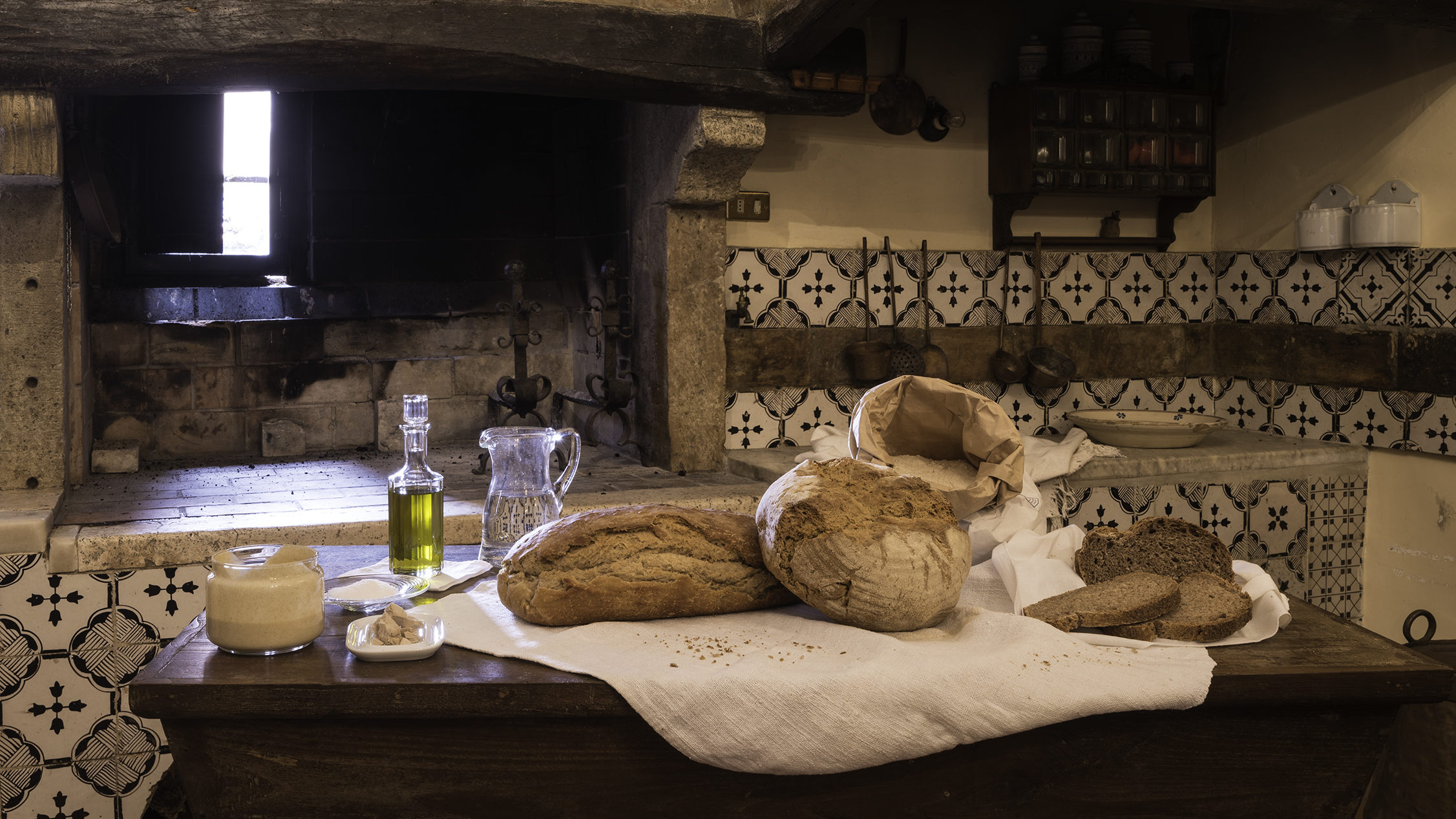
Review of the Scientific Literature on Whole Einkorn Wheat LiCoLi
Index
Part I – Microbiological and technological foundations of einkorn wheat LiCoLi
1. LiCoLi as a stable microbial ecosystem
2. The role of sourdough age
3. Microbiology of einkorn LiCoLi
4. Metabolic interactions in LiCoLi
5. Effects of fermentation on nutritional properties
6. Technological stability of mature einkorn LiCoLi
7. Technological implications for einkorn doughs
Part II – In depth analysis of mature whole einkorn wheat LiCoLi
Introduction
1. Typical microbiota of mature LiCoLi
1.1 Microbial community of LiCoLi
2. Specific microbiota of einkorn LiCoLi
3. Microbiological differences between einkorn and modern wheat
3.1 Effect of flour on the microbiome
4. Evolution of the microbiome over time
4.1 Initial dynamics
4.2 Stabilization in mature sourdoughs
5. Metabolic interactions between yeasts and bacteria
6. Technological implications of mature LiCoLi
7. Combined use of LiCoLi and baker’s yeast in bread doughs
7.1 Interaction between the two fermentative systems
7.2 Effects on fermentation dynamics
7.3 Effects on the aromatic profile
7.4 Technological effects on the dough
7.5 Practical considerations
7.6 Summary of the mixed fermentation system
Final conclusions
Related in depth study:
Proteolytic activity of whole einkorn wheat LiCoLi – lactic acid bacteria, bran enzymes and gluten protein hydrolysis. (scientific article published separately)
Abstract
Liquid Sourdough Starter (LiCoLi) obtained from einkorn wheat (Triticum monococcum) represents a complex fermentation system in which yeasts and lactic acid bacteria interact stably over time. In mature sourdoughs, maintained for years through regular refreshments, the microbial community reaches a relatively stable ecological balance with significant effects on fermentation, the aromatic profile and the technological properties of doughs. This article summarizes the available scientific knowledge on sourdough microbiology, with particular reference to whole einkorn fermentation and the phenomena observed in mature sourdough starters.
Methodological note: relationship between sourdough and LiCoLi
Most scientific studies on sourdough microbiology concern sourdough, a term used in the international literature to indicate flour and water doughs spontaneously fermented by communities of lactic acid bacteria (LAB) and yeasts.
LiCoLi (Liquid Sourdough Starter) represents a technological variant of this fermentation system characterized by high dough hydration, generally close to or above 100% relative to the weight of flour. From a microbiological point of view, LiCoLi can therefore be considered a liquid sourdough.
For this reason, many experimental findings obtained from traditional sourdoughs can also be applied to LiCoLi. However, high hydration may influence some ecological parameters of the fermentation system, including:
1. the fermentation rate
2. the diffusion of metabolites
3. the ratio between lactic acid and acetic acid
4. the growth dynamics of microbial populations.
In this article the term LiCoLi is used to indicate a liquid sourdough starter obtained from whole einkorn wheat flour, while references to the scientific literature on sourdough are considered applicable to this fermentation system due to the microbiological similarities between the two models.
1. LiCoLi as a stable microbial ecosystem
Sourdough is an ecosystem composed mainly of:
1. lactic acid bacteria (LAB)
2. osmotolerant yeasts
which live in metabolic symbiosis.
Lactic acid bacteria ferment sugars derived from starch degradation producing:
1. lactic acid
2. acetic acid
3. aromatic compounds.
Yeasts primarily produce:
1. CO₂, responsible for leavening
2. aromatic metabolites useful for flavor development.
Among the most common bacteria in mature LiCoLi are:
1. Fructilactobacillus sanfranciscensis
2. Limosilactobacillus pontis
3. Leuconostoc citreum
These microorganisms are particularly adapted to the acidic environment and to the availability of maltose typical of flour and water dough.
During fermentation several secondary metabolites are produced, including ethanol, organic acids (lactic, acetic and succinic acid), esters, aldehydes, diacetyl, acetoin and other volatile aromatic compounds that contribute to the development of the sensory profile of bread. Some lactic acid bacteria may also produce mannitol and exopolysaccharides, molecules that influence dough structure, moisture retention and the softness of the final product.
Table – Main metabolites produced in sourdough fermentation and their technological effects
|
Metabolite |
Main microorganism |
Effect on bread |
|
Lactic acid |
Lactic acid bacteria (e.g., Fructilactobacillus sanfranciscensis, Lactiplantibacillus plantarum) |
Dough acidification, improved shelf life, slightly sour flavor |
|
Acetic acid |
Heterofermentative lactic acid bacteria |
Sharper aroma, increased antimicrobial activity |
|
Ethanol |
Yeasts (Saccharomyces cerevisiae, Kazachstania humilis) |
Precursor of aromatic compounds; evaporates during baking |
|
CO₂ |
Yeasts |
Responsible for dough leavening and crumb structure |
|
Diacetyl |
Lactic acid bacteria |
Buttery aromatic notes |
|
Acetoin |
Lactic acid bacteria |
Contribution to the aromatic bouquet of bread |
|
Volatile esters |
Yeasts and LAB |
Fruity and complex aromas |
|
Mannitol |
Heterofermentative LAB |
Contribution to taste and redox metabolism |
|
Exopolysaccharides (EPS) |
Some LAB (Leuconostoc, Lactobacillus) |
Improves dough structure and crumb softness |
|
Succinic acid |
LAB and yeasts |
Contribution to complex taste and aroma stability |
2. The role of sourdough age
In sourdoughs maintained for many years the microbial community tends to stabilize. According to De Vuyst et al. (2023), continuous sourdough propagation favors the selective adaptation of specific lactic acid bacteria and yeasts, generating communities that are relatively stable over time.
Reference study
De Vuyst L., Leroy F. (2023). Sourdough production: fermentation strategies and microbial ecology
DOI: 10.1080/10408398.2021.1976100
The review highlights how the microbial communities of mature sourdoughs become highly stable thanks to ecological selection occurring during continuous refreshments.
This stability leads to:
1. more predictable fermentation
2. lower aromatic variability
3. better balance between acidity and fermentative activity.
3. Microbiology of einkorn LiCoLi
LiCoLi (Liquid Sourdough Starter) is a form of sourdough characterized by high hydration, generally equal to or greater than 100% relative to the weight of flour. From a microbiological point of view, it belongs to the category of sourdoughs, the term used in the international scientific literature to indicate doughs spontaneously fermented by communities of lactic acid bacteria (LAB) and yeasts.
The main difference between LiCoLi and solid sourdough concerns consistency and the water–flour ratio, which in LiCoLi favors greater diffusion of metabolites and a fermentative dynamic that is often faster and more homogeneous. Despite these technological differences, the two systems share a similar microbial structure and are both considered variants of traditional sourdough.
Einkorn (Triticum monococcum) has nutritional and structural characteristics different from modern wheat:
1. higher micronutrient content
2. different protein profile
3. greater presence of phenolic compounds.
Lactic fermentation of einkorn also promotes:
1. increase in mineral bioavailability
2. development of complex aromas
3. improvement of digestibility.
In the case of whole flours, the presence of bran also contributes to the introduction of greater initial microbial biodiversity and mineral compounds that may favor the development and stabilization of lactic acid bacteria and yeast communities in the sourdough starter.
Reference study
Çakır E., Arıcı M., Durak M.Z., Karasu S. (2020) Molecular and technological characterization of lactic acid bacteria in einkorn sourdough. DOI: 10.1007/s00217-020-03469-3
The study isolated 32 strains of lactic acid bacteria from spontaneous einkorn sourdough. Among the main ones:
1. Lactobacillus crustorum
2. Lactobacillus brevis
3. Lactobacillus plantarum
4. Pediococcus acidilactici
Some strains showed:
1. antifungal activity
2. phytase production (improves mineral absorption)
3. antimicrobial activity.
4. Metabolic interactions in LiCoLi
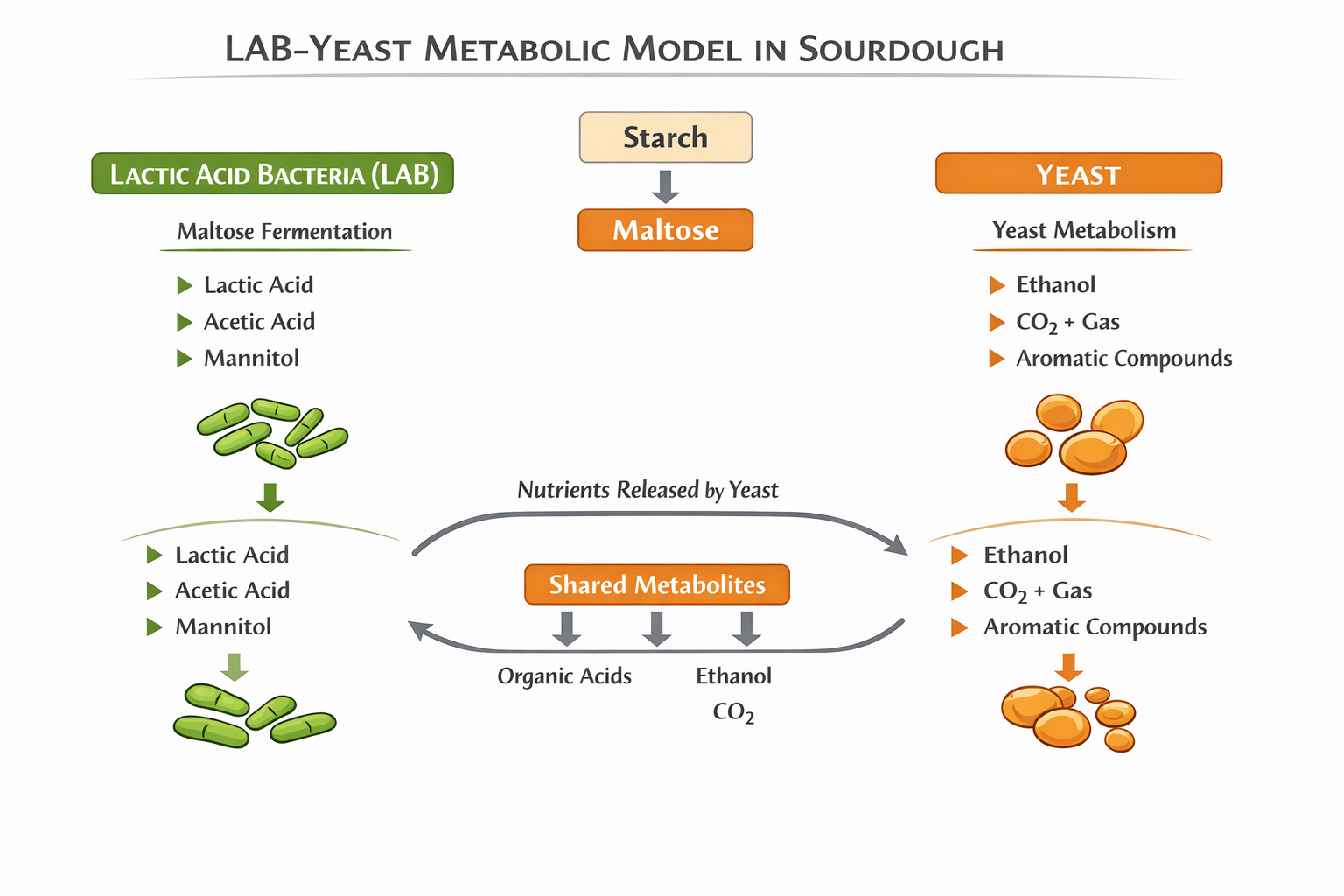
LiCoLi metabolism is driven by cooperation between lactic acid bacteria and yeasts. Lactic acid bacteria use sugars derived from starch degradation producing:
1. lactic acid
2. acetic acid
3. ethanol
4. mannitol
5. CO₂.
Yeasts primarily produce:
1. CO₂ for leavening
2. volatile aromatic compounds.
This metabolic cooperation stabilizes fermentation and contributes decisively to the sensory profile of bread.
Figure 1. Simplified metabolic model of interactions between lactic acid bacteria (LAB) and yeasts in LiCoLi. LAB mainly metabolize maltose and other sugars derived from starch producing lactic acid, acetic acid and other metabolites, while yeasts produce CO₂ and ethanol contributing to leavening and aromatic development of the dough.
5. Effects of fermentation on nutritional properties
Fermentation with sourdough can improve several nutritional aspects of bread.
According to Reffai et al. (2025):
1. lactic fermentation reduces the glycemic index of bread
2. improves the bioavailability of nutritional compounds
3. increases the production of bioactive metabolites.
Other studies indicate that fermentation can increase the antioxidant activity of fermented cereals thanks to the transformation of phenolic compounds.
6. Technological stability of mature einkorn LiCoLi
In mature sourdough starters, the following features are often observed:
1. slower but stable fermentation
2. balanced acidity
3. greater tolerance to long fermentations.
This stability derives from the natural selection of microbial strains adapted to the fermentation environment of LiCoLi, characterized by:
1. high tolerance to acidity
2. efficient maltose metabolism
3. ability to compete with other microorganisms.
In many cases the dominant lactic acid bacteria remain stable for years in the sourdough culture.
7. Technological implications for einkorn doughs
Einkorn has a weaker gluten network compared with modern wheat.
Fermentation with sourdough:
1. stabilizes dough structure
2. produces organic acids that improve the strength of the protein network
3. contributes to bread shelf life.
Furthermore, some lactic acid bacteria produce exopolysaccharides, which improve the structure and softness of the final product.
Conclusions
LiCoLi obtained from whole einkorn wheat flour represents a complex and highly adapted fermentation system. In mature sourdough starters microbial selection generates stable communities of lactic acid bacteria and yeasts that:
1. improve bread aroma
2. stabilize fermentation
3. increase the nutritional value of the product.
The combination of whole einkorn and mature sourdough therefore constitutes an interesting model of traditional cereal fermentation with relevant technological and nutritional implications.
The previous sections have illustrated the main microbiological and technological aspects of LiCoLi obtained from einkorn wheat. In the following part some specific aspects of the microbiome of mature sourdough starters are explored in greater depth, with particular attention to the characteristics of whole einkorn wheat LiCoLi, the differences compared with other cereals and the evolutionary dynamics of microbial communities over time.
Part II – In-depth analysis of mature whole einkorn wheat LiCoLi
(stable microbiota, differences between flours and microbial evolution over time)