Header Image - Gluten Light

Yearly Archives

39 Articles

FODMAP: Food Composition and Definition of Tolerable Cutoff Values

by luciano

Abstract

The low-FODMAP diet represents an established dietary strategy for the management of irritable bowel syndrome (IBS). However, it should be considered an evidence-based strategy for symptom control rather than a curative therapy for the disease. In recent years, numerous clinical studies, systematic reviews and meta-analyses have confirmed the effectiveness of this approach in reducing gastrointestinal symptoms and improving patients’ quality of life.

The dietary approach is based on limiting poorly absorbed fermentable carbohydrates (FODMAPs), including oligosaccharides (fructans and galacto-oligosaccharides), disaccharides (lactose), monosaccharides (fructose in excess of glucose), and polyols (sorbitol and mannitol).

The development of the low-FODMAP diet required not only detailed data on food composition but also the definition of cutoff values to classify foods as low in FODMAPs. In recent years, the expansion of food composition databases and the analysis of new industrial and regional products have improved the international standardization of the diet.

Recent studies indicate that approximately half, and in some cases up to two-thirds of patients with IBS experience improvement in symptoms after applying the low-FODMAP diet, particularly abdominal pain, bloating and abdominal distension [1,2,3]. However, the modern approach to the diet emphasizes a temporary restriction followed by a phase of food reintroduction and personalization.

1. Food Composition and Classification of FODMAPs

FODMAPs (Fermentable Oligo-, Di-, Mono-saccharides And Polyols) include short-chain carbohydrates that are poorly absorbed in the small intestine and easily fermented in the colon.

These molecules present two main characteristics:

  1. Poor intestinal absorption

  2. High fermentability by the intestinal microbiota

Fermentation produces gas and osmotic compounds that can cause intestinal distension, pain, and alterations in intestinal motility [7].

The main categories of FODMAPs include:

1 – oligosaccharides (fructans and galacto-oligosaccharides)

2 – disaccharides (lactose)

3 – monosaccharides (fructose in excess of glucose)

4 -polyols (sorbitol and mannitol)

These carbohydrates are widely present in commonly consumed foods, including fruit, vegetables, cereals, dairy products and legumes [5]. Recent studies indicate that the average daily intake of FODMAPs in the general population is approximately 20 g per day, without substantial differences between healthy individuals and patients with functional gastrointestinal disorders [4].

2. Definition of FODMAP Cutoff Values

To apply the low-FODMAP diet it is necessary to define threshold values useful for classifying foods as low (“low FODMAP”) or high (“high FODMAP”) in fermentable carbohydrates.

In the initial development of the diet, these values were established considering several factors:

the specific FODMAP content in foods typical portion sizes consumed in a single meal
clinical observations of the frequency with which certain foods induced symptoms in patients with irritable bowel syndrome (IBS).

Based on these criteria, conservative threshold values were proposed with the aim of allowing the combined consumption of several foods classified as low-FODMAP within the same meal without exceeding levels generally associated with the onset of symptoms.

In early controlled dietary studies on the low-FODMAP diet it was suggested that a total intake of approximately 0.5 g of FODMAPs per meal (excluding lactose) was generally well tolerated during the initial restriction phase.

However, in more recent clinical applications this value should be interpreted as an operational reference derived from experimental studies rather than as a universally applicable threshold, since individual tolerance to FODMAPs may vary significantly among patients.

More recent clinical evidence nevertheless supports the overall effectiveness of the low-FODMAP approach. Numerous systematic reviews and meta-analyses of randomized trials have shown that the low-FODMAP diet significantly reduces the severity of IBS symptoms, particularly abdominal pain, bloating and distension, and contributes to improving patients’ quality of life [1,2].

In a review of meta-analyses including more than 3,700 patients with IBS, the low-FODMAP diet showed a significant reduction in the severity of gastrointestinal symptoms compared with other dietary interventions or standard dietary recommendations [1].

These results confirm that defining cutoff values of FODMAPs in foods represents a useful tool for designing the diet, although flexible and personalized application is required in clinical practice.

3. Coexistence of Gluten and FODMAPs in Cereal Foods

Many foods containing gluten also contain high levels of FODMAPs, particularly fructans. Consequently, the reduction in symptoms observed in patients who eliminate gluten may in fact be attributable to reduced FODMAP intake rather than to the removal of gluten itself. Recent studies indicate that the low-FODMAP diet often proves more effective than a simple gluten-free diet in controlling IBS symptoms [6]. However, not all gluten-free products are necessarily low in FODMAPs. Their final composition depends on:

1 -the ingredients used
2 -industrial food processing techniques.

4. Effect of Food Processing Technologies

The final FODMAP content of foods can be significantly modified by technological processing.

Among the processes that most influence FODMAP levels are:

1 – fermentation
2 – cooking
3 – hydration and thermal treatment
4 -lactic fermentation.

A relevant example is sourdough bread, in which lactic acid bacteria metabolize part of the fructans present in flour, reducing the final FODMAP content. Similarly, some processing techniques can reduce the galacto-oligosaccharide content in legumes. These findings highlight that the FODMAP composition of foods depends not only on the raw ingredient but also on the technological processing used.

5. Recent Developments in Low-FODMAP Diet Research

In recent years the low-FODMAP diet has been the subject of numerous clinical studies and meta-analyses.

Recent evidence indicates that:

1 – the low-FODMAP diet is one of the most effective dietary interventions for IBS [2]
2 – approximately 50–70% of patients experience symptom improvement [7]
3 – the main effects concern abdominal pain, bloating and distension [3].

In a network meta-analysis of randomized trials, the low-FODMAP diet was identified as the most effective dietary strategy for the overall control of IBS symptoms [2].

6. Effects on the Intestinal Microbiota

A topic of considerable interest in recent years concerns the impact of the low-FODMAP diet on the intestinal microbiota. A meta-analysis of randomized clinical studies showed that the diet may lead to a reduction in the abundance of bifidobacteria, without significantly altering the overall diversity of the intestinal microbiota [3]. This observation has led to the recommendation that the restrictive phase of the diet should be limited in time and followed by a controlled reintroduction phase.

7. Evolution of the Dietary Model: Restriction, Reintroduction and Personalization

The modern approach to the low-FODMAP diet is based on three phases:

  1. restriction phase (2–6 weeks)

  2. reintroduction phase of individual FODMAP groups

  3. long-term personalization phase.

The goal is not the permanent elimination of FODMAPs but the identification of the specific categories that trigger symptoms in individual patients [9]. This approach allows patients to maintain a more varied and nutritionally balanced diet.

Conclusions

In recent years the low-FODMAP diet has become one of the most effective dietary approaches for the management of irritable bowel syndrome. Progress in the characterization of food composition, the expansion of international databases, and new clinical evidence have improved the understanding of the pathophysiological mechanisms associated with FODMAPs.

Recent evidence also highlights the importance of:

1 – applying the diet under professional supervision
2 – limiting the restrictive phase
3 – progressively personalizing dietary intake.

Main High-FODMAP Foods (to be reduced):

  1. Fruit: Apples, pears, apricots, cherries, peaches, watermelon, plums.

  2. Vegetables: Garlic, onion, asparagus, broccoli, cauliflower, mushrooms, artichokes.

  3. Dairy: Milk, yogurt, and fresh cheeses containing lactose.

  4. Legumes: Chickpeas, lentils, beans.

  5. Grains: Wheat, rye, barley.

  6. Sweeteners: Honey, high-fructose corn syrup, sorbitol, mannitol.

Veronesi Foundation

Main Low-FODMAP Foods (allowed):

  1. Fruit: Bananas, blueberries, strawberries, kiwi, grapes, oranges, melon.

  2. Vegetables: Carrots, green beans, cucumbers, lettuce, zucchini, potatoes, tomatoes.

  3. Dairy: Lactose-free dairy products, aged cheeses (such as Parmesan).

  4. Grains: Rice, oats, corn, quinoa, gluten-free pasta/bread.

  5. Proteins: Meat, fish, eggs.

Bibliografia scientifica recente

[1] Black C.J., Staudacher H.M., Ford A.C.
Efficacy of a Low-FODMAP Diet in Irritable Bowel Syndrome: Systematic Review and Network Meta-analysis.
Gut. 2022;71(6):1117-1126.
DOI: 10.1136/gutjnl-2021-325214

[2] Whelan K., Martin L.D., Staudacher H.M., Lomer M.C.E.
The Low FODMAP Diet in the Management of Irritable Bowel Syndrome: Recent Advances and Clinical Applications.
Current Opinion in Gastroenterology. 2022;38(2):101-108.
DOI: 10.1097/MOG.0000000000000786

[3] So D., Staudacher H.M., Lomer M.C.E., Whelan K.
Effects of a Low-FODMAP Diet on the Colonic Microbiome in Irritable Bowel Syndrome: A Systematic Review and Meta-analysis.
American Journal of Clinical Nutrition. 2022;116(1):225-236.
DOI: 10.1093/ajcn/nqac164

[4] Zanzer Y.C., Whelan K., Staudacher H.M.
Habitual FODMAP Intake and Dietary Patterns: A Systematic Review and Meta-analysis.
Journal of Functional Foods. 2023;100:105914.
DOI: 10.1016/j.jff.2023.105914

[5] Skodje G.I., Sarna V.K., Minelle I.H. et al.
Fructan, Rather Than Gluten, Induces Symptoms in Patients With Self-Reported Non-Celiac Gluten Sensitivity.
Gastroenterology. 2018;154(3):529-539.
DOI: 10.1053/j.gastro.2017.10.040

[6] Loponen J., Gänzle M.G.
Use of Sourdough Fermentation to Reduce FODMAP Content in Wheat-Based Products.
Food Microbiology. 2018;72:93-101.
DOI: 10.1016/j.fm.2017.07.003

[7] Staudacher H.M., Whelan K.
Mechanisms and Efficacy of Dietary FODMAP Restriction in Irritable Bowel Syndrome.
Nature Reviews Gastroenterology & Hepatology. 2023;20(3):165-182.
DOI: 10.1038/s41575-023-00742-9

[8] Varney J., Muir J.G., Gibson P.R.
Twenty Years of FODMAP Research: Progress and Future Directions.
Journal of Gastroenterology and Hepatology. 2024.
DOI: 10.1111/jgh.16523

[9] Halmos E.P., Gibson P.R.
Dietary FODMAP Reduction and Gastrointestinal Symptoms in Irritable Bowel Syndrome: Updated Evidence.
Clinical Gastroenterology and Hepatology. 2024.
DOI: 10.1016/j.cgh.2024.02.012

[10] Bogdanowska-Charkiewicz D., et al.
Low-FODMAP Diet in Irritable Bowel Syndrome: Umbrella Review of Meta-analyses.
Nutrients. 2025;17:1545.
DOI: 10.3390/nu17091545

Studi fondamentali del gruppo Monash

[11] Halmos E.P., Power V.A., Shepherd S.J., Gibson P.R., Muir J.G.

A Diet Low in FODMAPs Reduces Symptoms of Irritable Bowel Syndrome.
Gastroenterology. 2014;146(1):67-75.
DOI: 10.1053/j.gastro.2013.09.046

Abstract (summary)

  1. Randomized controlled trial conducted by the Monash group comparing a typical Australian diet with a low-FODMAP diet in patients with IBS.

  2. The results demonstrated a significant reduction in gastrointestinal symptoms, particularly abdominal pain, bloating, and flatulence, in patients following the low-FODMAP diet.

  3. This study represents one of the most frequently cited clinical trials supporting the effectiveness of the diet.

[12] Varney J., Barrett J., Scarlata K., Catsos P., Gibson P., Muir J.

FODMAPs: Food Composition, Defining Cutoff Values and International Application.
Journal of Gastroenterology and Hepatology. 2017;32(S1):53-61.
DOI: 10.1111/jgh.13698

Abstract (summary)

  1. Landmark article describing the development of methodologies for analyzing the FODMAP composition of foods and defining the threshold values used to classify foods as low-FODMAP.

  2. The paper also discusses the implications of differences between national food systems and the importance of updated databases for the international application of the diet.

Final note

  1. These two studies are among the most cited in the FODMAP literature.

  2. Halmos 2014 → fundamental clinical trial.

  3. Varney 2017 → definition of cutoff values and food composition.

Almost all recent reviews (including those from 2023–2024) continue to cite them.

Biological Effects of Food Additives on the Gut Microbiota, Intestinal Barrier, and Inflammation

by luciano

Abstract

In recent years, scientific interest has grown regarding the possible role of certain food additives, particularly emulsifiers, thickeners, and stabilizers, in modulating the human intestinal environment. Several experimental studies have suggested that compounds such as carboxymethylcellulose, polysorbate-80, and carrageenan may influence the gut microbiota, mucus structure, epithelial permeability, and certain pro-inflammatory signals.

In some models, these alterations are also associated with metabolic phenotypes consistent with increased adiposity, insulin resistance, or worsening of colitis. However, the strength of the evidence varies greatly depending on the type of study: the most consistent evidence comes from mice and other preclinical models; in vitro/ex vivo studies are useful for identifying mechanisms; data in humans are still relatively limited, short-term, and not always consistent. (PubMed)

Overall, the literature suggests that some additives may contribute to biological mechanisms potentially relevant to intestinal health, while not by themselves representing the cause of the chronic diseases associated with ultra-processed foods.

In subjects who present genetic predispositions, immunological vulnerabilities, or already existing clinical conditions — even when not yet clearly manifest at the clinical level — adopting a criterion of nutritional caution does not represent an excess of prudence, but rather an attitude of preventive responsibility. Such an approach does not necessarily imply the indiscriminate elimination of products containing additives from the diet, but rather a careful and personalized evaluation of the individual’s clinical, metabolic, and nutritional context.

Introduction

In recent years, a growing portion of the scientific literature has begun to examine the possible role of certain food additives in modulating the intestinal environment. The focus is not generically on “all additives,” but rather on specific compounds widely used in industrial and ultra-processed products, especially carboxymethylcellulose (CMC), polysorbate-80 (P80), carrageenan, and, in some contexts, also ingredients such as maltodextrin, mono- and diglycerides, lecithins, and other agents with a technological function. (PubMed)

The biological hypothesis underlying this line of research is that some of these compounds may act at one or more levels of the intestinal ecosystem. In particular, they may influence:

  • the composition of the gut microbiota;

  • the metabolic function of the microbiota;

  • the structure of intestinal mucus;

  • epithelial permeability;

  • the resulting immune activation or low-grade inflammation.

In some experimental models, these alterations are also associated with metabolic changes consistent with increased adiposity, insulin resistance, or worsening of colitis. However, the strength of the evidence varies markedly depending on the type of study. The most consistent evidence comes from mice and other preclinical models; in vitro and ex vivo studies are particularly useful for identifying mechanisms; human data, by contrast, are still relatively limited, short-term, and not always consistent. (PubMed)

For this reason, the most accurate formulation is not that “additives directly cause” obesity, diabetes, cancer, or mental disorders, but rather that some specific additives have shown the capacity to modify plausible biological mechanisms — microbiota, mucus, intestinal barrier, pro-inflammatory signals — that may contribute, in certain contexts, to pathological processes. The transition from biological plausibility to causal clinical proof in humans, however, is not yet complete. (PubMed)

Meaning of the Expression “Possible Role” in the Clinical Context

“In the clinical field, it is relatively rare to be able to attribute with absolute certainty the effect of a single product, additive, or dietary factor on human health. This is due to the fact that individuals’ physiological conditions and the dietary and environmental context in which exposure occurs are highly variable. These factors can significantly influence the biological response and make the interpretation of observed effects more complex. For this reason, scientific literature often uses expressions such as ‘possible role,’ ‘association,’ or ‘plausible mechanism,’ which indicate the presence of experimental or observational evidence, but not necessarily a definitively demonstrated causal relationship.”

Index

A – Emulsifiers, other additives
B – Food colorings
C – Conclusions

A – Emulsifiers, Other Additives

Why the Gut Microbiota and the Intestinal Barrier Are So Important

The intestine is not merely an organ responsible for nutrient absorption. It is a complex ecosystem composed of:

  1. intestinal epithelium;

  2. tight junctions, that is, the structures that hold cells together;

  3. mucus layer, which functions as a physical and chemical barrier;

  4. gut microbiota, that is, the set of resident microorganisms;

  5. mucosal immune system, which monitors and regulates interactions with microbes and antigens. (PubMed)

When the mucus is intact and the microbiota is relatively balanced, bacteria remain at a certain distance from the epithelium, produce useful metabolites such as short-chain fatty acids (SCFAs), and help maintain a well-regulated immune response. If, on the other hand, the mucus becomes thinner, permeability increases, or the microbiota acquires more pro-inflammatory characteristics, contact between bacteria and the mucosa may increase, as may the production of immunostimulatory molecules such as flagellin and lipopolysaccharide (LPS), and the likelihood of a persistent inflammatory response. (PubMed)

This is the framework within which studies on emulsifiers are situated: not so much as acute toxins, but as substances capable, in some cases, of remodeling the intestinal ecosystem in a potentially unfavorable way. (PubMed)

1. In Vitro and Ex Vivo Evidence

Hydrolysis of Gluten, Dough Fermentation, and Digestibility

by luciano

(Role of yeasts, enzymes, lactic acid bacteria, and intestinal microbiota)

General Index

  1. Structure of gluten

  2. What gluten hydrolysis is

  3. The role of baker’s yeast

  4. Enzymes naturally present in flour

  5. Biochemical processes in dough

  6. Short fermentation (4 hours) with baker’s yeast

  7. Prolonged fermentation (12 hours) with baker’s yeast

  8. Why sourdough is different

  9. Microbiology of sourdough

  10. Effects of lactic fermentation

  11. Degradation of immunogenic gluten peptides

  12. Reduction of FODMAPs

  13. Role of temperature in fermentation

  14. Role of dough hydration

  15. Difference between leavening and maturation

  16. Why too much hydrolysis worsens structure

  17. The role of flour strength (W)

  18. How much gluten is actually hydrolyzed in studies

  19. Human digestion of gluten

  20. Actual digestibility and sensation of lightness

  21. The myth of 48–72 hour maturation

  22. Why some pizzas cause bloating

  23. Role of the intestinal microbiota

  24. Gluten or fructans: what causes the symptoms

  25. Reduction of FODMAPs with sourdough

  26. Individual variability in digestion

  27. General scheme of the biochemical processes of dough

  28. Main chemical reactions during fermentation

  29. Evolution of dough structure during fermentation

  30. Percentages of gluten degradation in experimental studies

  31. General conclusions

  32. Bibliography

1 . Structure of gluten [1][3]
Gluten is a protein complex present in wheat that forms when flour is hydrated and subjected to mixing. The main proteins involved are gliadins and glutenins, which belong to the class of wheat storage prolamins.

Gliadins are monomeric proteins soluble in hydroalcoholic solutions and are mainly responsible for the viscosity and extensibility of the dough.

Glutenins, on the other hand, are polymeric proteins composed of high- and low-molecular-weight subunits (HMW-GS and LMW-GS) linked together by disulfide bonds. These proteins give the dough elasticity and strength.

During mixing, the interactions between gliadins and glutenins lead to the formation of a three-dimensional viscoelastic protein network capable of retaining the gases produced during fermentation and responsible for the structure of baked products [1].

A fundamental role in gluten structure is played by GMP (Glutenin Macropolymer), large aggregates of high-molecular-weight glutenins that constitute the insoluble fraction of gluten. GMP represent the structural backbone of the gluten network and are strongly correlated with flour strength, dough tenacity, and baking quality [3].

The stability of the gluten network mainly depends on several intermolecular interactions, including:
• disulfide bonds between glutenin subunits
• hydrogen bonds between polar groups of proteins
• hydrophobic interactions between nonpolar regions of protein chains.

2 . What gluten hydrolysis is [2]
Hydrolysis consists of the cleavage of peptide bonds in proteins with the formation of smaller peptides.

In the case of gluten, the process is catalyzed by proteolytic enzymes (proteases), which use a water molecule to break the peptide bond of the protein chain.

In general terms, the reaction can be schematized as:

protein + H₂O —(protease)→ smaller peptides

Hydrolysis modifies the structure of the gluten network and the rheological properties of the dough. In particular:

When hydrolysis is moderate:
• dough extensibility increases
• workability improves

When hydrolysis is excessive:
• the gluten network weakens
• the ability to retain fermentation gases is reduced [2].

3. The role of baker’s yeast [4]
Saccharomyces cerevisiae is responsible for alcoholic fermentation.

Metabolic reaction: glucose → CO₂ + ethanol.

Effects:
• dough growth
• aromatic development.

Yeast produces limited amounts of proteases and therefore does not significantly contribute to gluten degradation [4].

4. Enzymes naturally present in flour [4][5]
Flour contains several endogenous enzymes that play a fundamental role in the biochemical transformations occurring during mixing and fermentation. These enzymes contribute to the controlled degradation of the main macromolecules of flour, particularly starches and proteins.

Among the most important enzymes are amylases, which catalyze the degradation of starch. In particular, starch is progressively hydrolyzed according to the sequence:

starch → maltose → glucose

The simple sugars produced represent an energy source for yeasts, which use them in fermentative metabolism to produce carbon dioxide (CO₂) and other metabolites involved in dough development [4].

Another important group of enzymes is represented by proteases, which act on gluten proteins. These enzymes progressively hydrolyze protein chains according to the process:

gluten → polypeptides → peptides

This partial degradation of proteins modifies the structure of the gluten network, making the dough more extensible and workable.

Taken together, the reactions catalyzed by amylases and proteases contribute to the processes of enzymatic maturation of the dough, which influence the structure, fermentability, and final characteristics of the baked product [5].

5. Biochemical processes in dough [4][5]
When flour and water are mixed, a series of physical, chemical, and microbiological processes are activated that determine the evolution of the dough over time. In particular, three main interconnected systems are activated:
a. formation of the gluten network
b. enzymatic activity of the flour
c. microbial fermentation
Hydration of the flour allows gluten proteins (gliadins and glutenins) to absorb water and interact with one another, progressively forming a three-dimensional protein network that gives the dough elasticity and extensibility.
At the same time, the enzymes naturally present in flour, such as amylases and proteases, are activated and begin to degrade starches and proteins respectively, contributing to the processes of dough maturation.
Finally, the yeasts and any lactic acid bacteria present in the dough metabolize the available sugars, producing carbon dioxide (CO₂) and other metabolites, responsible for the increase in dough volume and the development of aromatic compounds.
Under normal conditions, the processes in the dough follow a typical sequence:
a. hydration of proteins and initial formation of the gluten network
b. activity of amylases, with starch degradation and production of fermentable sugars
c. yeast fermentation, with production of CO₂
d. enzymatic maturation, which progressively modifies the structure of starches and proteins.
These processes occur simultaneously and interdependently, influencing the structure of the dough, its workability, and the characteristics of the final product.

6. Short fermentation (about 4 hours) [6]
During a short fermentation, as in baking processes with reduced times, the predominant activity is that of yeasts, which metabolize the available sugars producing carbon dioxide (CO₂) and ethanol. The CO₂ remains trapped in the gluten network and causes the increase in dough volume.
Under these conditions, the time available for enzymatic maturation processes is limited. Consequently, the enzymes present in flour, particularly proteases, have little time to act on gluten proteins.
The result is that:
a. the hydrolysis of gluten proteins remains very limited
b. the structure of the gluten network undergoes few modifications
c. the dough maintains a relatively compact and little-modified protein structure [6].

7. Prolonged fermentation (about 12 hours) [5].
During longer fermentations, the dough remains for a longer time under the combined action of enzymes and microorganisms, allowing a more complete development of maturation processes. In particular, the proteases present in flour begin to hydrolyze some chains of gluten proteins, partially breaking peptide bonds. This process leads to a reduction in the rigidity of the gluten network and makes the dough more extensible and workable.
At the same time, amylases continue to degrade starch producing simpler sugars, which can be used by yeasts in the fermentative process. During fermentation a slight decrease in the pH of the dough is also observed, due to the production of organic acids by microorganisms. This lowering of pH can favor the activity of some enzymes, further contributing to the processes of enzymatic maturation of the dough [5].

8. Why sourdough is different [5][8]
Sourdough contains:
• yeasts
• lactic acid bacteria.

Lactic acid bacteria produce:
• lactic acid
• acetic acid.

This acidification increases the activity of proteases and the degradation of gluten [5].

Some lactic acid bacteria possess complex proteolytic systems, including enzymes such as prolyl endopeptidases and endopeptidases specific for proline residues, which are able to further degrade proline-rich peptides, including some immunogenic fragments of gluten.

Among the microorganisms most studied for this activity are species belonging to the genera Lactobacillus, Lactiplantibacillus and Lacticaseibacillus, including:
• Lactobacillus sanfranciscensis
• Lactobacillus plantarum (now Lactiplantibacillus plantarum)
• Lactobacillus brevis
• Lactobacillus helveticus
• Lactobacillus paracasei

These microorganisms, often present in sourdough starters, possess proteolytic systems capable of hydrolyzing proline-rich peptides and contributing to the degradation of immunogenic sequences of gliadin, including fragments derived from the 33-mer peptide, reducing their immunogenic potential [8].

9. Microbiology of sourdough

Sourdough hosts a complex and relatively stable microbial community, composed mainly of yeasts and lactic acid bacteria, which coexist in a natural fermentation system. The balance between these microorganisms depends on several factors, including type of flour, dough hydration, temperature, and refreshment method.

Among the yeasts most frequently associated with sourdough are:
• Saccharomyces cerevisiae
• Candida milleri (now often classified as Kazachstania humilis)

These microorganisms are mainly responsible for the production of carbon dioxide (CO₂) through sugar fermentation, contributing to the increase in dough volume.

Alongside yeasts, sourdough contains numerous lactic acid bacteria, including:
• Lactobacillus sanfranciscensis
• Lactobacillus plantarum
• Lactobacillus brevis

Lactic acid bacteria metabolize sugars producing lactic acid and acetic acid, contributing to the development of dough acidity and the formation of aromatic compounds characteristic of natural fermentation [7].

10. Effects of lactic fermentation [5][7]

Lactic fermentation plays an important role in the biochemical evolution of the dough during sourdough fermentation. One of the main effects is the progressive acidification of the dough, due to the production of lactic acid and acetic acid by lactic acid bacteria. The decrease in pH influences several biochemical and technological processes. In particular, acidification can favor greater activity of some enzymes present in flour, such as amylases and proteases, contributing to the processes of enzymatic maturation of the dough. In addition, the presence of lactic acid bacteria and their proteolytic systems can lead to greater degradation of proteins, including a partial hydrolysis of gluten proteins. This process can modify the structure of the protein network, making the dough more extensible and workable. Overall, lactic fermentation contributes not only to the development of acidity, but also to the formation of aromas, the modification of dough structure, and the final characteristics of the baked product.

11. Degradation of immunogenic peptides [8]

During During gastrointestinal digestion, gluten proteins are partially hydrolyzed by digestive enzymes such as pepsin, trypsin, and chymotrypsin. However, due to the high content of proline and glutamine, some peptide sequences are particularly resistant to enzymatic degradation.:
This resistance to digestion is largely due to the high content of proline residues in gluten proteins, which makes many peptide bonds poorly accessible to human digestive enzymes.

Among Among these fragments, some peptides are immunogenic, that is, capable of activating the immune response in subjects affected by celiac disease. One of the most studied is the 33-mer peptide derived from α-gliadin, known for its high resistance to digestion and for the presence of several epitopes recognized by the immune system. Its resistance derives from the high content of proline and glutamine, which makes the peptide poorly susceptible to human digestive enzymes.

In addition to immunogenic peptides, resistant but non-immunogenic peptides are also formed during gluten digestion, which are not capable of activating the typical immune response of celiac disease. These fragments derive from the partial degradation of gluten proteins and can persist in the gastrointestinal tract.

In individuals with alterations in gastrointestinal functionality, such as in the case of a compromised intestinal barrier or microbiota dysbiosis, such peptides may contribute to undesirable biological effects. In particular, some studies suggest that they may interact with the intestinal microbiota, influence the permeability of the epithelial barrier, and modulate, albeit indirectly, some local immune responses.

Even undigested non-immunogenic peptides can persist in the intestinal lumen and participate in microbial fermentation processes or interact with the microbiota. Although they do not activate the typical immune response of celiac disease, their presence may contribute, in predisposed subjects, to the appearance of gastrointestinal symptoms or to a sensation of reduced digestibility.

12. Reduction of FODMAPs and modification of other wheat compounds [9]

Wheat contains fructans, carbohydrates belonging to the category of FODMAPs (Fermentable Oligo-, Di-, Monosaccharides and Polyols). These compounds may be poorly digested in the small intestine and fermented by the intestinal microbiota, causing gastrointestinal symptoms in sensitive individuals. During lactic fermentation, some microorganisms are able to metabolize fructans through enzymes such as fructanases, converting them into simpler sugars that are subsequently transformed into organic acids (mainly lactic acid and acetic acid):
fructans → simple sugars → organic acids

13. Role of temperature [4]

Temperature Temperature is one of the main factors that influence the speed and balance of the processes occurring in dough, particularly microbial fermentation and enzymatic activity.
At higher temperatures, the metabolic activity of yeasts and bacteria increases, resulting in faster fermentation and more rapid production of CO₂. However, fermentation that is too fast can reduce the time available for enzymatic maturation processes, with less degradation of starches and proteins.
Conversely, at lower temperatures fermentation occurs more slowly. This slowing of microbial activity allows the enzymes present in flour (such as amylases and proteases) to act longer on the dough, favoring greater enzymatic maturation.

Consequently:
• high temperatures → fast fermentation and shorter processing times;

• low temperatures → slower fermentation and greater development of maturation processes.

For this reason, modern baking techniques often use controlled low-temperature fermentations, which allow better management of production times and favor the development of structure, aromas, and rheological characteristics of the dough.

14. Role of hydration [5]

Dough hydration, that is, the amount of water present relative to the flour, represents a fundamental factor in the processes that occur during mixing and fermentation.

Water performs several technological and biochemical functions, including:

• favoring the molecular mobility of dough components

• allowing the development of the gluten network through hydration of gluten proteins

• facilitating the activity of enzymes present in flour and produced by microorganisms.

An adequate availability of water allows enzymes, such as amylases and proteases, to act more effectively on starches and proteins, favoring the maturation processes of the dough.

More hydrated doughs therefore tend to show greater enzymatic activity and a more extensible structure, allowing more effective maturation during fermentation. In addition, greater hydration can favor the formation of a more alveolated structure in the final product.

Conversely, doughs with low hydration are generally more compact and limit the mobility of molecules and enzymatic activity, partly reducing the intensity of maturation processes [5].

15. Difference between leavening and maturation [4][5]

In the baking process it is important to distinguish between leavening and maturation, two phenomena that often occur simultaneously but involve different mechanisms.

Leavening Leavening is the biological process through which yeasts metabolize the sugars present in the dough producing carbon dioxide (CO₂) and ethanol. The CO₂ remains trapped in the gluten network, determining the increase in dough volume and the formation of alveolation in the final product.

Maturation, on the other hand, mainly concerns the enzymatic processes that occur in the dough over time. During this phase, enzymes naturally present in flour or produced by microorganisms act on starches and proteins.

In particular:

• amylases degrade starch into simpler sugars, which can be used by yeasts during fermentation;

• proteases partially hydrolyze gluten proteins, modifying the structure of the gluten network.

These processes contribute to making the dough more extensible and workable, as well as influencing the final characteristics of the product in terms of structure, aroma, and digestibility. Leavening and maturation are therefore distinct but closely interconnected processes in determining the quality of the dough and the baked product.

16. Too much hydrolysis and loss of structure [4]

Proteolysis represents an important process in dough maturation, since the partial degradation of gluten proteins can improve the extensibility and workability of the dough. However, when protein hydrolysis becomes excessive, it can compromise the stability of the gluten network.

If proteolysis is too intense, the protein chains of glutenins and gliadins are progressively fragmented, reducing the number of intermolecular interactions that maintain the stability of the gluten network structure. Consequently, the protein network progressively loses elasticity and cohesion capacity.

When this process becomes marked:

• the gluten network collapses or weakens significantly

• the dough loses the ability to retain the gases produced during fermentation

• the structure of the dough becomes softer and less stable.

This phenomenon can occur, for example, under conditions of very long fermentations, high proteolytic activity, or strong acidification of the dough. In these cases, excessive degradation of proteins can lead to a less resistant structure, with negative effects on the volume and consistency of the final product.

17. Role of flour strength (W) [1].

Flour strength, indicated by the parameter W, is a measure of the flour’s ability to develop and maintain an elastic and resistant gluten network during mixing and fermentation. This value is determined using the Chopin alveograph and reflects the dough’s ability to retain the gases produced during fermentation. In general, flours with a high W value contain a greater amount of gluten proteins (gliadins and glutenins) and are able to form a more structured and resistant gluten network.

Strong flours are characterized by:

• higher protein content

• greater water absorption capacity

• greater resistance to dough deformation

These flours are often used for long-fermentation doughs, since their protein structure allows stability and gas retention capacity to be maintained over time. Conversely, flours with lower W form a less resistant gluten network and are generally more suitable for doughs with shorter fermentation times or for baked products that require a more crumbly structure.

18, How much gluten is hydrolyzed [2][5]

The degradation of gluten proteins during dough fermentation is generally limited in traditional baking processes.

Experimental studies indicate that:
• fermentation with baker’s yeast
4–6 hours → about 2–5% hydrolysis of gluten proteins
• longer fermentations (12–24 hours) → about 5–10% protein degradation

In sourdough fermentation systems, the combined presence of lactic acid bacteria and microbial proteolytic systems can increase the hydrolysis of gluten proteins, in some cases leading to higher values of protein degradation, especially during prolonged fermentations and controlled experimental conditions. However, in most baked products obtained with traditional methods, gluten degradation remains partial and the protein structure continues to perform its technological role in dough formation.

19. Digestion of gluten [10]

Gluten digestion is a complex process that involves several phases of the gastrointestinal tract and the combined action of digestive enzymes and the microbiota.

The process can be divided into four main phases:

  1. Oral cavity
    During chewing, gluten is mechanically fragmented and mixed with saliva. Although saliva mainly contains amylolytic enzymes, the oral microbiota may contribute to a limited extent to the initial degradation of some peptides.

  2. Stomach
    In the stomach, gluten proteins are partially hydrolyzed by the enzyme pepsin, active in an acidic environment, generating smaller polypeptides.

  3. Small intestine
    In the duodenum and jejunum, pancreatic enzymes intervene, particularly trypsin, chymotrypsin and elastase, which continue protein digestion producing smaller peptides. However, due to the high content of proline and glutamine, some gluten sequences remain resistant to complete digestion.

  4. Intestinal microbiota
    Peptides not completely digested can be further metabolized by the intestinal microbiota, which possesses proteolytic enzymes capable of degrading some gluten fragments.

The The microbiota contributes to peptide degradation [10].

20. Actual digestibility and perception [4]

The perception of “lightness” of a baked product does not depend exclusively on the biochemical digestion of its components, but also on structural and compositional factors of the product.

Among the elements that can influence this perception are:
• alveolation
• dough hydration
• fat content

Good alveolation makes the structure of the product more porous and less compact, facilitating fragmentation during chewing and the action of digestive enzymes. Dough hydration can influence the perception of digestibility because more hydrated doughs tend to develop a more open and less dense structure after baking. This softer and more alveolated structure generally requires less mechanical work during gastric digestion, and is therefore perceived as lighter. In addition, greater hydration favors more intense enzymatic processes during fermentation (on starches and proteins), which can contribute to a partial degradation of macromolecules before baking. Finally, the fat content of the meal can influence digestion by slowing gastric emptying, increasing the sensation of heaviness or fullness after consumption. Overall, the perception of digestibility of a baked product is therefore the result of the interaction between food structure, nutritional composition, and the individual response of the digestive system.

21. The 72-hour myth [6]

In the context of baking, the idea is often widespread that very long fermentation times, such as 48–72 hours, are always necessary to obtain a more digestible or better matured dough. In reality, numerous studies show that much of the biochemical transformation of dough occurs in the first 18–24 hours of fermentation [6].

During this initial phase, the main processes of enzymatic maturation occur, including:
• the activity of amylases, which degrade starch producing fermentable sugars;
• the action of proteases, which partially hydrolyze gluten proteins;
• the metabolic activity of yeasts and lactic acid bacteria, which produce organic acids, CO₂ and aromatic compounds.

These processes contribute to modifying the structure of the dough, improving its workability, development of the gluten network and sensory characteristics of the final product.Extending fermentation beyond 24–36 hours may continue to influence some transformations, but with progressively more limited effects, while the risks of excessive acidification or weakening of the gluten network increase. For this reason, very long times such as 72 hours are not always necessary, and their effectiveness depends on several factors, including type of flour, fermentation temperature, hydration and microbiota present in the dough.

22. Why some pizzas cause bloating [9][11]

The sensation of bloating after the consumption of pizza may depend on several factors related both to the composition of the dough and to the way the meal is consumed.

One One possible cause is the presence of FODMAPs, particularly fructans derived from wheat. These carbohydrates may be poorly digested in the small intestine and subsequently fermented by the intestinal microbiota, with gas production that can cause bloating especially in sensitive individuals.

Another important factor is the quantity consumed and the overall composition of the meal. Very abundant meals or meals rich in fats can slow gastric emptying and make digestion slower, favoring the sensation of heaviness or abdominal distension.

The characteristics of the flour used can also influence the digestibility of pizza. The use of very strong flours, rich in proteins and with high baking strength, leads to the formation of a more tenacious gluten network, which may be slower to digest if the dough does not undergo adequate enzymatic maturation.

In addition, the times and conditions of fermentation and maturation of the dough play a relevant role. Fermentation that is too short may not allow sufficient enzymatic activity (amylases and proteases), with less degradation of starches and proteins. Conversely, adequate fermentation processes favor the partial hydrolysis of macromolecules, improving the workability of the dough and the tolerability of the final product.

Finally, individual factors, such as sensitivity to FODMAPs, the composition of the intestinal microbiota and digestive functionality, can also influence the appearance of bloating after the consumption of pizza.

A further element to consider is dough hydration. Doughs with low hydration tend to be more compact and less digestible, whereas greater hydration favors enzymatic activity, a more alveolated structure and generally faster digestion. Very dry doughs may instead be denser and heavier in the stomach, contributing to the sensation of bloating.

Pizza baking also affects digestibility. Adequate baking allows starch gelatinization and protein denaturation, making the structure of the food more easily digestible. Conversely, an undercooked pizza may contain partially gelatinized starch and therefore be less digestible, favoring phenomena of intestinal fermentation and gas production.

Overall, bloating associated with pizza consumption does not depend on a single factor, but on the interaction of several technological and nutritional elements, including type of flour, dough hydration, maturation and fermentation times, baking method, quantity consumed and individual characteristics of the consumer.

23. Role of the intestinal microbiota [10]

The intestinal microbiota consists of a complex community of microorganisms that plays an important role in the digestive and metabolic processes of the organism. In addition to the enzymes produced by the human digestive system, many intestinal bacteria possess specific enzymes capable of degrading food compounds that are not completely digested. In particular, the microbiota contributes to the fermentation of non-digestible carbohydrates and to the degradation of some residual peptides and proteins, producing metabolites such as short-chain fatty acids (SCFAs), including acetate, propionate and butyrate. These compounds perform several physiological functions, including supporting the metabolism of intestinal cells and modulating some immune processes. The composition of the microbiota can therefore influence individual tolerance to different foods, including wheat-based products, contributing to variability in the digestive response among different individuals [10].

24. Gluten or fructans [11]

For a long time, gastrointestinal symptoms associated with the consumption of wheat-based products were mainly attributed to gluten. However, more recent clinical studies suggest that, in many cases, such symptoms may be caused by other wheat components, particularly fructans. Fructans belong to the category of FODMAPs, fermentable carbohydrates that may be poorly absorbed in the small intestine and subsequently fermented by the intestinal microbiota in the colon. This fermentation process can lead to the production of gas and organic acids, causing symptoms such as bloating, abdominal pain and distension. Some controlled clinical studies have shown that, in subjects with non-celiac wheat sensitivity, gastrointestinal symptoms are often more associated with fructans than with gluten itself [11].

25. Reduction of FODMAPs with sourdough [9]

Sourdough fermentation can contribute to the reduction of FODMAP content, particularly of the fructans present in wheat flour. During lactic fermentation, some lactic acid bacteria possess enzymes capable of degrading fructans into simpler sugars, which are subsequently metabolized by the microorganisms present in the dough. This process leads to the production of lactic acid, acetic acid and other fermentative metabolites. In sufficiently long fermentations, this microbial metabolism can lead to a significant reduction in fructan content, potentially contributing to improved tolerability of baked products for some people sensitive to FODMAPs [9]. The effectiveness of this reduction, however, depends on several factors, including fermentation time, composition of the sourdough microbiota, type of flour and fermentation conditions.

26. Individual variability [10] [11]

The digestion and tolerability of wheat-based products can vary among individuals and depend on several factors related both to the food and to digestive conditions.

Among the most relevant factors are:
• quantity of food consumed
• structure of the product (alveolation, hydration, degree of baking)
• composition of the meal, particularly the presence of fats or other foods that may influence gastric emptying.

The characteristics of the dough and the fermentation process, such as the type of flour used, the level of hydration and the maturation times, can also influence the final structure of the product and therefore the way it is digested. For this reason, the perception of digestibility of baked products can vary considerably depending both on the technological characteristics of the product and on the conditions of consumption.

Specific studies

1 – Skodje et al., 2018

Fructan, rather than gluten, induces symptoms in patients with self-reported non-celiac gluten sensitivity. This randomized double-blind clinical study compared the effects of gluten, fructans and placebo in subjects with self-reported non-celiac gluten sensitivity. The results showed that fructans induced significantly greater gastrointestinal symptoms compared with gluten. This suggests that, in many cases, symptoms attributed to gluten may be related to the fermentation of FODMAPs by the intestinal microbiota. The study therefore highlights the role of individual variability in digestive response and the interaction between diet and microbiota in the onset of intestinal symptoms.

2. Flint et al., 2012

The role of the gut microbiota in nutrition and health

The scientific review describes the role of the intestinal microbiota in the digestion of carbohydrates and proteins not completely digested by the human body. Intestinal bacteria possess numerous metabolic enzymes that allow the fermentation of residual food substrates, producing metabolites such as short-chain fatty acids (SCFAs). Differences in microbiota composition among individuals can therefore influence digestion, nutrient absorption and tolerance to specific foods.

27. Diagram of biochemical processes [4][5]

Simplified sequence:
Flour + water

protein hydration

gluten formation

amylases → sugars

yeast → CO₂

proteases → gluten degradation.

28. Main chemical reactions

Alcoholic fermentation
glucose → CO₂ + ethanol.

Lactic fermentation
glucose → lactic acid.

29. Evolution of dough structure [4][5]

The structure of the dough is not static, but evolves progressively during the different phases of processing and fermentation. This evolution depends on the interaction between physical, enzymatic and microbiological processes, which modify over time the organization of the gluten network and the distribution of gases in the dough.

The main phases of this evolution can be schematized as follows.

1. Gluten formation
During mixing, the hydration of wheat proteins (gliadins and glutenins) allows the formation of the gluten network, an elastic three-dimensional structure that gives the dough cohesion, elasticity and extensibility. This network represents the framework that will allow the gases produced during fermentation to be retained.

2. Fermentation
During fermentation, yeasts metabolize sugars producing carbon dioxide (CO₂) and ethanol. The gas produced accumulates within the gluten network forming gas bubbles that determine dough expansion and the development of alveolation.

3. Enzymatic maturation
Alongside fermentation, enzymatic maturation processes occur. The enzymes naturally present in flour, particularly amylases and proteases, progressively degrade starches and proteins. Amylases produce fermentable sugars, while proteases partially modify the gluten network, making the dough more extensible and workable.

4. Possible protein degradation
If fermentation times are further prolonged, protease activity can become more marked, leading to more extensive degradation of gluten proteins. In this phase some peptide bonds are progressively hydrolyzed, with consequent weakening of the gluten network.

The phenomenon can have different effects depending on the intensity of the process. Moderate degradation can improve dough workability and contribute to maturation. Conversely, excessive proteolysis can compromise the ability of the gluten network to retain gases, leading to a weaker and less stable dough.

Overall, the evolution of dough structure is the result of a dynamic balance between formation, strengthening and progressive modification of the protein network, influenced by factors such as fermentation time, temperature, hydration and flour strength.

30. Experimental percentages of gluten degradation [5][8]

Several experimental studies have evaluated the extent of gluten protein degradation during dough fermentation.

The results generally show that:
• short fermentation with baker’s yeast
≈ 2–5% protein hydrolysis
• longer fermentations (12–24 hours)
≈ 5–10% gluten degradation
• fermentations with sourdough and selected lactic acid bacteria
up to 20–40% protein degradation under controlled experimental conditions.

It is important to emphasize that these values depend on numerous factors, including:
• fermentation time
• composition of the sourdough microbiota
• temperature and pH of the dough
• activity of microbial proteolytic systems.

Under standard baking conditions, gluten degradation therefore remains partial and rarely leads to complete hydrolysis of the proteins.

31. Conclusions [4][5][7][9][10]

The digestibility of doughs and baked products is the result of a complex series of biochemical, microbiological and technological processes that occur during dough preparation, fermentation and baking. It therefore does not depend on a single factor, but on the interaction between different elements that influence the structure and transformation of the macromolecules present in flour.

Among the most relevant factors are:

• the time and conditions of fermentation, which determine the intensity of dough maturation processes
• the natural enzymatic activity of flour, particularly that of amylases and proteases, which contributes to the partial degradation of starches and proteins

• the presence of lactic acid bacteria, which can favor further biochemical transformations, including dough acidification, proteolytic activity and reduction of some components such as fructans
• the structural characteristics of the dough, influenced by technological factors such as hydration, flour strength and fermentation method

• the individual variability of digestion, which may also be influenced by the composition of the intestinal microbiota.

Overall, enzymatic maturation processes play a central role in modifying dough structure before baking, contributing to the transformation of macromolecules and the formation of the final characteristics of the product.

It is also important to emphasize that baker’s yeast (Saccharomyces cerevisiae) mainly has the role of producing carbon dioxide (CO₂) responsible for leavening, while its direct contribution to the degradation of gluten proteins is relatively limited compared with that of flour enzymes and the proteolytic systems present in lactic acid bacteria.

Therefore, the digestibility of baked products cannot be attributed exclusively to the type of yeast used, but must be interpreted as the result of the balance between fermentation, enzymatic maturation, dough structure and process conditions that characterize dough production.

Bibliografia

[1] Shewry, P. R., Halford, N. G., Belton, P. S., & Tatham, A. S. (2002).
The structure and properties of gluten: an elastic protein from wheat grain.
Philosophical Transactions of the Royal Society B, 357, 133–142.

[2] Wieser, H. (2007).
Chemistry of gluten proteins.
Food Microbiology, 24, 115–119.

[3] Don, C., Lichtendonk, W. J., Plijter, J. J., & Hamer, R. J. (2003).
Glutenin macropolymer: a gel formed by glutenin particles.
Journal of Cereal Science, 37, 1–7.

[4] Belitz, H. D., Grosch, W., & Schieberle, P. (2009).
Food Chemistry. Springer, Berlin.

[5] Coda, Di Cagno, Gobbetti e Rizzello (2014).
Sourdough lactic acid bacteria: exploration of non-wheat cereal-based fermentation.
Food Microbiology, 37, 51–58.

[6] Corsetti, A., & Settanni, L. (2007).
Lactobacilli in sourdough fermentation.
Food Research International, 40, 539–558.

[7] De Vuyst, L., & Neysens, P. (2005).
The sourdough microflora: biodiversity and metabolic interactions.
Trends in Food Science & Technology, 16, 43–56.

[8] De Angelis et al. (2006) con titolo su gliadin polypeptides responsible for celiac sprue, pubblicata in Biochimica et Biophysica Acta
[9] Loponen, J., & Gänzle, M. (2018).
Use of sourdough in low FODMAP baking.
Foods nel 2018, 7(7):96

[10] Flint, H. J., Scott, K. P., Louis, P., & Duncan, S. H. (2012).
The role of the gut microbiota in nutrition and health.
Nature Reviews Gastroenterology & Hepatology, 9, 577–589.

[11] Skodje, G. I., Sarna, V. K., Minelle, I. H., et al. (2018).
Fructan, rather than gluten, induces symptoms in patients with self-reported non-celiac gluten sensitivity.
Gastroenterology, 154, 529–539.

Influence of Bran Particle Size in Einkorn Flours: Effects on the Gluten Matrix and Dough Properties

by luciano

Highlights:

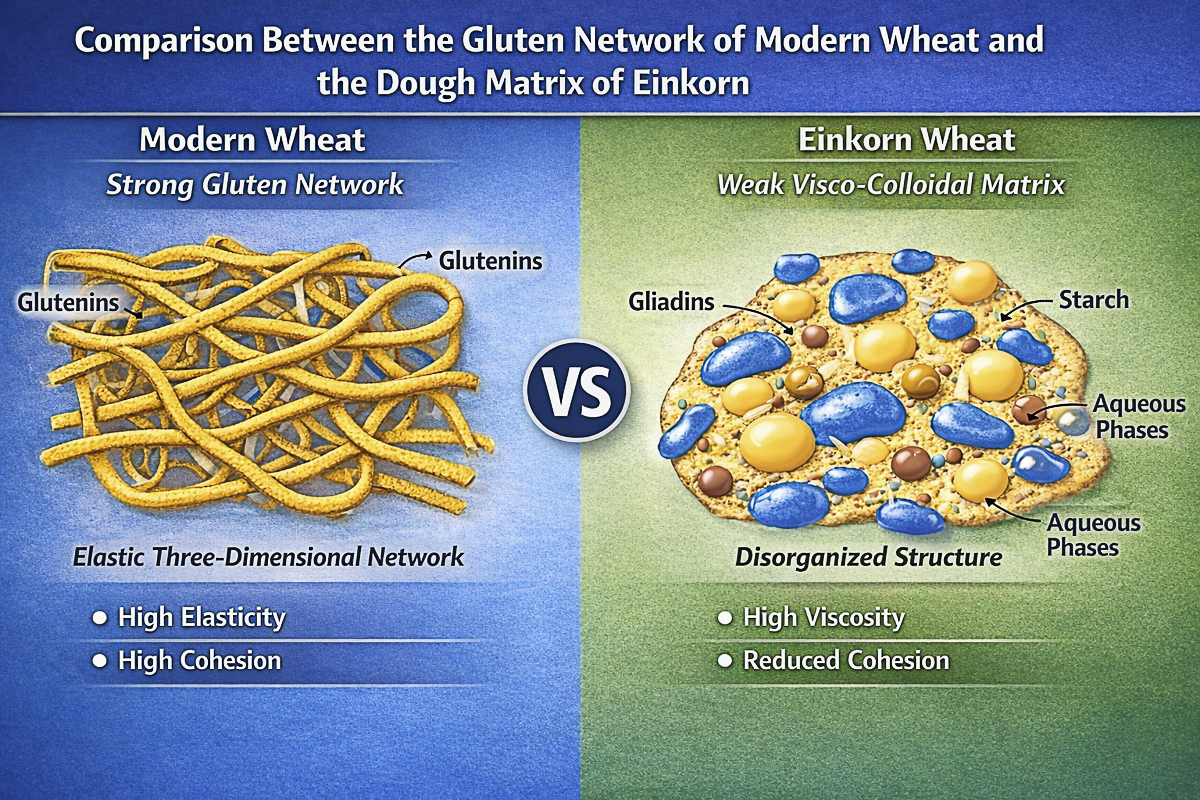
1️⃣ Einkorn (Triticum monococcum) possesses a predominantly visco-colloidal dough matrix, due to the greater prevalence of gliadins compared to polymeric glutenins, which results in doughs that are less elastic and more viscous than those of modern wheat.

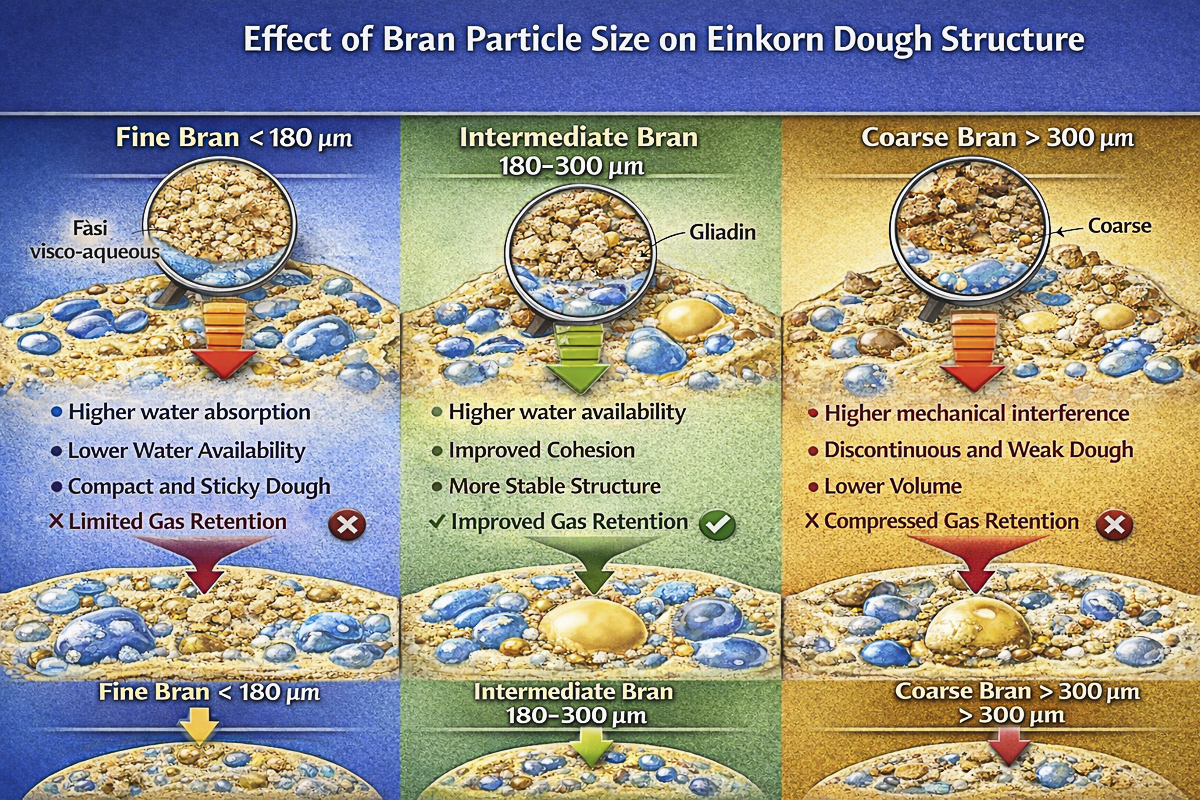
2️⃣ Bran particle size represents a crucial technological parameter in wholegrain flours, influencing water absorption, dough cohesion and fermentation stability.

3️⃣ In einkorn, an intermediate bran particle size may have a structuring effect on the dough, acting as a colloidal filler within the matrix and contributing to the stabilization of gas bubbles during fermentation.

4️⃣ Genetic variability among einkorn genotypes significantly influences technological quality, with relevant differences in dough behavior, bread volume and final aromatic profile.

5️⃣ Some einkorn lines show relatively lower gluten immunogenicity compared to hexaploid wheats, although they are not suitable for the diet of celiac patients. However, they may be useful for certain individuals (see end of chapter 11).

1. Introduction

Einkorn wheat (Triticum monococcum) represents one of the oldest wheat species cultivated by humans and possesses technological characteristics that differ significantly from those of modern wheats. In particular, the rheological properties of einkorn flours differ substantially from those of modern bread wheat, especially with regard to the structure and behavior of the gluten matrix.

The protein composition of einkorn is characterized by a relative predominance of gliadins (including γ-gliadins) and by a lower quantity and quality of polymeric glutenins. Gliadins mainly contribute to the viscous properties of the dough, while polymeric glutenins are responsible for elastic properties and for the formation of a stable three-dimensional gluten network.

This specific protein composition results in a rheological system in einkorn that behaves predominantly as a pasty-viscous system rather than an elastic one (Figure 1). Consequently, doughs obtained from einkorn flours are generally less elastic, more viscous and have a limited capacity to retain gas during fermentation.

Scientific references

Wieser, H. (2007). Chemistry of gluten proteins. Food Microbiology. DOI: 10.1016/j.fm.2006.07.004

Abdel-Aal, E.-S. M. et al. (1998). Genetic and environmental effects on gluten proteins of einkorn wheat. Journal of Cereal Science. DOI: 10.1006/jcrs.1997.0143

2. Role of Bran in Dough: General Concepts

Bran represents a fundamental component of wholegrain flours and can significantly influence the rheological properties of dough and the quality of the final product. The effect of bran on dough is generally attributed to two main mechanisms: interaction with water and mechanical interference with the dough structure.

2.1 Water absorption effect

Bran particles possess a remarkable capacity to absorb water due to their high content of dietary fiber, particularly arabinoxylans and cellulose. As the specific surface area of bran particles increases, their capacity to bind water also increases.

✅ This phenomenon results in a reduction of water available for other dough components, particularly starch and gluten proteins. Consequently, the distribution of water in the dough can significantly modify the formation and stability of the protein matrix.

2.2 Mechanical effect of bran particles

In addition to the water-related effect, bran can exert a mechanical effect on the dough structure. Bran particles of large size may act as discontinuous elements within the dough matrix, interfering with the continuity of the gluten network.

In modern wheats, characterized by a relatively strong and elastic gluten network, coarse bran particles can physically interrupt the protein network, resulting in a reduced ability of the dough to retain gas and, consequently, a decrease in final bread volume.

References

Noort, M. W. J. et al. (2010). The effect of particle size of wheat bran on bread quality. Journal of Cereal Science. DOI: 10.1016/j.jcs.2010.03.003

Hemdane, S. et al. (2016). Wheat bran in bread making: A critical review. Food Chemistry. DOI: 10.1016/j.foodchem.2015.09.092

3. Effect of Bran Particle Size on Dough Properties

The size of bran particles represents a particularly important technological parameter, as it influences both water absorption capacity and mechanical interaction with the dough structure.

3.1 Fine bran

Fine bran presents a high specific surface area. This results in a greater capacity to absorb water compared to larger particles.

In the presence of fine bran, the following are generally observed:

1️⃣ lower water availability for proteins and starch
2️⃣ higher water absorption by bran
3️⃣ more homogeneous distribution of particles in the dough.

From a technological point of view, these effects may lead to the formation of more viscous and compact doughs, with a more limited but generally more uniform development of dough structure.

3.2 Coarse bran

Bran with larger particle size presents a lower specific surface area and therefore tends to absorb less water during the initial phases of mixing.

However, larger particles may exert a stronger mechanical effect on the dough structure. In modern wheats this phenomenon may cause discontinuities in the gluten network, resulting in reduced dough stability and lower final bread volume.

4. Technological Specificity of Einkorn

In the case of einkorn, the effect of bran must be interpreted in light of the specific characteristics of its protein matrix.

As previously described, the gluten network of einkorn is generally weaker than that of modern wheats and does not form an equally developed continuous elastic structure. Dough behavior is dominated more by viscosity and colloidal cohesion phenomena rather than by a well-organized elastic gluten network.

✅ In this technological context, bran does not necessarily act as an element that breaks a strong gluten network, as occurs in modern bread wheat. However, it may still interfere with dough cohesion or contribute to the stabilization of the overall structure of the system.

References

Hidalgo, A. & Brandolini, A. (2014). Nutritional properties of einkorn wheat. Journal of the Science of Food and Agriculture. DOI: 10.1002/jsfa.6382

Brandolini, A. et al. (2008). Technological quality of einkorn wheat. Journal of Cereal Science. DOI: 10.1016/j.jcs.2008.01.001

5. Recent Evidence on the Technological Properties of Einkorn

Gluten peptides relatively resistant to digestion: interactions with the intestinal barrier, innate immunity, and mucosal vulnerability

by luciano

The present text summarizes some mechanistic evidence regarding the interaction between protein fragments relatively resistant to digestion, the intestinal barrier, and mucosal immunity.

1. General framework

The digestion of dietary proteins generates peptide fragments that are normally further degraded and handled by the mucosal immune system without causing pathological effects.

Under physiological conditions, the intestinal barrier, immune tolerance mechanisms, and the action of the microbiota contribute to maintaining a functional balance between dietary antigen exposure and the body’s response.

When these systems are altered or particularly sensitive, some peptides relatively resistant to digestion may interact more actively with the immunological environment of the intestinal mucosa.

2. Resistant peptides and innate immunity

Some protein fragments derived from gluten have structural characteristics that slow their complete enzymatic hydrolysis. Experimental studies (in vitro and in vivo in murine models) have shown that these fragments may:

a – activate innate signaling pathways (e.g. MyD88-dependent pathways)

b – modulate the production of local inflammatory mediators

c – interact with the intestinal epithelium by influencing tight junction organization

d – in specific models, activate the NLRP3 inflammasome

It is important to emphasize that these observations derive mainly from controlled experimental models; however, they demonstrate the biological plausibility of an interaction between persistent protein fragments and mucosal immunity.

3. Intestinal permeability and functional vulnerability

The intestinal barrier represents a dynamic system regulated by:

1 – tight junctions

2 – mucus and microbiota

3 – local immune signals

In conditions of vulnerability — such as:

1 – irritable bowel syndrome

2 – chronic dysbiosis

3 – prolonged stress

4 – metabolic obesity

5 – non-intestinal inflammatory conditions associated with increased permeability

the epithelial response threshold may be altered.

In such contexts, the presence of protein fragments relatively resistant to digestion may:

1 – prolong mucosal contact

2 – promote local activation of innate immunity

3 – contribute to a low-grade pro-inflammatory environment

This is not a matter of direct causality demonstrated in healthy humans, but of plausible interactions in predisposing conditions.

4. Microbiota as a response modulator

The intestinal microbiota plays a central role in the handling of dietary proteins:

it participates in the secondary degradation of peptides

it modulates barrier integrity

it influences the local immune profile

Animal models have shown that microbial composition can amplify or attenuate the mucosal response to wheat protein components.

In humans, dietary studies show that changes in gluten intake are associated with variations in the microbiota; however, these effects are often intertwined with changes in fiber and the overall food matrix.

In subjects with dysbiosis or unstable microbial balance, the handling of persistent protein fragments may be less efficient.

5. Clinical conditions not always overt

Some individuals present with:

fluctuating gastrointestinal symptoms

unexplained chronic fatigue

mild metabolic alterations

functional intestinal disorders

In these cases, even in the absence of a structured diagnosis, there are sometimes observed:

markers of altered barrier function

increased low-grade pro-inflammatory cytokines

modifications of the microbiota

There is no robust clinical evidence demonstrating that gluten peptides are the direct cause of such conditions; however, in the presence of vulnerability, the quality of protein digestion and the burden of persistent fragments may represent a modulating factor.

6. Individual vulnerability, fermentation, and modulation of the persistent peptide load

The relationship between foods and the organism is never linear, but systemic.

The response to a dietary protein does not depend exclusively on its composition, but rather on the dynamic interaction among:

1 – the functional state of the intestinal barrier

2 – the microbiota profile

3 – the regulation of innate immunity

4 – the efficiency of digestive processes

5 – the individual metabolic and inflammatory context

In a fully healthy subject, these systems cooperate effectively in ensuring the complete handling of the protein fragments deriving from gluten digestion.

The possible presence of peptides relatively resistant to digestion does not, in itself, entail a clinically relevant disturbance.

Conversely, in the presence of vulnerabilities — genetic, immunological, metabolic, or functional — even mild alterations of the barrier or microbiota may modify the organism’s response threshold.

Within this framework, fermentation technology takes on relevance that goes beyond the sensory or structural aspect of the product.

Prolonged fermentation, controlled acidification, and microbial peptidase activity may:

1 – reduce the average molecular weight of protein fractions

2 – modify the peptide profile of the dough

3 – decrease the proportion of relatively persistent fragments

4 – make the protein matrix more accessible to enzymatic digestion

7. Summary of the evidence

In healthy subjects, the organism effectively regulates the response to dietary protein fragments.

In the presence of immunological vulnerability, non-specific genetic predisposition, or alterations of the mucosal barrier, the response to relatively digestion-resistant peptides may be statistically amplified.

The strongest evidence derives from experimental models; clinical data in humans remain limited.

The intestinal microbiota represents a key mediator in the modulation of these effects.

8. Prudential implication

In subjects with predisposing conditions — even if not fully manifest — a prudent nutritional approach may be justified.

Such an approach should be:

1 – personalized

2 – contextualized

3 – integrated into the overall assessment of health status

and not intended as a generalization applicable to the healthy population.

Bibliography

Scientific studies connected to the most relevant passages of the systemic concluding paragraph: interaction of digestion-resistant protein fragments with the intestinal barrier, innate immune signals, and modulation of the microbiota.

1. Intestinal barrier (paracellular opening mechanism)

Gliadin induces an increase in intestinal permeability and zonulin release by binding to the chemokine receptor CXCR3 — Alessio Fasano et al., 2008, Gastroenterology

Why it is central

This study demonstrates the molecular mechanism by which gliadin components can modulate the intestinal barrier.

Mechanism shown

gliadin → CXCR3 → MyD88 → zonulin release → tight junction opening

Why it is fundamental

it directly links dietary peptides → intestinal permeability

it identifies the receptor and the signaling pathway

it is one of the most cited studies on barrier modulation.

Role in your article

It is the foundation for the mucosal barrier / gatekeeping chapter.

2. Activation of innate immunity

Gliadin stimulation of murine macrophage inflammatory gene expression and intestinal permeability are MyD88-dependent — Steven N. Vogel et al., 2006, The Journal of Immunology

Why it is central

It demonstrates that gliadin and resistant peptides can activate innate immunity.

Mechanism shown

gliadin peptides → MyD88-dependent activation →

expression of inflammatory genes in macrophages + modulation of intestinal permeability.

Why it is important

it explains that the effect is not only on the barrier, but also on immune signaling

it directly links resistant peptides → innate immune response

Role in your article

It is the basis for the section on resistant peptides as innate immunological signals.

3. Inflammasome and mucosal damage

p31-43 Gliadin Peptide Forms Oligomers and Induces NLRP3 Inflammasome/Caspase-1-Dependent Mucosal Damage in Small Intestine — Fernando G. Chirdo et al., 2019, Frontiers in Immunology.

Why it is central
It shows that a single resistant peptide (p31-43) can activate the NLRP3 inflammasome in vivo.
Mechanism shown
p31-43 → oligomerization → activation of the NLRP3 inflammasome →
caspase-1 → IL-1β → mucosal damage
Why it is very strong
it demonstrates a complete inflammatory mechanism
it occurs in vivo in the animal model
it links peptide persistence → structured inflammatory response
Role in your article
It is the basis of the section on activation of mucosal inflammation.
Why these three form the mechanistic axis
Together they describe a coherent biological sequence:
1️⃣ Resistant peptides → intestinal barrier
(Lammers)
2️⃣ Resistant peptides → innate immunity
(Thomas)
3️⃣ Resistant peptides → inflammasome and mucosal damage
(Gómez Castro)
They therefore explain:
dietary peptide → barrier → immunity → inflammation

B. Research, studies related to the chapters

1. Intestinal barrier and permeability

1.1 Gliadin → CXCR3 → MyD88 → zonulin → ↑ permeability (murine ex vivo + human expression data)

Lammers KM et al. (2008)
Title: Gliadin induces an increase in intestinal permeability and zonulin release by binding to the chemokine receptor CXCR3
Journal: Gastroenterology
DOI: 10.1053/j.gastro.2008.03.023 (PubMed)
Model / what it measures
Murine small intestine ex vivo (intestinal segments) + permeability testing and zonulin release
Receptor validation: CXCR3 and MyD88 involvement
Key results
Gliadin (and some overlapping peptides) binds to CXCR3 and induces CXCR3–MyD88 association in the epithelium. (PubMed)
It increases zonulin release and permeability in wild-type; the effect is absent in CXCR3−/−. (PubMed)
How to translate it into the chapter
It is one of the “cleanest” demonstrations that gluten components can act as functional modulators of the barrier (paracellular opening) through innate pathways.

1.2. Barrier effect on human tissue ex vivo (TEER and permeability)
Hollon J et al. (2015)
Title: Effect of gliadin on permeability of intestinal biopsy explants from celiac disease patients and patients with non-celiac gluten sensitivity
Journal: Nutrients
DOI: 10.3390/nu7031565 (PubMed)
Model / what it measures
Human intestinal biopsies ex vivo in chamber (microsnapwell)
TEER measurement (transepithelial electrical resistance) as a proxy for barrier integrity
Key results (mechanistic)
Exposure to gliadin → worsening of barrier indices (↓ TEER / ↑ permeability) in the experimental set-up. (PubMed)
Manual-style use
Useful because it shifts the issue from murine biology alone to a measurable effect on human tissue, while still remaining an ex vivo model (therefore not “clinical”).

2. Innate immune activation by resistant peptides

2.1 Innate immunity: response to resistant peptides (MyD88, interferons, inflammasome)
Gliadin + “resistant” peptides → permeability + macrophage activation (MyD88-dependent)
Thomas KE et al. (2006)
Title: Gliadin stimulation of murine macrophage inflammatory gene expression and intestinal permeability are MyD88-dependent
Journal: The The Journal of Immunology
DOI: 10.4049/jimmunol.176.4.2512 (PubMed)
Model / what it measures
Murine macrophages + expression of inflammatory genes/cytokines
Intestinal permeability testing and zonulin release in the experimental system
Stimuli: gliadin and peptides (including 33-mer and p31–43)
Key results
Gliadin and derivatives (33-mer, p31–43) induce:
increased permeability (via zonulin)
up-regulation of inflammatory signals in macrophages
in a MyD88-dependent manner. (OUP Academic)
Message for the manual
Resistant peptides can be viewed as “signals” capable of activating innate immunity and modulating the barrier, independently of the clinical discussion on celiac disease.

2.2. p31–43 in vivo: MyD88 and type I interferons (mouse)
Araya RE et al. (2016)
Title: Mechanisms of innate immune activation by gluten peptide p31-43 in mice
Journal: Am J Physiol Gastrointest Liver Physiol
DOI: 10.1152/ajpgi.00435.2015 (PubMed)
Model / what it measures
Intraluminal administration of p31–43 in mice
Analysis: mucosal damage, cell death, inflammatory mediators
Key results
p31–43 induces mucosal alterations and inflammatory mediators; dependence on MyD88 and type I IFN, not on TLR4 in the set-up. (PubMed)
Why it is needed
It is a strong step: a single resistant peptide can activate innate circuits in vivo.

2.3. p31–43: oligomerization → NLRP3 inflammasome/caspase-1 → mucosal damage (mouse)
Gómez Castro MF et al. (2019)
Title: p31-43 Gliadin Peptide Forms Oligomers and Induces NLRP3 Inflammasome/Caspase 1-Dependent Mucosal Damage in Small Intestine
Journal: Frontiers in Immunology
DOI: 10.3389/fimmu.2019.00031 (Frontiers)
Model / what it measures
p31–43 administered to mice + histology, IFNβ, mature IL-1β
KO/inhibition experiments for NLRP3 and caspase-1
Physicochemical study: tendency of the peptide to form oligomers
Key results
The induced enteropathy is not observed without NLRP3 or caspase-1, and is reduced with a caspase-1 inhibitor. (PubMed)
The peptide shows a propensity for self-assembly/aggregation, linked to inflammasome activation. (Frontiers)
Take-home
“Digestive resistance” is not only chemical: it may favor persistence/aggregation and activate innate platforms (inflammasome).

2.4. Intracellular persistence and epithelial stress (cells + mucosa)
Luciani A et al. (2010)
Title: Lysosomal accumulation of gliadin p31-43 peptide induces oxidative stress…
Journal: Gut
DOI: 10.1136/gut.2009.183608 (PubMed)
Key results
p31–43 can accumulate in lysosomal compartments and induce oxidative stress and cellular responses in epithelial and mucosal models. (PubMed)
Utility
It adds the “cellular” level: resistant peptides may also act through stress/intracellular trafficking, not only through tight junctions.

3. Microbiota and host response modulation

3.1. Human data: microbiota, symptoms, and biomarkers (with the fiber caveat)

Diet context: microbiota, barrier, and immune interactions

Human dietary studies investigating gluten intake rarely isolate gluten itself. Changes in gluten consumption are usually accompanied by modifications in cereal composition, fiber intake, and overall dietary matrix.

What these studies measure

Human intervention or observational studies typically evaluate:

  • intestinal microbiota composition

  • microbial metabolic activity (e.g., fermentation markers)

  • gastrointestinal symptoms

  • selected metabolic or inflammatory biomarkers

Interpretative limitation

A major confounding factor in these studies is that reducing gluten intake often simultaneously modifies:

  • total dietary fiber

  • fermentable carbohydrate composition

  • cereal matrix structure

Therefore, observed microbiota changes cannot always be attributed to gluten itself.

Relevance for the present discussion

These studies are useful because they translate mechanistic hypotheses into real human physiology. However, they must be interpreted cautiously, as microbiota changes often reflect broader dietary shifts rather than the isolated biological effect of gluten-derived peptides.

3.2. Gliadin in the diet (HFD) → microbiota + barrier + immune phenotypes (mice)
Zhang L et al. (2017)
Title: Effects of Gliadin consumption on the Intestinal Microbiota and Metabolic Homeostasis in Mice Fed a High-fat Diet
Journal: Scientific Reports
DOI: 10.1038/srep44613 (PubMed)
Model / what it measures
HFD with vs without 4% gliadin for 23 weeks
“Integrated” analysis: microbiota in 3 compartments, barrier function, urinary metabolome, immune profiles in multiple tissues
Key results
Gliadin is associated with changes in microbiota composition/activity, barrier function, and immune phenotypes (in addition to metabolic parameters) in the HFD context. (PubMed)
Interpretative note (important)
It is a “stressed” model (HFD): useful for discussing aggravating factors, not for generalizing to bread/pizza “under ideal conditions.”

3.3. Gluten and barrier function in an inflammatory context: DSS colitis + diet with gluten (mice)
Menta/Alvarez-Leite et al. (2019)
Title: Wheat gluten intake increases the severity of experimental colitis and bacterial translocation by weakening of the proteins of the junctional complex
Journal: British Journal of Nutrition
DOI: 10.1017/S0007114518003422 (PubMed)
Model / what it measures
DSS-colitis + standard diet vs diet with ~4.5% wheat gluten
Outcome: colitis severity, permeability, bacterial translocation, proteins of the junctional complex
Key results
Dietary gluten worsens the picture in the presence of colitis, with increased permeability and bacterial translocation, and alterations of junctional proteins/organization. (PubMed)
Use in the manual
It is a strong example of “resistant peptides as an aggravating factor in an already compromised intestine,” without saying they are the primary cause.

4. Human dietary studies

4.1 Human data: microbiota, symptoms, and biomarkers (with the fiber caveat)

Here, more than “peptides” in the strict sense, the studies test gluten intake (or its reduction) and measure microbiota, intestinal fermentation, and symptoms. They are useful because they translate the discussion into real human physiology; however, they present a major confounding factor: changes in gluten intake are usually accompanied by changes in dietary fiber and cereal matrix composition.

4.2 Randomized crossover trial: low-gluten vs high-gluten (60 non-celiac adults)

Hansen LBS / Roager HM / Licht TR et al. (2018)
Title: A low-gluten diet induces changes in the intestinal microbiome of healthy Danish adults
Journal: Nature Communications
DOI: 10.1038/s41467-018-07019-x

What it measures

  • Shotgun metagenomics

  • intestinal fermentation (H₂ breath test)

  • gastrointestinal symptoms (bloating)

  • selected metabolic and inflammatory biomarkers

Key results

Low-gluten diet → moderate changes in the intestinal microbiome and reduced hydrogen production, accompanied by improvement in reported bloating.

The authors emphasize that these effects are likely driven largely by changes in dietary fiber composition rather than gluten itself.

No major changes were observed in systemic inflammatory markers; interpretation therefore remains cautious.

How to use it

This study supports the idea that physiological responses depend on the overall food matrix and dietary composition, not on isolated gluten alone.

4.3. Short intervention: 4 weeks of GFD in healthy volunteers (21 subjects)
Bonder MJ et al. (2016)
Title: The influence of a short-term gluten-free diet on the human gut microbiome
Journal: Genome Medicine
DOI: 10.1186/s13073-016-0295-y (SpringerLink)
Key results
Moderate taxonomic changes; more evident effects on predicted microbial pathways (many linked to carbohydrate/starch metabolism). (SpringerLink)
Selected intestinal/inflammatory biomarkers: no major “clinical” signal in healthy subjects in the short term (cautious interpretation). (SpringerLink)

Pathophysiological conclusion
Overall, the experimental evidence indicates that some gluten components and specific peptides relatively resistant to digestion can interact with intestinal physiology at multiple levels.
At the level of the mucosal barrier, these fragments may modulate paracellular permeability through innate signaling pathways, involving mediators such as CXCR3, MyD88, and zonulin.
At the immune level, some resistant peptides — particularly p31-43 in experimental models — are able to activate local innate responses, including interferon-dependent pathways and, under certain conditions, the NLRP3/caspase-1 inflammasome.
At the ecological and functional level, the microbiota appears both as a modulator of the host response to gluten and as a possible target of the effects induced by the dietary context in which gluten itself is consumed.
In human studies, the observed effects mainly concern moderate modifications of the microbiota and intestinal fermentation; however, these data must be interpreted with caution, since they often reflect concomitant variations in dietary fiber and the overall matrix of the diet, rather than the isolated action of gluten.

Concluding methodological note
These studies do not state that gluten protein fragments are in themselves pathological in the healthy subject. However, they provide biologically plausible mechanisms for how:
specific resistant protein sequences (e.g. from gluten) can activate cellular signals in the intestinal epithelium and innate immunity, (PubMed)
this activation can include changes in paracellular permeability and pro-inflammatory pathways (inflammasome), (PubMed)
the way the organism responds to these signals is influenced by individual factors (microbiota, mucosal barrier, immunological vulnerability). (PubMed)
These studies are predominantly:
model-based (in vitro / ex vivo)
in vivo in animals
based on synthetic protein fragments or fragments administered in a non-physiological manner
That is, they are not clinical studies in humans under normal dietary conditions, but rather mechanistic evidence on biological pathways that could be relevant in the context of subjects with a fragile intestinal barrier, altered microbiota, or subclinical immunological vulnerability.