
Header Image - Gluten Light

Monthly Archives

13 Articles

The 33-mer Peptide — Why It Is a Fundamental Reference

by luciano

(Insight 2 of “Genetic Potential and Processing Conditions in the Determination of Gluten Strength, Digestibility, and Immunogenicity”)

The 33-mer peptide (sequence LQLQPFPQPQLPYPQPQLPYPQPQLPYPQPQPF) is recognized as one of the most digestion-resistant peptides derived from gluten proteins and as one of the main stimulators of T cells in the context of celiac disease.

Its importance stems from three key characteristics:

1 – Enzymatic resistance
Its high content of proline and glutamine makes it highly resistant to human digestive enzymes (pepsin, trypsin, chymotrypsin), allowing it to persist in the intestinal lumen after both in vitro and in vivo digestion.
2 – High immunogenicity
It contains multiple regions (epitopes) recognized by T cells from patients with celiac disease and was among the first peptides identified with this property.
3 – resence in common wheat species
It is present in most common hexaploid wheats (T. aestivum) and in spelt, but has been reported as absent in tetraploid/diploid wheats lacking the D genome (such as durum wheat, emmer, and einkorn).
For these reasons, the 33-mer peptide is frequently used as a marker for assessing “gluten immunogenicity” in flours and food products and for comparing wheat cultivars in research focused on immune response.

Key Findings from Studies on the 33-mer Peptide. Shan et al. (2002) — Identification and Immunogenicity of the 33-mer. Title: A resistant peptide from gliadin that is a potent activator of intestinal T cells in celiac disease. Authors: Shan L., Molberg Ø., Parrot I., Hausch F., Filiz F., Gray G.M., Sollid L.M., Khosla C. Journal: Science (2002). DOI: 10.1126/science.1074624

Core finding:
This landmark study isolated and characterized the 33-mer peptide as one of the most potent activators of T cells in celiac patients and demonstrated its extreme resistance to standard proteolytic digestion, confirming its immunogenic relevance.

Vader et al. (2002) — Structure and Epitopes of the 33-mer. Title: Structural basis for gluten intolerance in celiac sprue. Authors: Vader W., Stepniak D., Bunnik E., et al. Journal: Journal of Experimental Medicine (2002)
DOI: 10.1084/jem.20020609

Core finding:
Mapping of the major immunogenic epitopes within gliadins, explaining why sequences such as the 33-mer—with multiple and overlapping epitopes—are particularly active in triggering immune responses.

Schalk et al. (2017) — Quantification and Distribution of the 33-mer in Wheat. Title: Quantitation of the immunodominant 33-mer peptide from α-gliadin in wheat flours by liquid chromatography tandem mass spectrometry. Authors: Kathrin Schalk, Christina Lang, Herbert Wieser, Peter Koehler, Katharina Anne Scherf. Journal: Scientific Reports (2017). DOI: 10.1038/srep45092

Core finding:

This study measured the 33-mer content in a wide range of modern and ancient wheat flours using a targeted method (SIDA + LC-MS/MS), providing important data on variability among wheat genotypes.

Specific Findings from Schalk et al. (2017)

General overview:

The 33-mer peptide was detected in all common wheat (hexaploid) and spelt flours analyzed.
Reported values ranged approximately from 90.9 μg/g to 602.6 μg/g of flour.
The peptide was not detected (below limit of detection) in cereals lacking the D genome such as durum wheat, emmer, and einkorn, consistent with the absence of α2-gliadins encoding this peptide.
Interpretation:
The observed variability indicates that even within closely related wheat types, the amount of 33-mer peptide can differ substantially. This suggests that genotype and cultivar variation have a tangible impact on the content of celiac-related immunogenic peptides.

Related and Complementary Evidence

Norwig et al. (2024) confirm the presence of the 33-mer in all analyzed common wheat and spelt samples, reinforcing its central role in gluten-related peptidomic research.
Broader proteomic and peptidomic approaches show that the 33-mer is only one of several immunogenic peptides that can persist after digestion, but it remains a robust marker for comparing genotypes and technological processes (fermentation, baking, etc.).
Explanatory Box — Main Results from Schalk et al. (2017)

33-mer peptide content (μg/g flour) in analyzed wheats:

Minimum observed value: ~90.9 μg/g
Maximum observed value: ~602.6 μg/g
Typical distribution: most samples fall in the 200–400 μg/g range
Absence: not detected in durum wheat, emmer, and einkorn, likely due to the lack of D-genome α2-gliadin.

Why This Subsection Completes the Big Picture
Starting from a clear biological concept (resistance + immunogenicity), this subsection connects:

Molecular mechanisms (multiple epitopes within a single peptide),
Classical experimental evidence,
Real quantitative data across different cultivars,
Consistency with variability observed in broader peptidomic studies.
This provides readers with a solid framework to understand not only that the 33-mer exists, but why its presence and quantity vary among wheats and why it matters for digestion and immune response.

Keywords: 33-mer peptide, gluten immunogenicity, celiac disease gluten peptides, α-gliadin peptides, digestion-resistant gluten peptides, wheat cultivars immunogenicity, gluten T-cell epitopes, gluten peptidomics, wheat genetics and celiac disease, gluten digestibility
Related topics with “Chronic low-grade inflammation (or chronic silent inflammation)”

by luciano

1 – Paradigmatic cases (In depth of Chronic low-grade inflammation (or chronic silent inflammation)

Obesity

Obesity—especially visceral obesity—is accompanied by a state of chronic low-grade inflammation. Excess adipose tissue secretes pro-inflammatory cytokines (such as TNF-α and IL-6) that contribute to the development of insulin resistance. It is therefore not surprising that obese patients often show elevated levels of C-reactive protein (CRP) (a marker of systemic inflammation) and a higher risk of type 2 diabetes. Lifestyle interventions aimed at weight reduction (a balanced diet and exercise) help to “cool down” this metabolic inflammation, also improving clinical parameters.

Metabolic syndrome

Metabolic syndrome is closely associated with a state of chronic low-grade (or “silent”) inflammation, in which excess visceral fat acts as an endocrine organ by secreting pro-inflammatory cytokines (such as IL-6 and TNF-α). This persistent process—often referred to as “meta-inflammation”—promotes insulin resistance, vascular dysfunction, and increases the risk of diabetes and cardiovascular disease.

Rheumatoid arthritis (autoimmune disease)

References
Wellen & Hotamisligil, J Clin Invest, 2003
Shoelson et al., J Clin Invest, 2006

Rheumatoid arthritis

Rheumatoid arthritis (RA) is a chronic autoimmune inflammatory disease that primarily affects the joints, causing pain, swelling, and symmetrical stiffness, with onset often between 40 and 60 years of age. The immune system mistakenly attacks healthy tissues, creating chronic low-grade inflammation which, if left untreated, leads to progressive deformities and joint damage.

Biomarkers

The most commonly used markers of low-grade inflammation include C-reactive protein (CRP), interleukin-6 (IL-6), fibrinogen, and reactive oxygen species (ROS). These markers can be measured through blood tests and indicate a chronic inflammatory state that may be associated with various health conditions.

References
McInnes & Schett, NEJM, 2011
Smolen et al., Lancet, 2016

2 – Appendix A

Generalized inflammation, also known as systemic inflammation, is a condition in which the inflammatory process simultaneously involves multiple body districts rather than remaining confined to a specific site. This means that inflammatory mechanisms—normally activated as a protective response to infections, injuries, or tissue damage—remain diffusely and persistently active.

Systemic inflammation can develop in two main ways, characterized by different mechanisms, onset times, and clinical significance. On the one hand, it may result from the generalization of an initially localized acute inflammation; on the other, it may arise from the progressive extension of a low-grade chronic inflammatory state, which over time becomes systemic.

In the first case, inflammation begins at a specific site—such as pneumonia, appendicitis, or an infected wound—and rapidly spreads throughout the body. This occurs due to the massive release of inflammatory mediators, including cytokines (such as TNF-α, IL-1, IL-6), prostaglandins, and other pro-inflammatory molecules that enter the circulation, producing a generalized response. Typical examples include sepsis, septic shock, extensive burns, and major trauma. This form—known as acute systemic inflammation or SIRS (Systemic Inflammatory Response Syndrome)—is characterized by rapid onset, high intensity, and marked symptoms such as high fever, tachycardia, hypotension, and major metabolic alterations.

In the second case, inflammation is slow, persistent, and low-intensity. It initially affects one or more specific tissues—such as adipose tissue, the gut, or the joints—and later tends to spread systemically. The underlying mechanism is the continuous production of small amounts of inflammatory mediators that do not trigger an evident acute response but progressively accumulate over time. This condition is termed chronic low-grade systemic inflammation and is frequently associated with obesity, type 2 diabetes, metabolic syndrome, cardiovascular disease, and autoimmune disorders.

Among the main sites of origin of low-grade chronic inflammation, the gut plays a central role due to its large surface area, intense immune activity, and close interaction with the microbiota. Alterations in the intestinal barrier and microbial composition can promote the translocation of pro-inflammatory molecules into the bloodstream, contributing to the systemic spread of the process.

The causes of systemic inflammation—especially in its chronic form—are multiple and include chronic or recurrent infections, obesity, chronic inflammatory diseases such as rheumatoid arthritis and ulcerative colitis, chronic stress, an unbalanced diet rich in saturated fats, sugars, and ultra-processed foods, deficiencies of vitamins, minerals, and antioxidants, as well as smoking and excessive alcohol consumption.

Symptoms of generalized inflammation may vary depending on the cause and severity, but frequently include chronic fatigue, widespread muscle and joint pain, difficulties with concentration and memory, mood swings with irritability, anxiety or depression, digestive disturbances such as constipation or diarrhea, and in some cases a mild, persistent fever.

Over the long term, systemic inflammation represents an important risk factor for numerous chronic diseases, including cardiovascular disease (hypertension, atherosclerosis, myocardial infarction), type 2 diabetes, certain cancers (especially colon and breast), kidney disease, and worsening of autoimmune conditions.

In summary, systemic inflammation can reflect either an acute response that becomes generalized or the outcome of a low-grade chronic process that progressively extends. Although these are different conditions, both involve the simultaneous involvement of multiple organs and systems and have a relevant impact on overall health.

3 – Appendix B

Undigested food

Undigested food can trigger chronic low-grade inflammation, a biological process known as metabolic endotoxemia.

Here are the main mechanisms linking impaired digestion to inflammation:

1. “Leaky gut” (intestinal permeability)

When food macromolecules are not properly broken down (due to enzyme deficiency or insufficient chewing), they can damage the intestinal tight junctions.

Mechanism: Fragments of undigested proteins and bacterial toxins (LPS) pass directly into the bloodstream.
Response: The immune system recognizes these particles as “intruders,” activating a persistent but mild systemic inflammatory response.

2. Dysbiosis and fermentation

Undigested food reaching the colon becomes a substrate for fermentation by pathogenic bacteria.
Protein putrefaction: If proteins are not digested in the stomach/small intestine, their breakdown in the colon produces toxic metabolites such as ammonia and hydrogen sulfide, which irritate the intestinal mucosa and increase pro-inflammatory cytokine levels.
Excess LPS: Overgrowth of Gram-negative bacteria increases lipopolysaccharides (LPS), among the most powerful activators of low-grade inflammation detectable via hs-CRP.

3. Non–IgE-mediated food intolerances

Unlike acute allergies, constant exposure to foods the body cannot properly process (e.g., lactose or fructose malabsorption) keeps the immune system in a state of chronic alert.

Signs to monitor

If you suspect your inflammation is linked to digestion, look for:

  • Immediate or post-prandial abdominal bloating

  • Visible food fragments in the stool

  • Brain fog after meals


4 – A special case: the role of gluten

“The role of gluten: Gluten exerts multiple harmful effects that compromise human health, not only in gluten-dependent diseases but also in chronic inflammatory conditions unrelated to gluten. After consumption, indigestible gluten peptides are modified by luminal microbial transglutaminase or transported across the intestinal epithelium to interact with the densely populated immune cells of the mucosa. As disruptors of intestinal permeability, undigested gluten peptides compromise the integrity of tight junctions, allowing foreign immunogenic molecules to reach internal compartments. Gliadin peptides are systemically distributed to remote organs, where they encounter endogenous tissue transglutaminase. Following post-translational deamidation or transamidation, the peptides become immunogenic and pro-inflammatory, inducing organ dysfunction and pathology. Cross-reactivity and sequence homology between gluten/gliadin peptides and human epitopes may contribute to molecular mimicry in the induction of autoimmunity. As proof of concept, gluten withdrawal alleviates disease activity in chronic inflammatory, metabolic, and autoimmune conditions, and even in neurodegeneration. We recommend combining a gluten-free diet with the Mediterranean diet to leverage the advantages of both. Before recommending gluten withdrawal for non–gluten-dependent conditions, patients should be asked about intestinal symptoms and screened for celiac-associated antibodies. The current list of gluten-induced diseases includes celiac disease, dermatitis herpetiformis, gluten ataxia, wheat allergy, and non-celiac gluten sensitivity. Given that gluten is a universal pro-inflammatory molecule, other non-celiac autoinflammatory and neurodegenerative conditions should be investigated for potential gluten elimination.” Gluten is a Proinflammatory Inducer of Autoimmunity. Aaron Lerner et al. Journal of Translational Gastroenterology 2024; 2(2):109–124. DOI: 10.14218/JTG.2023.00060.


Bibliographic references

  1. Furman D, et al. Chronic inflammation in the etiology of disease across the life span. Nature Medicine. 2019.
    A landmark review describing systemic chronic inflammation as a central trait in the major causes of global morbidity (cancer, cardiovascular disease, diabetes, chronic kidney disease, and others) and discussing social, environmental, and biological drivers.

  2. Franceschi C, et al. Inflamm-aging and immune-metabolic changes with aging. Cell. 2018.
    This article introduces the concept of inflammaging—age-associated low-grade chronic inflammation—and highlights the role of persistent inflammatory mediators.

  3. Khanna D, Khanna S, et al. Obesity: A chronic low-grade inflammation and its markers. Journal of Inflammation Research. 2020.
    A review analyzing obesity as a paradigmatic model of low-grade systemic inflammation, with extensive discussion of key inflammatory markers produced by adipose tissue.

  4. Chen L, et al. Inflammatory responses and inflammation-associated diseases in organs. Journal of Biomedical Research. 2017.
    A comprehensive review of the molecular mechanisms of acute and chronic inflammatory responses and their implications in multiple systemic diseases (cardiovascular, metabolic, autoimmune, and neoplastic).


Chronic low-grade inflammation (or chronic silent inflammation)

by luciano

Highlight – Why this is a central topic
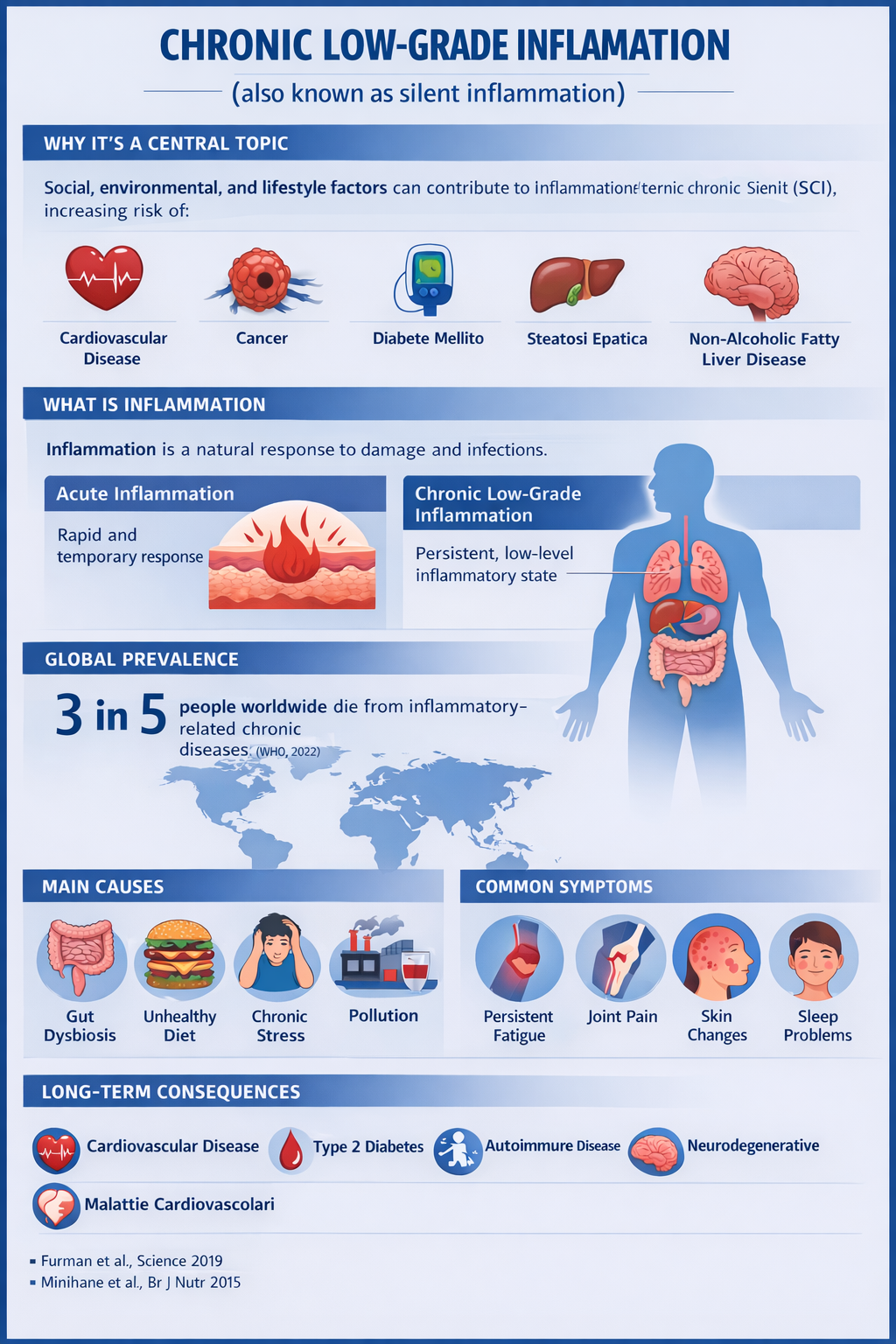
Although intermittent increases in inflammation are essential for survival during physical injury and infection, recent research has revealed that certain social, environmental, and lifestyle-related factors can promote systemic chronic inflammation (SCI), which in turn may lead to a variety of diseases that collectively represent the leading causes of disability and mortality worldwide, such as cardiovascular disease, cancer, diabetes mellitus, chronic kidney disease, non-alcoholic fatty liver disease, and autoimmune and neurodegenerative diseases.

References
Furman et al., Science, 2019
Calder et al., Nutrients, 2017

What is inflammation
Inflammation is a central component of innate (nonspecific) immunity. In general terms, inflammation is a local response to cellular damage characterized by increased blood flow, capillary dilation, leukocyte infiltration, and localized production of a series of chemical mediators that contribute to the elimination of toxic agents and the repair of damaged tissues.

It is now clear that the termination (also known as resolution) of inflammation is an active process involving cytokines and other anti-inflammatory mediators, particularly lipid mediators, rather than a simple shutdown of pro-inflammatory pathways.

Inflammation acts both as a “friend and a foe”: it is an essential component of immune surveillance and host defense; however, a persistent inflammatory state over time is a pathological feature of a wide range of chronic conditions.

References
Medzhitov, Nature, 2008
Serhan et al., Nature, 2007

Acute inflammation
Acute inflammation is the body’s rapid, short-term response to injury or infection, characterized by redness, swelling, heat, and pain. It is a beneficial process that helps protect against pathogens and initiates tissue repair. Although it may last from a few hours to a few days, it differs from chronic inflammation, which persists for longer periods and can be harmful.

(Personal note: The classic signs of acute inflammation—heat, redness, swelling, pain—indicate that the body is fighting and healing.)

References
Abbas et al., Cellular and Molecular Immunology
Serhan et al., Nature, 2007

Chronic low-grade inflammation
Low-grade, or “silent,” inflammation is a chronic, non-infectious, low-intensity immune response that persists for months or years. It is often triggered by obesity, metabolic stress, and poor nutrition, which includes not only unhealthy food choices but also incomplete digestive processes and microbiota imbalances.

This condition is characterized by slightly elevated blood markers that are often technically within normal ranges (such as CRP), making clinical diagnosis extremely challenging. It acts as a “silent killer,” serving as a precursor to serious conditions such as diabetes, heart disease, and chronic pain.

Key aspects of low-grade inflammation include:
Multifactorial causes:

In addition to physical inactivity and environmental factors, metabolic disturbances and alterations of the intestinal barrier play a crucial role. When food is not properly digested, it can trigger a persistent immune reaction that fuels the inflammatory state.

Systemic impact:

This chronic state causes mild but continuous tissue damage, directly linked to diseases such as Alzheimer’s disease, type 2 diabetes, cardiovascular disorders, and certain cancers.

How to diagnose it:
A. First phase:

Because standard tests do not detect acute abnormalities, diagnosis must rely on analysis of persistent symptoms such as unexplained fatigue, chronic pain, and cognitive changes (brain fog).

B. Second phase:

High-sensitivity C-reactive protein (hs-CRP) blood test. Unlike standard CRP, hs-CRP can measure values below 0.3 mg/dL, allowing detection of minimal fluctuations that would otherwise remain invisible.

C. Third phase

Interlukin-6 (IL-6). This is a specialized test. In most laboratories, IL-6 is considered “normal” up to about 5–10 pg/mL. In acute infection, IL-6 can rise to 100 or 1000 pg/mL.
In low-grade inflammation, IL-6 may increase from 1 to 3 pg/mL.
Although tripled (and therefore abnormal), the laboratory result will still read “Below limit: NORMAL.” This is why it is an “elusive” marker for general practitioners, but an “advanced biomarker” for specialists who can interpret subtle variations. Specialists often evaluate IL-6 together with the Neutrophil-to-Lymphocyte Ratio (NLR), a simple calculation from the complete blood count that confirms whether the immune system is in a state of chronic alert.

References
Minihane et al., British Journal of Nutrition, 2015
Hotamisligil, Nature, 2006
Pearson et al., Circulation, 2003
Lucius, Integrative and Complementary Therapies, 2023

Low-grade chronic inflammation and systemic inflammation
When the inflammatory state simultaneously involves multiple body districts, it is referred to as systemic inflammation. This condition may arise either from the generalization of an acute inflammatory process or from the progressive extension of an initially localized low-grade chronic inflammatory state.

The intestine represents one of the main sites of origin due to its extensive surface area, intense immune activity, and interaction with the microbiota. However, the process affects numerous organs and tissues.

References
Furman et al., Science, 2019
Franceschi et al., Cell, 2018

Global prevalence
Chronic inflammatory diseases are the leading cause of death worldwide. It is estimated that about 3 out of 5 people globally die from diseases linked to chronic inflammatory processes.

“Chronic inflammatory diseases are the most significant cause of death in the world. The World Health Organization (WHO) ranks chronic diseases as the greatest threat to human health. The prevalence of diseases associated with chronic inflammation is anticipated to increase persistently for the next 30 years in the United States. in 2000, nearly 125 million Americans were living with chronic conditions and 61 million (21%) had more than one. In recent estimates by Rand Corporation, in 2014 nearly 60% of Americans had at least one chronic condition, 42% had more than one and 12% of adults had 5 or more chronic conditions. Worldwide, 3 of 5 people die due to chronic inflammatory diseases like stroke, chronic respiratory diseases, heart disorders, cancer, obesity, and diabetes. 2022”.

References
Furman et al., Science, 2019

Main causes and triggering factors
Gut dysbiosis: Alteration of the intestinal bacterial flora, which may be caused by an unbalanced diet, excessive use of antibiotics, or other toxic substances.

Unhealthy diet: Excessive consumption of processed foods rich in refined sugars and saturated fats, which can promote inflammation.

Stress: Chronic stress can negatively affect the immune system and increase susceptibility to inflammation.

Environmental pollution and toxins: Exposure to chemicals present in the environment or in food may contribute to oxidative stress and inflammation.

Smoking and alcohol: These factors can worsen oxidative stress and damage cells, thereby promoting inflammation.

References
Cani et al., Diabetes, 2007
Tilg & Moschen, Gut, 2014
Egger & Dixon, AJPM, 2014
Slavich & Irwin, Psychological Bulletin, 2014

Common symptoms
Digestive disorders: Bloating, abdominal cramps, diarrhea or constipation, which may vary in intensity and frequency.

Persistent fatigue: Chronic tiredness, lack of energy, and difficulty concentrating.

Joint pain: Widespread muscle and joint pain.

Skin alterations: Rashes, eczema, or other skin manifestations.

Sleep problems: Difficulty falling asleep or maintaining deep sleep.

Skin manifestations

References
Dantzer et al., Brain Behav Immun, 2008
Miller et al., Biol Psychiatry, 2009

Long-term consequences
If left untreated, low-grade intestinal inflammation may contribute to the development of chronic diseases such as:

Cardiovascular diseases: Increased risk of heart attack, stroke, and other cardiovascular conditions.

Type 2 diabetes: Higher likelihood of developing insulin resistance and diabetes.

Autoimmune diseases: Increased susceptibility to conditions such as rheumatoid arthritis, lupus, etc.

Neurodegenerative disorders: Increased risk of developing diseases such as Alzheimer’s or Parkinson’s.

Certain types of cancer: Increased risk of developing some cancers.

General measures that may help reduce inflammation
Follow a balanced diet: Rich in fiber, fruits, vegetables, and whole foods, with a low glycemic index.

Reduce intake of processed foods, refined sugars, and saturated fats.

Manage stress: Through relaxation techniques, meditation, yoga, or other stress-reducing activities.

Maintain a healthy weight: Obesity and overweight can increase inflammation.

Limit alcohol consumption and quit smoking.

Supplement with probiotics: They may help restore the balance of the intestinal bacterial flora.

References
Estruch et al., NEJM, 2018
Calder et al., Br J Nutr, 2011

Note
Low-grade chronic inflammation (or “silent” inflammation) is a key factor in the development and progression of cardiovascular diseases, including atherosclerosis, hypertension, and myocardial infarction. This often asymptomatic process causes endothelial dysfunction, stimulates the formation and rupture of atherosclerotic plaques, and may lead to acute coronary syndromes.

References
Ridker et al., NEJM, 2017
Libby, Nature, 2002

Topics covered in the in-depth study
1 – Paradigmatic cases (Obesity, Metabolic syndrome, Rheumatoid arthritis (autoimmune disease), Biomarkers.
2 – Appendix A: Generalized inflammation
3 – Appendix B: Undigested food
4 – A special case: the role of gluten

Bibliographic references

Why intermolecular bonds “make” gluten strong

by luciano

(In-depth note 1 of Genetic potential and processing conditions in determining gluten strength, digestibility, and immunogenicity)

Gluten is a protein network that emerges when gliadins and glutenins are hydrated and subjected to mechanical energy (mixing/kneading) or thermal energy (heating). Its “strength” (tenacity/elasticity and ability to withstand stress) depends on two families of interactions:

1 – Covalent disulfide bonds (S–S).
These are the most “structural” cross-links. In glutenins (especially HMW-GS and LMW-GS), intermolecular disulfide bonds build polymers (often referred to as GMP / glutenin macropolymer) that provide the elastic backbone of the network.
2 – Non-covalent interactions (hydrophobic, hydrogen bonds, ionic interactions).
They are weaker but extremely numerous and “modulate” the network: they contribute to cohesion, viscosity, reorganization, and the response to hydration/temperature/solvents. Many studies show that changes in secondary structure and non-covalent interactions accompany (and sometimes amplify) the effects of disulfide bonds.
A key point:

the network is not static. During processing, thiol–disulfide exchange reactions (–SH/–S–S–) occur that remodel network connectivity: more opportunities to form/reorganize S–S bonds → generally a “stronger” and/or more resilient network.

Practical implications for dough

From an operational standpoint, gluten strength does not depend only on the genetic potential of the flour, but also on how the system is “set up” to express and organize its intermolecular bonds.

Adequate hydration:
Water acts as a plasticizer and allows proteins to move, interact, and realign. Hydration levels that are too low limit network formation; higher hydration promotes molecular mobility and bond reorganization, making gluten more extensible.

Mixing energy:
Mechanical action facilitates contact between protein chains and accelerates thiol–disulfide exchange reactions. Insufficient mixing leads to an incomplete network; excessive energy, on the other hand, can cause bond breakage and excessive reorganization, with a loss of structure.

Resting time:
Rest phases (autolyse, bulk fermentation) allow non-covalent interactions and disulfide bonds to redistribute toward more stable configurations, improving the balance between elasticity and extensibility.

Chemical conditions:
pH, salts, and the presence of oxidizing or reducing agents directly influence the equilibrium between –SH groups and –S–S– bridges, thereby modulating cross-link density within the network.

Genetic Potential and Processing Conditions in Determining Gluten Strength, Digestibility, and Immunogenicity

by luciano

Introduction
Gluten is the protein complex that forms when wheat storage proteins—mainly gliadins and glutenins—are hydrated and subjected to mechanical work. During this process, they organize into a continuous three-dimensional network responsible for the viscoelastic properties of dough.
Gluten strength is not an intrinsic and immutable property of individual wheat proteins, but rather an emergent characteristic of the supramolecular organization that develops when storage proteins are hydrated and exposed to mechanical energy during mixing (Shewry & Tatham, 1997; Wieser, 2023). Gluten quality therefore results from the interaction between the initial molecular composition and process-induced structural transformations.
In the grain, gliadins consist mainly of monomeric proteins stabilized by intramolecular disulfide bonds, whereas glutenins are also present as polymers stabilized by intermolecular disulfide bonds, which constitute the structural basis of gluten elasticity (Shewry & Tatham, 1997; Wieser, 2023). Disulfide bridges therefore represent the main covalent cross-links responsible for the formation of a continuous protein network.
It is essential to distinguish between the strength of an individual bond and the ability to form an extended network of bonds. From a chemical perspective, the bond energy of a disulfide bridge is essentially constant; differences among varieties do not arise from “stronger” bonds, but from variations in the number, position, and accessibility of cysteine residues, as well as from the composition of high- and low-molecular-weight glutenin subunits (Wieser, 2023). These features define the genetic cross-linking potential, namely the intrinsic predisposition of proteins to participate in the formation of intermolecular bonds.
The existence and structural importance of disulfide bonds in gluten have been confirmed through direct identification of S–S connections by mass spectrometry, which enabled mapping of specific intra- and intermolecular bonds in gluten proteins (Lutz et al., 2012). This evidence supports the concept that the gluten network is stabilized by a dense web of covalent connections.
During mixing, genetic potential is converted into real structure through dynamic processes of disulfide bond breakage and reformation, mainly via thiol–disulfide exchange reactions (Lagrain et al., 2010). Consequently, the gluten network does not simply correspond to the polymers already present in the grain, but rather represents a reorganized structure that develops as a function of hydration, mechanical energy, temperature, and redox conditions.
Protein composition also influences the architecture of the polymers that form. It has been shown that certain gliadins containing an odd number of cysteine residues can be incorporated into polymeric fractions and act as elements that limit or modulate chain extension (Vensel et al., 2014). This highlights that network quality depends not only on the amount of polymeric proteins, but also on their molecular nature.
In parallel, classic studies have shown that glutenin polymers undergo depolymerization and repolymerization during dough processing, and that the content of glutenin macropolymer (GMP) is closely correlated with dough and gluten strength (Weegels et al., 1996). This dynamic behavior underscores the decisive role of processing conditions in modulating the expression of genetic potential.

Structural Implications for Digestibility
Gluten strength and protein network structure influence not only dough rheology, but also the accessibility of proteins and starch to digestive enzymes. Recent studies show that glutens characterized by a more compact and extensive network are associated with a lower rate of starch digestion and different kinetics of protein degradation, suggesting that the gluten matrix functions as a physical barrier to enzymatic action (Zou et al., 2022).
At the molecular level, gluten proteins are rich in proline and glutamine, a composition that confers intrinsic resistance to major gastrointestinal proteases. As a result, gluten digestion frequently leads to the formation of relatively long and poorly degradable peptides (Di Stasio et al., 2025).
Among these, fragments derived from α-gliadins—such as the well-known 33-mer peptide—exhibit high resistance to proteolysis and contain epitopes recognized by the immune system in individuals with celiac disease (Hernández-Figueroa et al., 2025). The likelihood of formation and persistence of such peptides is influenced by both wheat genotype and gluten structural organization.

Role of Processing in Modulating Peptides
Processing conditions, particularly fermentation, can significantly modify gluten structure and the peptide profile generated during digestion. Sourdough fermentation, through the combined activity of endogenous flour enzymes and microbial proteases, can partially hydrolyze gluten proteins and alter the distribution of released immunogenic peptides (Ogilvie et al., 2021).
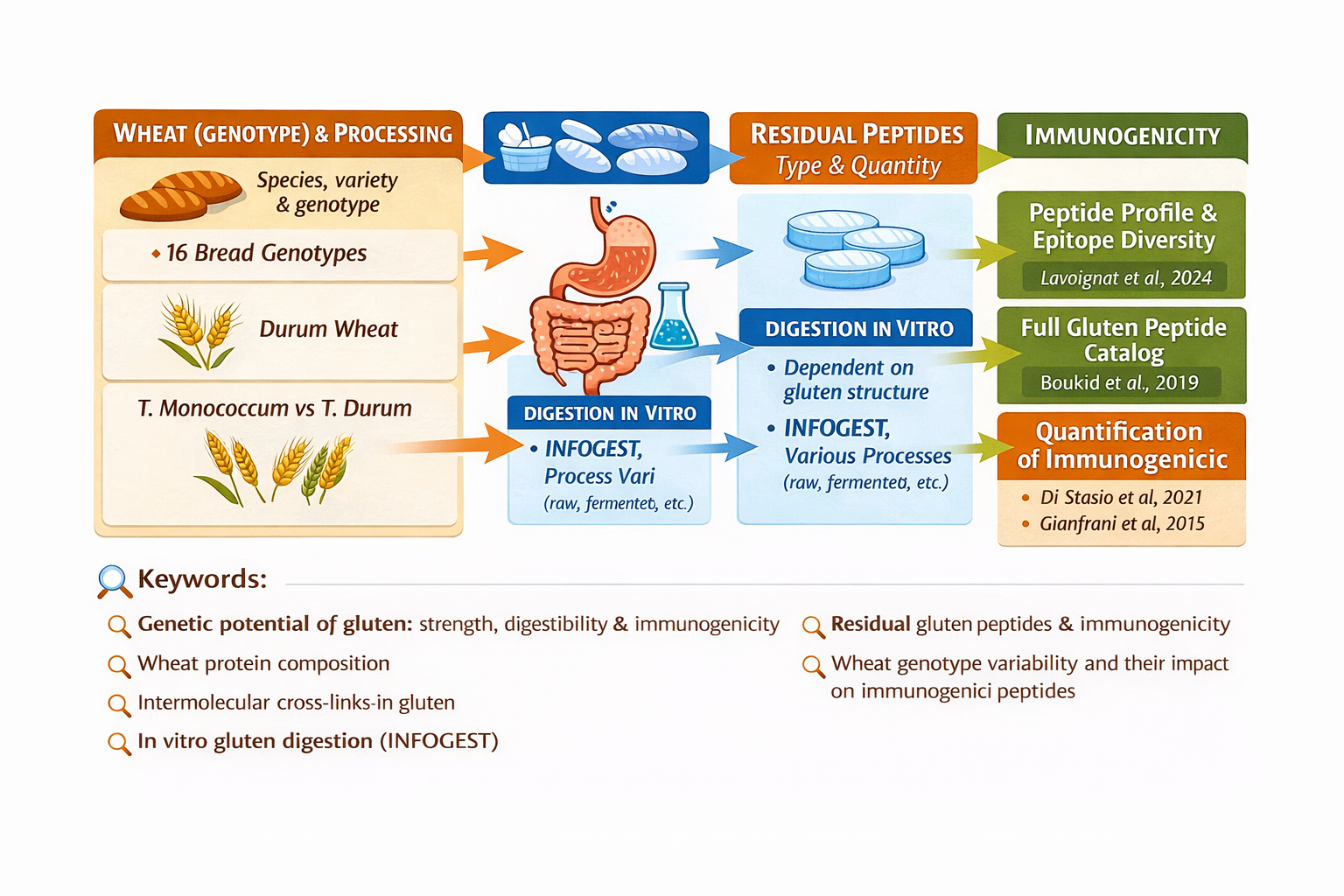
Peptidomic analyses of breads subjected to in vitro digestion reveal considerable peptide diversity, correlated with wheat genotype, agronomic conditions, and processing technologies (Lavoignat et al., 2024). This confirms that the final peptide profile is not determined solely by protein sequence, but also by network architecture and its processing history.
The use of standardized semi-dynamic digestion protocols (such as INFOGEST) allows realistic simulation of oral, gastric, and intestinal phases, enabling quantification of resistant and potentially toxic peptide formation (Freitas et al., 2022). Advanced liquid chromatography–mass spectrometry techniques allow absolute quantification of these fragments and comparative evaluation of varieties and processes.
In parallel, the use of supplemental enzymes or selected microorganisms has been explored as a strategy to enhance degradation of particularly resistant gluten peptides, demonstrating that targeted interventions can significantly reduce the concentration of problematic fragments (Dunaevsky et al., 2021).

Integrated Perspective
Taken together, these findings lead to an integrated view:
The initial molecular composition defines the upper limit of possible gluten connectivity.
Mixing and fermentation determine how much of this potential is actually expressed.
The resulting network structure influences not only technological strength, but also digestibility and the profile of released peptides.

In summary:
✔ What matters most is the network that forms in gluten
✔ But this network is constrained by what exists at the origin
✔ And the resulting network also determines the digestive fate of proteins