Abstract
The human gut microbiota is a complex ecosystem of microorganisms that plays a central role in digestion, immune function, metabolic regulation, and the handling of dietary and environmental toxins. Through the fermentation of non-digestible carbohydrates and fibers, gut bacteria produce short-chain fatty acids (SCFAs) such as butyrate, acetate, and propionate, which act as key metabolic mediators between the microbiota and the host. These metabolites serve as essential energy substrates for intestinal epithelial cells, support gut barrier integrity, and modulate inflammatory responses and systemic metabolism.
In addition to carbohydrate fermentation, the gut microbiota is involved in the biotransformation of xenobiotics, including environmental toxins, drugs, and food-derived compounds, influencing their bioavailability and toxicity. Conversely, exposure to antibiotics, pollutants, alcohol, and ultra-processed foods can disrupt microbial balance, leading to dysbiosis, increased intestinal permeability, inflammation, and metabolic disorders.
This article explores the bidirectional interactions between the gut microbiota and toxins, the different types of bacterial fermentation (saccharolytic versus proteolytic), and the concept of energetic symbiosis between microbes and the human host. Understanding these mechanisms highlights the crucial role of diet—particularly dietary fiber—in maintaining microbiota functionality, metabolic health, and resilience against toxic and inflammatory challenges.
Keywords
Gut microbiota; Short-chain fatty acids (SCFAs); Dietary fiber; Butyrate; Fermentation; Metabolic health; Inflammation; Gut barrier; Dysbiosis; Toxin metabolism; Gut–liver axis; Energetic symbiosis
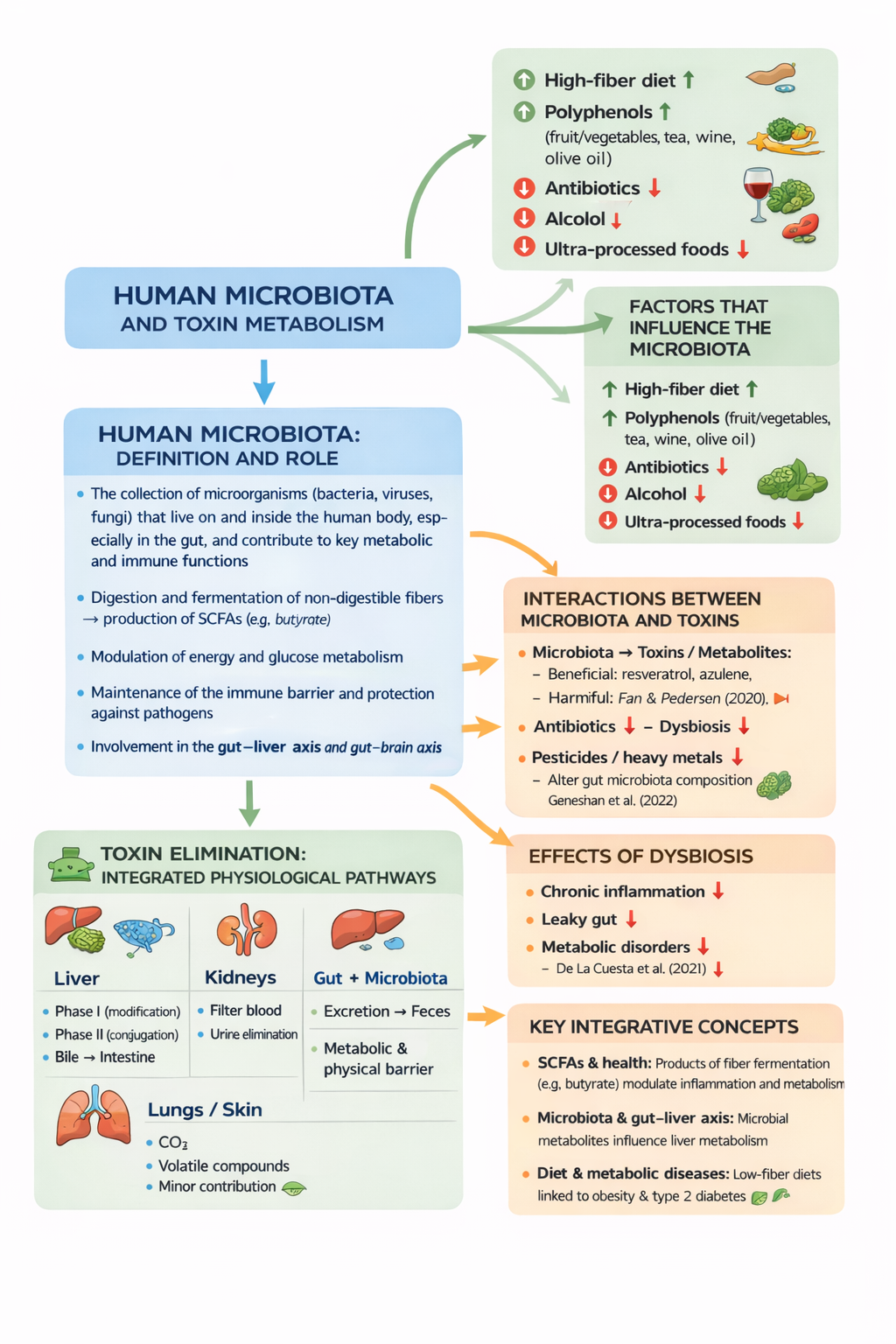
1) Human microbiota: definition and role
Definition
The human microbiota is the collection of microorganisms (bacteria, viruses, and fungi) that live on and within the human body, particularly in the gut, and contribute to critical metabolic and immune functions. (Nature)
Main functions
Digestion and fermentation of non-digestible fibers → production of short-chain fatty acids (SCFAs), such as butyrate. (MDPI)
Modulation of energy and glucose metabolism. (Nature)
Maintenance of the immune barrier and protection against pathogens. (Nature)
Involvement in the gut–liver and gut–brain axes. (Atti dell’Accademia Lancisiana)
2) Interactions between the microbiota and toxins
2A – Microbiota → toxins/metabolites
The microbiota:
Ferments dietary fibers [1], producing beneficial metabolites (SCFAs). (MDPI)
Metabolizes xenobiotics (environmental toxins, drugs, additives), influencing their chemical form and toxicity. (MDPI)
Contributes to the intestinal barrier, limiting the absorption of harmful substances. (Atti dell’Accademia Lancisiana)
Recent research:
1. Fan & Pedersen (2020): link the gut microbiota to the metabolism of food-derived compounds and toxins in humans. (Nature)
2. Tu et al. (2020): review on the microbiome and environmental toxicity (concept of gut microbiome toxicity). (MDPI)
2B – Toxins → microbiota
Some agents negatively impact the microbiota:
Antibiotics → intestinal dysbiosis
Pesticides/heavy metals → alteration of microbial diversity
Alcohol and ultra-processed foods → emerging negative effects
Evidence examples:
Environmental and dietary factors can alter microbial balance and increase inflammation. (ScienceDirect)
2C – Effects of dysbiosis
Dysbiosis (microbiota imbalance) may lead to:
Intestinal inflammation
Increased intestinal permeability (leaky gut)
Metabolic disorders (obesity, insulin resistance)
Recent scientific evidence:
Reviews linking microbiota composition to metabolism and human health. (Nature)
3) Factors influencing the microbiota
Factor
Effect
High-fiber diet
↑ diversity and SCFA production (MDPI)
Polyphenols (fruit/vegetables, tea, wine, olive oil)
Positive modulation of the microbial community
Antibiotics
↓ biodiversity, ↑ dysbiosis
Alcohol
May damage the mucosa and promote permeability
Ultra-processed foods
Associated with dysbiosis (mechanisms still under investigation)
Key research:
1. Charnock & Telle-Hansen (2020): effects of fiber on the microbiota and metabolic health. (MDPI)
2. PubMed reviews (2023–2024): fiber and microbiota modulation with clinical implications in metabolic diseases. (PubMed)
4) Toxin elimination: integrated physiological pathways
Liver
Phase I: structural modification of toxins (oxidation)
Phase II: conjugation → increased solubility
Elimination via bile → intestine
The microbiota may modify these metabolites and influence their recirculation
Kidneys
Filter the blood
Eliminate water-soluble toxins through urine
Intestine + microbiota
Excretion of toxins via feces
Physical and metabolic barrier against the absorption of harmful compounds
Lungs and skin
Elimination of CO₂ and volatile compounds
Minor role in the detoxification of more complex molecules
5) Integrative key concepts
SCFAs and health
Products of bacterial fiber fermentation (e.g., butyrate) not only provide substrates for intestinal cells but also modulate inflammation and systemic metabolism. (MDPI)
Microbiota and the gut–liver axis
Microbial metabolites influence hepatic metabolism, with potential effects on toxin handling and lipid metabolism. (Nature)
Diet and metabolic diseases
Microbiota changes associated with low fiber intake are linked to obesity and type 2 diabetes. (PubMed)
Mini-summary
1. The gut microbiota is an ecosystem of microorganisms that supports digestion, immunity, and metabolism; its alteration (dysbiosis) is associated with metabolic diseases. (Nature)
2. Non-digestible dietary fibers are fermented by gut microbes into beneficial compounds (SCFAs). (MDPI)
3. Microbiota and toxins influence each other: the microbiota can degrade or transform xenobiotics, while substances such as antibiotics and pollutants can alter microbial composition. (MDPI)
4. The body eliminates toxins through the liver, kidneys, intestine (with microbiota involvement), lungs, and skin.