
Header Image - Gluten Light

Monthly Archives

13 Articles

Irritable Bowel Syndrome (IBS) and Intestinal Permeability

by luciano

Abstract
Irritable bowel syndrome (IBS) is a complex and multifactorial disorder that cannot be explained by a single pathogenic mechanism. In recent years, increased intestinal permeability (“leaky gut”) has received considerable attention as a potential contributor to IBS pathophysiology. However, current scientific evidence indicates that barrier dysfunction affects only a subset of patients rather than representing a universal feature of the condition. Increased intestinal permeability is more frequently observed in diarrhea-predominant IBS (IBS-D) and post-infectious IBS (PI-IBS), whereas many patients exhibit a structurally intact intestinal barrier. In these cases, symptoms are more accurately attributed to alterations in the gut–brain axis, visceral hypersensitivity, disordered intestinal motility, and gut microbiota dysbiosis. An integrated understanding of these mechanisms is essential to move beyond reductionist models and to guide personalized therapeutic strategies.

Keywords
irritable bowel syndrome, IBS, intestinal permeability, leaky gut, IBS-D, post-infectious IBS, gut barrier, tight junctions, gut-brain axis, visceral hypersensitivity, gut microbiota, functional gastrointestinal disorders, chronic abdominal pain, low-grade inflammation, personalized IBS treatment

1. Introduction
Irritable bowel syndrome (IBS) is one of the most common functional gastrointestinal disorders, characterized by recurrent abdominal pain associated with changes in bowel habits, in the absence of identifiable structural abnormalities. Over the past two decades, the traditional view of IBS as a purely “functional” disorder has been progressively replaced by a more comprehensive model that integrates neurobiological, immune, microbial, and mucosal barrier factors.
Within this evolving framework, increased intestinal permeability—commonly referred to as “leaky gut”—has been proposed as a central mechanism in IBS pathogenesis. While this hypothesis has gained substantial attention, accumulating evidence suggests a more nuanced reality: increased permeability is present only in a subset of IBS patients and does not constitute a defining feature of the syndrome as a whole.

2. Evidence of Altered Intestinal Permeability in IBS
Numerous clinical and experimental studies have assessed intestinal barrier function in IBS using permeability tests (e.g., lactulose/mannitol ratio), urinary and plasma biomarkers, mucosal biopsies, and molecular analyses of tight junction proteins.
Collectively, these studies demonstrate that:
A significant but non-majority proportion of IBS patients exhibits increased intestinal permeability;
Barrier dysfunction is more commonly observed in the colon, although small intestinal involvement may occur in specific subgroups;
Increased permeability is not stable over time and may fluctuate in response to prior infections, dietary factors, psychological stress, and microbiota composition.
These findings indicate that intestinal barrier dysfunction represents an important pathogenic mechanism in IBS, but not an exclusive or universal one.

3. Differences Among IBS Subtypes
The heterogeneity of IBS becomes particularly evident when examining its clinical subtypes:
IBS-D (diarrhea-predominant IBS): This subtype is most frequently associated with increased intestinal permeability. Alterations in tight junction proteins and enhanced immune exposure to luminal antigens have been consistently reported.
Post-infectious IBS (PI-IBS): PI-IBS represents one of the strongest models linking IBS to barrier dysfunction. Following acute gastroenteritis, some patients develop chronic symptoms associated with increased permeability, low-grade mucosal inflammation, and mast cell activation.
IBS-C (constipation-predominant IBS): In most studies, intestinal permeability in IBS-C patients is comparable to that of healthy controls.
IBS-M (mixed subtype): Barrier function appears most consistently preserved in this group.
These differences underscore the absence of a single biological phenotype underlying IBS.

4. Molecular Mechanisms of Barrier Dysfunction
In IBS patients with increased permeability, several structural and functional alterations of the intestinal epithelial barrier have been documented, including:
Reduced expression or disorganization of tight junction proteins such as ZO-1, occludin, and claudins;
Increased paracellular passage of luminal molecules and antigens;
A correlation between the degree of barrier impairment and the severity of abdominal pain.
Loss of epithelial integrity facilitates contact between luminal antigens (bacterial or dietary) and the mucosal immune system, contributing to low-grade inflammatory responses.

5. Interaction Between Intestinal Permeability, Immune System, and Microbiota
In IBS subgroups characterized by barrier dysfunction, increased permeability may initiate a pathogenic cascade involving:
Activation of mast cells and other immune cells within the lamina propria;
Release of inflammatory and neuroactive mediators;
Sensitization of enteric nerve endings.
The gut microbiota plays a central role in this process. Qualitative and functional alterations of microbial communities can both contribute to barrier dysfunction and amplify immune and neural responses. Nevertheless, these mechanisms are not present in all IBS patients, reinforcing the concept of biological heterogeneity.

6. IBS Without Increased Intestinal Permeability
A crucial and often underestimated aspect of IBS is that many patients exhibit a structurally intact intestinal barrier. This is well documented in IBS-C and IBS-M subtypes, but also applies to a proportion of IBS-D patients.
In such cases, the leaky gut model alone is insufficient to explain symptom generation.

7. Alternative Mechanisms Independent of Permeability
7.1 Gut–Brain Axis Dysfunction
IBS is currently classified as a disorder of gut–brain interaction. Altered bidirectional communication between the enteric nervous system and the central nervous system can generate pain, urgency, and bowel habit changes in the absence of mucosal damage.
7.2 Visceral Hypersensitivity
Many IBS patients exhibit a reduced pain threshold to physiological intestinal stimuli. This phenomenon is attributed to:
Peripheral neural sensitization;
Central amplification of nociceptive signaling.
7.3 Altered Intestinal Motility
Disruptions in intestinal motor patterns may account for diarrhea, constipation, or alternating bowel habits without involving epithelial barrier dysfunction.
7.4 Dysbiosis Independent of Barrier Damage
Gut microbiota alterations may influence fermentation, gas production, bile acid metabolism, and neuroendocrine signaling even when intestinal permeability remains normal.

8. Clinical and Therapeutic Implications
Recognizing the heterogeneity of IBS has important clinical consequences:
In IBS-D and PI-IBS patients with documented increased permeability, interventions targeting barrier function (e.g., low-FODMAP diet, microbiota modulation, mucosal protective strategies) may be particularly beneficial;
In patients with normal permeability, therapeutic approaches focused on the gut–brain axis, visceral sensitivity modulation, and stress management are likely more appropriate.
A personalized approach is therefore essential.

9. Conclusions
IBS is a multifactorial and biologically heterogeneous condition. Increased intestinal permeability represents a documented and clinically relevant pathogenic mechanism, but it is not universal. In many patients, symptoms arise from neurofunctional, motor, or microbial alterations in the presence of an intact intestinal barrier.
An integrated perspective allows clinicians and researchers to move beyond reductionist models and to develop more effective diagnostic and therapeutic strategies.
The inflammatory, neurofunctional, microbial, and barrier-related mechanisms discussed here are explored in greater detail in the related articles referenced below.

Commented Bibliographic References (for Further Reading)
1. Camilleri M. et al. – Review on IBS and intestinal barrier function
A critical analysis of permeability alterations across IBS subtypes, emphasizing their non-universality.
2. Bischoff S.C. et al. – Intestinal permeability: mechanisms and clinical relevance
A foundational reference on molecular mechanisms of barrier function and clinical implications.
3. Spiller R., Garsed K. – Post-infectious IBS . Describes PI-IBS as a key model linking low-grade inflammation and increased permeability.
4. Barbara G. et al. – Mast cells and IBS. Seminal work on mast cell involvement in visceral pain and hypersensitivity.
5. Ford A.C. et al. – Systematic reviews on IBS pathophysiology
Integrated overview of microbiota, motility, and gut–brain axis mechanisms.
6. Drossman D.A. – Disorders of gut–brain interaction. A cornerstone reference framing IBS within modern gut–brain interaction paradigms.

The different mechanisms discussed—inflammatory, neuro-functional, microbial, and barrier-related—are examined separately in the related articles.
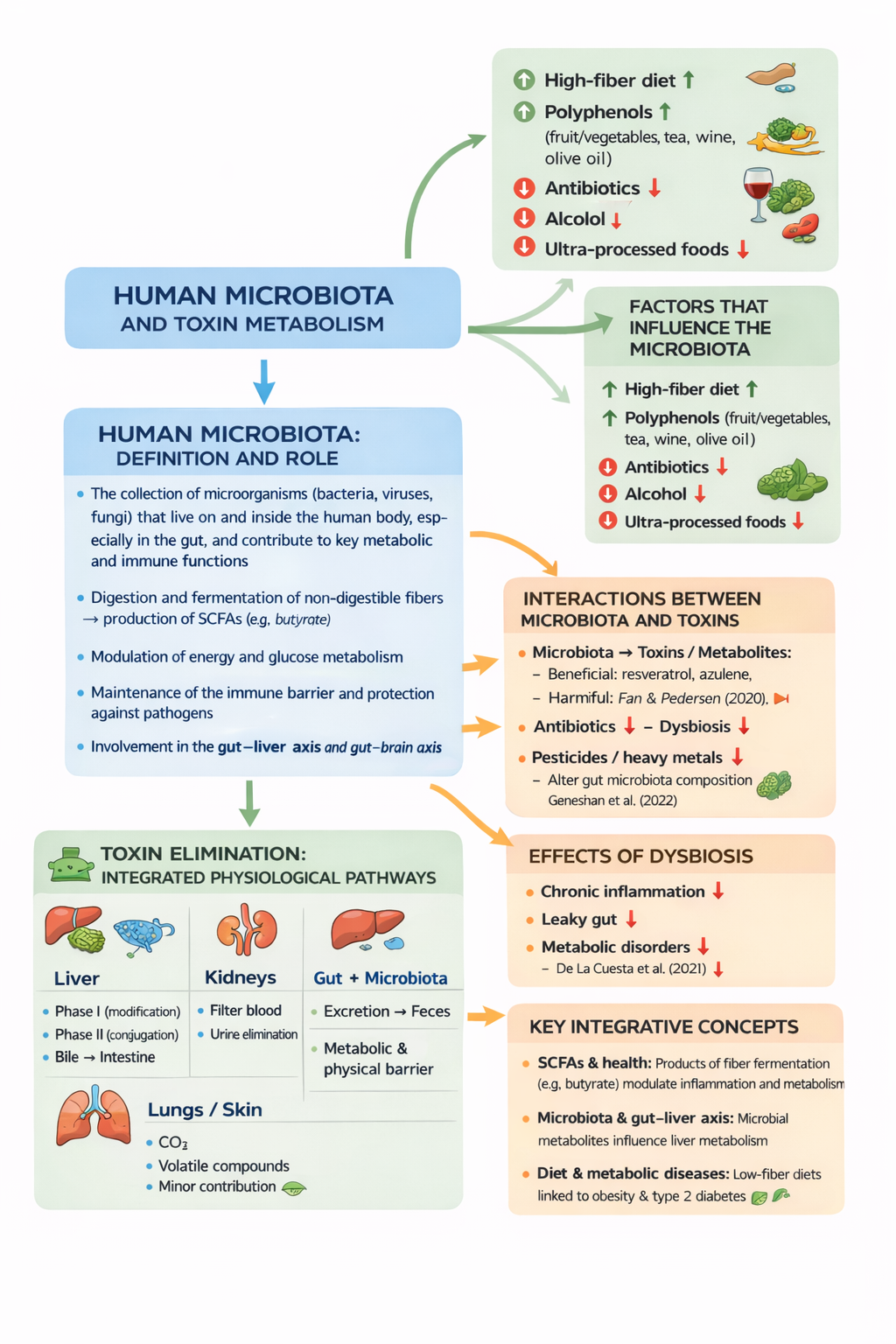
Human Microbiota and Toxin Metabolism

by luciano

Abstract
The human gut microbiota is a complex ecosystem of microorganisms that plays a central role in digestion, immune function, metabolic regulation, and the handling of dietary and environmental toxins. Through the fermentation of non-digestible carbohydrates and fibers, gut bacteria produce short-chain fatty acids (SCFAs) such as butyrate, acetate, and propionate, which act as key metabolic mediators between the microbiota and the host. These metabolites serve as essential energy substrates for intestinal epithelial cells, support gut barrier integrity, and modulate inflammatory responses and systemic metabolism.
In addition to carbohydrate fermentation, the gut microbiota is involved in the biotransformation of xenobiotics, including environmental toxins, drugs, and food-derived compounds, influencing their bioavailability and toxicity. Conversely, exposure to antibiotics, pollutants, alcohol, and ultra-processed foods can disrupt microbial balance, leading to dysbiosis, increased intestinal permeability, inflammation, and metabolic disorders.
This article explores the bidirectional interactions between the gut microbiota and toxins, the different types of bacterial fermentation (saccharolytic versus proteolytic), and the concept of energetic symbiosis between microbes and the human host. Understanding these mechanisms highlights the crucial role of diet—particularly dietary fiber—in maintaining microbiota functionality, metabolic health, and resilience against toxic and inflammatory challenges.

Keywords
Gut microbiota; Short-chain fatty acids (SCFAs); Dietary fiber; Butyrate; Fermentation; Metabolic health; Inflammation; Gut barrier; Dysbiosis; Toxin metabolism; Gut–liver axis; Energetic symbiosis
1) Human microbiota: definition and role
Definition
The human microbiota is the collection of microorganisms (bacteria, viruses, and fungi) that live on and within the human body, particularly in the gut, and contribute to critical metabolic and immune functions. (Nature)
Main functions
Digestion and fermentation of non-digestible fibers → production of short-chain fatty acids (SCFAs), such as butyrate. (MDPI)
Modulation of energy and glucose metabolism. (Nature)
Maintenance of the immune barrier and protection against pathogens. (Nature)
Involvement in the gut–liver and gut–brain axes. (Atti dell’Accademia Lancisiana)

2) Interactions between the microbiota and toxins
2A – Microbiota → toxins/metabolites
The microbiota:
Ferments dietary fibers [1], producing beneficial metabolites (SCFAs). (MDPI)
Metabolizes xenobiotics (environmental toxins, drugs, additives), influencing their chemical form and toxicity. (MDPI)
Contributes to the intestinal barrier, limiting the absorption of harmful substances. (Atti dell’Accademia Lancisiana)
Recent research:
1. Fan & Pedersen (2020): link the gut microbiota to the metabolism of food-derived compounds and toxins in humans. (Nature)
2. Tu et al. (2020): review on the microbiome and environmental toxicity (concept of gut microbiome toxicity). (MDPI)

2B – Toxins → microbiota
Some agents negatively impact the microbiota:
Antibiotics → intestinal dysbiosis
Pesticides/heavy metals → alteration of microbial diversity
Alcohol and ultra-processed foods → emerging negative effects
Evidence examples:
Environmental and dietary factors can alter microbial balance and increase inflammation. (ScienceDirect)

2C – Effects of dysbiosis
Dysbiosis (microbiota imbalance) may lead to:
Intestinal inflammation
Increased intestinal permeability (leaky gut)
Metabolic disorders (obesity, insulin resistance)
Recent scientific evidence:
Reviews linking microbiota composition to metabolism and human health. (Nature)

3) Factors influencing the microbiota
Factor
Effect
High-fiber diet
↑ diversity and SCFA production (MDPI)
Polyphenols (fruit/vegetables, tea, wine, olive oil)
Positive modulation of the microbial community
Antibiotics
↓ biodiversity, ↑ dysbiosis
Alcohol
May damage the mucosa and promote permeability
Ultra-processed foods
Associated with dysbiosis (mechanisms still under investigation)
Key research:
1. Charnock & Telle-Hansen (2020): effects of fiber on the microbiota and metabolic health. (MDPI)
2. PubMed reviews (2023–2024): fiber and microbiota modulation with clinical implications in metabolic diseases. (PubMed)

4) Toxin elimination: integrated physiological pathways
Liver
Phase I: structural modification of toxins (oxidation)
Phase II: conjugation → increased solubility
Elimination via bile → intestine
The microbiota may modify these metabolites and influence their recirculation
Kidneys
Filter the blood
Eliminate water-soluble toxins through urine
Intestine + microbiota
Excretion of toxins via feces
Physical and metabolic barrier against the absorption of harmful compounds
Lungs and skin
Elimination of CO₂ and volatile compounds
Minor role in the detoxification of more complex molecules

5) Integrative key concepts
SCFAs and health
Products of bacterial fiber fermentation (e.g., butyrate) not only provide substrates for intestinal cells but also modulate inflammation and systemic metabolism. (MDPI)
Microbiota and the gut–liver axis
Microbial metabolites influence hepatic metabolism, with potential effects on toxin handling and lipid metabolism. (Nature)
Diet and metabolic diseases
Microbiota changes associated with low fiber intake are linked to obesity and type 2 diabetes. (PubMed)

Mini-summary
1. The gut microbiota is an ecosystem of microorganisms that supports digestion, immunity, and metabolism; its alteration (dysbiosis) is associated with metabolic diseases. (Nature)
2. Non-digestible dietary fibers are fermented by gut microbes into beneficial compounds (SCFAs). (MDPI)
3. Microbiota and toxins influence each other: the microbiota can degrade or transform xenobiotics, while substances such as antibiotics and pollutants can alter microbial composition. (MDPI)
4. The body eliminates toxins through the liver, kidneys, intestine (with microbiota involvement), lungs, and skin.

Gluten and intestinal inflammation

by luciano

Gluten induces intestinal inflammation not only in celiac individuals but also in healthy ones

Intestinal inflammation is a condition of the gastro-intestinal system that affects a very large and constantly increasing number of people. This condition represents for the individual not only a state of disconfort that affects the quality of life but can – if underestimated or neglected – promote the onset or aggravation of serious illnesses.
An important role but still to be fully explored is played by gluten as it is pro-inflammatory.
The study” The Role of Gluten in Gastrointestinal Disorders: A Review. Sabrina Cenni. Gastrointestinal Disorders: A Review. Nutrients 2023” provides a useful overview of its effectiveness in the prevention and management of these disorderes.

“Abstract: Gluten is only partially digested by intestinal enzymes and can generate peptides that can alter intestinal permeability, facilitating bacterial translocation, thus affecting the immune system. Few studies addressed the role of diet with gluten in the development of intestinal inflammation and in other gastrointestinal disorders. The aim of this narrative review was to analyse the role of gluten in several gastrointestinal diseases so as to give a useful overview of its effectiveness in the prevention and management of these disorders.”

“Introduction. Gluten is a protein mass made of a complex network of gliadins and glutenins, which are proteins rich in glutamines and prolines found in most grains, such as barley, wheat, and rye [1 ,2]. Due to its high-water binding capacity and its consequent malleability and elasticity, gluten induces the formation of viscoelastic membranes, thus determining the proper consistency of dough, which allows it to be processed in bread and other foods [ 3– 5]. The high content of glutamines and prolines in gliadins make them difficult to cleave, making them able to escape degradation from gastric, pancreatic, and intestinal proteolytic enzymes [3, 4]. Therefore, gluten is what remains after the removal of starch, water-soluble proteins, and albumins [1]. In Western countries, the gluten dietary intake is approximately 5 to 20 g per day [3 , 4]. In the last decades, the literature reports an increased number of reactions following a widespread exposure to gluten [ 6]. Gluten-related diseases affect up to 10% of the general population and can be classified as three different disorders: IgE-mediated wheat allergy, Celiac disease (CD), and non-celiac gluten sensitivity (NCGS) [2, 6]. However, there is increasing evidence that gluten can trigger an innate and adaptative immune response responsible for intestinal inflammation [7]. Notably, along with other dietary elements, gluten may contribute to the development of inflammatory intestinal disorders, such as inflammatory bowel disease (IBD), as well as functional gastrointestinal disorders (FGIDs) and concur in symptom exacerbation, although its exact role is still under investigation.”

Gluten and intestinal inflammation.“Inflammation is the natural response of the innate immune system to external stimuli, such as microbial pathogens and injuries [8 ]. When the trigger persists and the immune cells are constantly activated, the inflammatory response may become chronic and self-sustainable [8]. The aetiology of inflammation is clear and easily detectable in some health conditions, while in others it can be difficult to identify [ 8]. The pathogenesis of inflammation is multifactorial. Nevertheless, genetic vulnerability, psychological stress, environmental factors, and some dietary patterns have been described as potentially implicated in the development of inflammatory phenotypes [ 8]. There are at least 50 different types of gliadin epitopes that can have an immunomodulatory and cytotoxic role or that can impact the gut permeating activities [ 8 ]; in fact, some of these can stimulate a pro-inflammatory innate immune response and others can activate specific T cells [8].
Gliadins immune cells’ activation is not only observed in celiac patients, as described by Lammers et al. [9, 10]. Indeed, their study concluded that gliadin induced an inflammatory response and, in particular, an important production of pro-inflammatory cytokines (IL-6, IL- 13, and interferon-gamma) both in Celiac patients and in healthy controls, even if proinflammatory cytokine levels were higher in Celiac patients [9, 10]. Similarly, Harris et al. showed that incubated peripheral blood mononuclear cells (PMBC) obtained from healthy HLA-DQ2 positive individuals produced proinflammatory cytokines, such as IL-23, IL-1beta, and TNF-α, when exposed to gliadin peptides [ 8, 11]. These cytokines’ production was significantly higher in Celiac patients compared to healthy controls [8,11]. Accordingly, Cinova et al., in their case-control study, demonstrated that gliadin could stimulate a substantial TNF-α and IL-8 production by monocytes, principally in celiac patients, but also, to a lesser extent, in healthy control individuals [12]. Gliadin also has an important role in modifying intestinal permeability through the reorganization of actin filaments and the modified expression of junctional complex proteins [ 8,13 ]. As demonstrated by Drago et al. and Lammers et al., gliadin’s binding to the chemokine receptor CXCR3 determines a release of zonulin, an active protein, which compromises the integrity of the intestinal barrier through the rearrangements of actin filaments, ultimately leading to an altered intestinal permeability both in Celiac and non-Celiac patients [ 9, 10, 14 ]. In conclusion, Ziegler et al. and Junker et al. reported that amylase trypsin inhibitors, found in gluten-containing cereals, have the capacity to activate toll-like receptors, thus stimulating the release of inflammatory cytokines and inducing a T-cell immune response in both celiac and non-celiac patients [15,16]”.

Einkorn wheat is the exception in relation to gluten-induced intestinal inflammation

A – Einkorn bread evidenced an anti-inflammatory effect. Integrated Evaluation of the Potential Health Benefits of Einkorn-Based Breads A. Gobetti et al. 2017.

B – Protective effects of ID331 Triticum monococcum. Protective effects of ID331 Triticum monococcum gliadin on in vitro models of the intestinal epithelium. Giuseppe Iacomino et al. (PMID: 27374565 DOI: 10.1016/j.foodchem.2016.06.014 )

Keywords: gluten; inflammatory bowel disease; functional gastrointestinal disorders; celiac disease