Header Image - Gluten Light

Daily Archives

3 Articles

Varietal Evolution and Quality in Durum Wheat (Triticum turgidum subsp. durum): from Traditional Populations to Modern Cultivars

by luciano

This work examines the varietal evolution of durum wheat, from traditional local populations (landraces) to modern cultivars, highlighting the relationship between genetic improvement, agricultural transformation, productivity, and grain quality.

In the earliest historical phase, durum wheat cultivation relied on genetically heterogeneous local populations, well adapted to specific environments but characterized by low yields and high phenotypic variability. With the advent of scientific plant breeding, between the late nineteenth and the first half of the twentieth century, these populations were progressively replaced by varieties obtained through the selection of pure lines. These new cultivars were more uniform and better suited to mechanization and to the requirements of the processing industry.

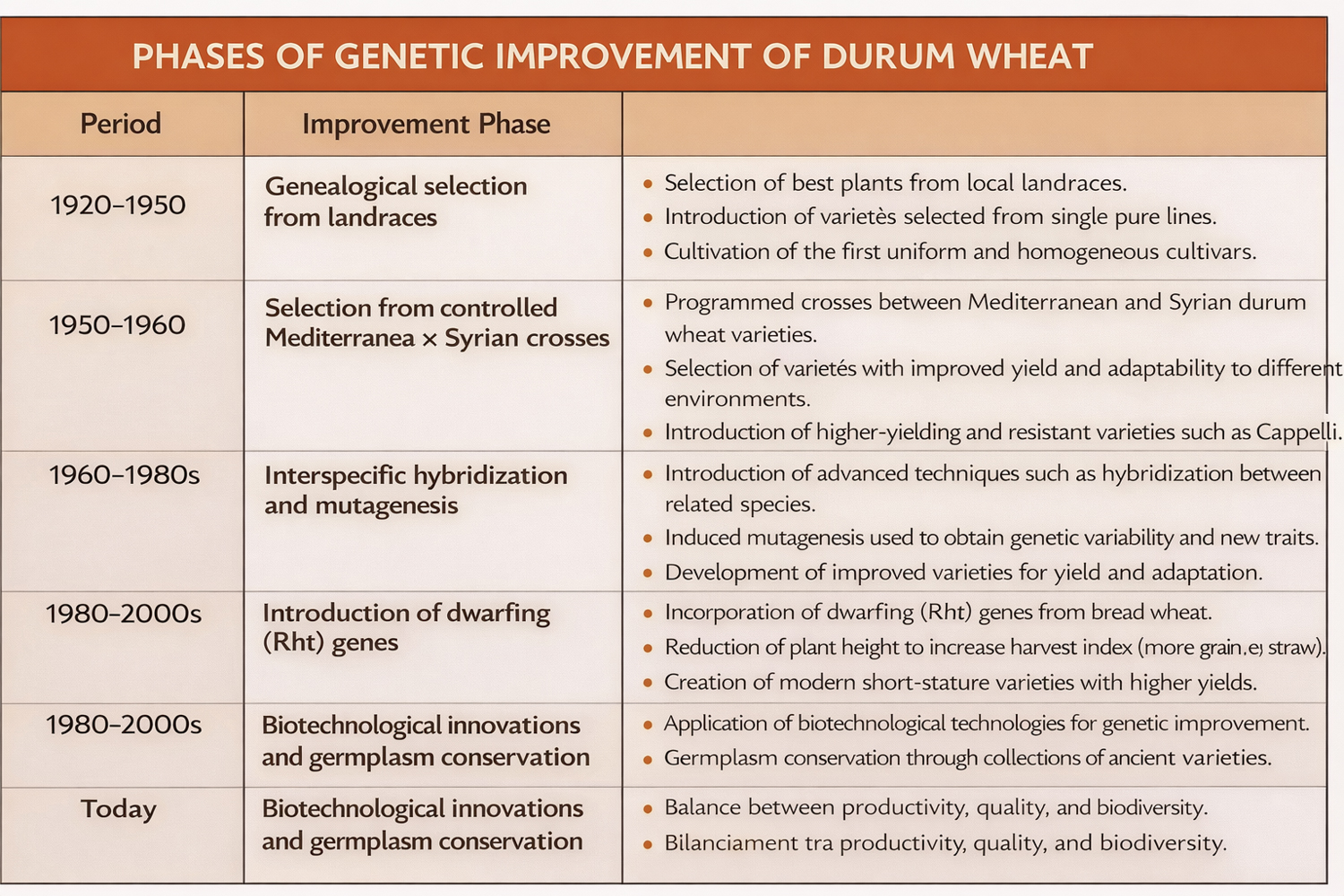
The document describes the main phases of durum wheat genetic improvement in Italy: from genealogical selection based on landraces (1920–1950), to the development of varieties derived from controlled crosses between Mediterranean and Syrian genotypes (1950s–1960s), and subsequently to more advanced approaches such as interspecific hybridization, induced mutagenesis, and the introduction of dwarfing genes (Rht) aimed at reducing plant height and increasing the harvest index.

Particular attention is given to the key role of historical cultivars such as Senatore Cappelli, which for decades represented the benchmark for both productivity and quality in Italian durum wheat, as well as to the later varieties that progressively replaced it due to higher yields and improved resistance to lodging and biotic stresses.

The work also emphasizes that, alongside productivity gains, agricultural intensification and the widespread adoption of genetically uniform cultivars have led to genetic erosion. This makes the conservation of germplasm, through both in situ and ex situ strategies, increasingly important. In conclusion, durum wheat breeding is presented as a dynamic process, closely linked to agronomic innovation, market demands, and the need to balance productivity, quality, and biodiversity conservation. Authors: Rosella Motzo, Francesco Giunta, Simonetta Fois. Coordinator: Prof. Mauro Deidda
Year: 2001. Co-funding body: Banco di Sardegna Foundation (note 1154/4135 of 12/18/2001)

Updates to date (key advances):

1) Reference genome del frumento duro (base per tutte le analisi moderne)
Title: Durum wheat genome highlights past domestication signatures and future improvement targets
Authors: Maccaferri, Harris, Twardziok, et al.
Year: 2019
DOI: 10.1038/s41588-019-0381-3 (PubMed)
Riassunto: Primo riferimento “chiave” con assemblaggio genomico del duro (cv. Svevo) e analisi di diversità/geni target: ha abilitato GWAS più robuste, identificazione di regioni selezionate durante domesticazione/miglioramento e nuovi bersagli per qualità e resa.

2) Speed breeding applicato specificamente al frumento duro (accelerare generazioni + selezione multi-tratto)
Title: Speed breeding for multiple quantitative traits in durum wheat
Authors: Alahmad et al.
Year: 2018
DOI: 10.1186/s13007-018-0302-y (PubMed)
Riassunto: Protocollo sperimentale per velocizzare cicli generazionali e fare selezione precoce su più caratteri quantitativi (non solo uno), utile per accelerare pyramiding di tratti (resa, fenologia, architettura, ecc.).

3) Genomic selection + GWAS in frumento duro (metodi moderni per prevedere resa/qualità)
Title: Genetic dissection of agronomic and quality traits based on association mapping and genomic selection approaches in durum wheat grown in Southern Spain
Authors: Mérida-García et al.
Year: 2019
DOI: 10.1371/journal.pone.0211718 (PLOS)
Riassunto: Combina association mapping (GWAS) e genomic selection su tratti agronomici e qualitativi: è un esempio “completo” di pipeline moderna (scoperta di loci + predizione genomica per selezione).

4) Fenotipizzazione ad alta capacità (iperspettrale) per stress caldo/siccità + genetica della resa
Title: High-throughput phenotyping using hyperspectral indicators supports the genetic dissection of yield in durum wheat grown under heat and drought stress
Authors: Mérida-García et al.
Year: 2024
DOI: 10.3389/fpls.2024.1470520 (PubMed)
Riassunto: Porta “novità” sul metodo: usa indicatori iperspettrali come proxy fisiologici per analizzare resa sotto stress, collegandoli alla genetica (utile per selezione in ambienti climate-stress).

5) Genomica + partecipazione agricoltori (local adaptation, “participatory genomics”)
Title: Genomics-driven breeding for local adaptation of durum wheat…
Authors: Gesesse et al.
Year: 2023
DOI: (indicizzato su PubMed; verificabile nella scheda articolo) (PubMed)
Riassunto: Integra dati genomici con selezione/valutazioni degli agricoltori (contesti low-input): introduce un approccio più “real-world” per migliorare adattamento locale e adozione varietale.

6) Dalle landraces agli aplotipi (integrazione “genomic + phenomic” per adattamento climatico)
Title: From landraces to haplotypes, exploiting a genomic and phenomic…
Authors: Palermo et al.
Year: 2024
DOI: (presente nella pagina articolo ScienceDirect) (ScienceDirect)
Riassunto: Usa tecniche avanzate per caratterizzare landraces (es. SSD, dati genomici + fenomici) per trovare materiale “ponte” tra varietà commerciali e resilienza a caldo/siccità.

7) CRISPR in frumento (dimostrazioni di editing multi-gene con impatto su qualità/sicurezza alimentare)
Title: CRISPR-Cas9 Multiplex Editing of the α-Amylase/Trypsin Inhibitor Genes…
Authors: Camerlengo et al.
Year: 2020
DOI: 10.3389/fsufs.2020.00104 (Frontiers)
Riassunto: Esempio di multiplex editing (più geni insieme) per ridurre componenti proteiche potenzialmente problematiche; dimostra velocità/precisione dell’editing rispetto al breeding convenzionale.

8) Protocolli/metodologia CRISPR per wheat (come “toolbox” operativo)
Title: CRISPR-Cas9 Based Genome Editing in Wheat
Authors: Smedley et al.
Year: 2021
DOI: 10.1002/cpz1.65 (currentprotocols.onlinelibrary.wiley.com)
Riassunto: Non è solo “risultato”, ma un riferimento pratico: design sgRNA, costrutti, workflow sperimentale per implementare CRISPR in wheat.

9) Review “stato dell’arte” specifica su duro (trend e metodi emergenti)
Title: Future of durum wheat research and breeding: Insights from early career researchers
Authors: Haugrud et al.
Year: 2024
DOI: 10.1002/tpg2.20453 (acsess.onlinelibrary.wiley.com)
Riassunto: Sintesi aggiornata su dove sta andando la ricerca: nuove fonti di variabilità, genomica, fenomica, breeding per stress e qualità, e priorità future.


The Role of Water in Reducing Low-Grade Inflammation

by luciano

(The Role of Water in Reducing Low-Grade Inflammation and Anti-Inflammatory Foods in Maintaining Physiological Homeostasis*)

(with references to the scientific section)

See: Practical vademecum (Why water helps extinguish inflammation)

1. Introduction
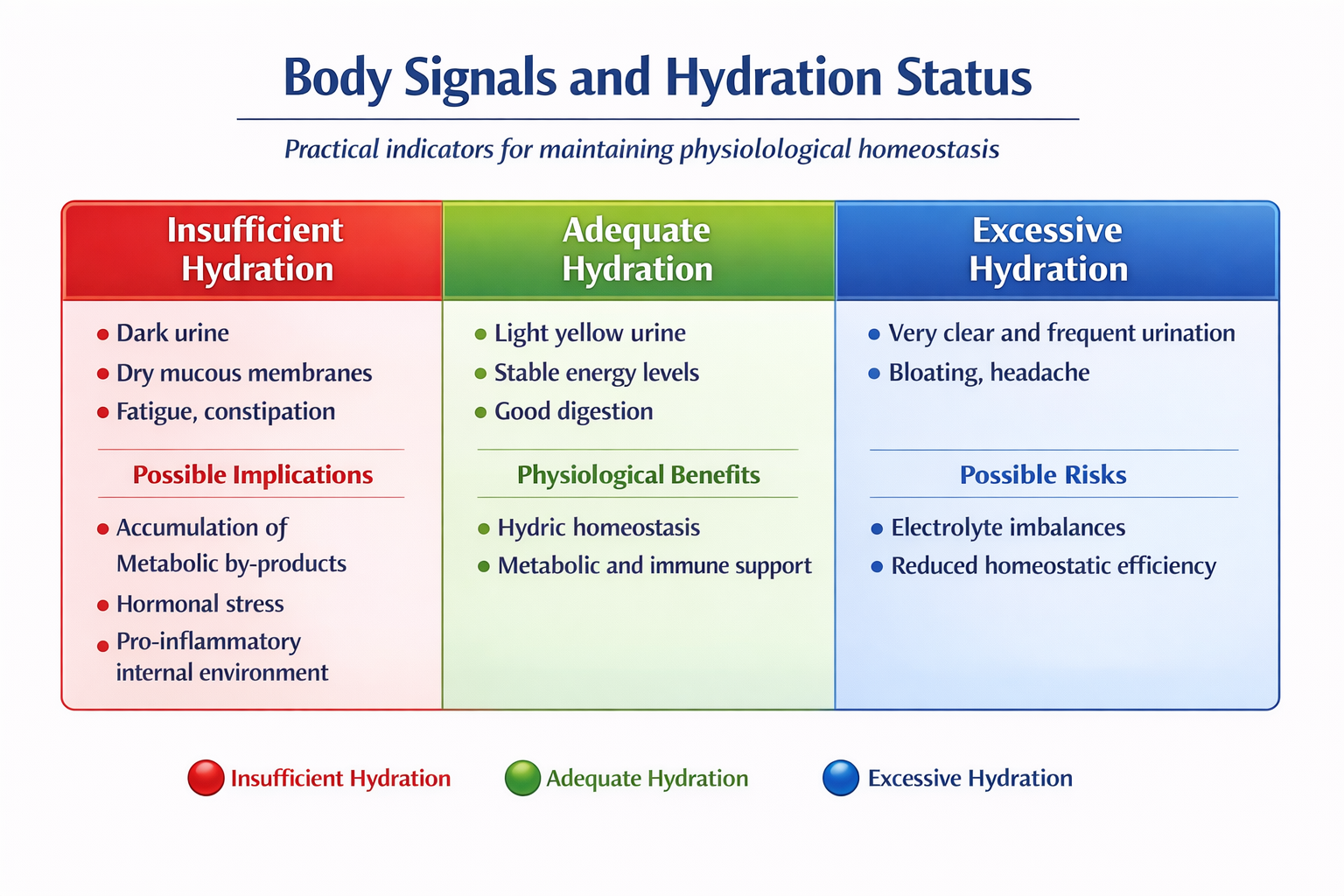
Low-grade inflammation is a condition of chronic and mild activation of the immune system, associated with numerous metabolic and pathological conditions, including obesity, metabolic syndrome, insulin resistance, and gut dysbiosis (studiolendaroeflorio.com). Emerging scientific evidence indicates that chronic dehydration and suboptimal dietary patterns are factors that not only affect metabolic function but also contribute to the persistence of a subclinical inflammatory state (PMC).

2. Water as an Essential Nutrient: Physiology and Hydric Homeostasis
Water is the most abundant component of the human body, accounting for approximately 50–65% of body weight in healthy adults (gabrielepelizza.com). This molecule is not merely a solvent but actively participates in metabolic processes, nutrient transport, waste elimination, regulation of cellular volume, and maintenance of body temperature (PMC).

2.1. Transport and Elimination of Metabolic Substances
Water forms the fluid medium in which the following processes occur:

transport of essential nutrients to cells,
mobilization and elimination of metabolic catabolic by-products,
transport of pro-inflammatory mediators to excretory organs (kidneys, liver).
Adequate plasma water volume facilitates glomerular filtration and enhances the kidneys’ ability to eliminate metabolic residues that may stimulate inflammation when accumulated (PMC).

2.2. Hydration and Systemic Inflammation
Studies investigating the effects of water restriction have shown that dehydration can contribute to metabolic imbalances and alterations in cellular function that promote systemic inflammatory responses (PMC).

A recent study on the gut microbiota indicates that water restriction disrupts intestinal homeostasis, leading to a reduction in local immune elements such as Th17 cells—key regulators of mucosal inflammation—suggesting a link between hydration status and immune response (ScienceDirect).

3. Specific Mechanisms Through Which Water Reduces Inflammation
3.1. Improved Circulation and Lymphatic Drainage
Adequate hydration maintains lower blood viscosity, improving fluidity and enhancing the transport of oxygen and nutrients to tissues while facilitating the removal of pro-inflammatory metabolites. Although no randomized controlled trials (RCTs) are specifically dedicated to this mechanism, basic cardiovascular physiology clearly describes these effects.

3.2. Effects on the Gut Microbiota
As previously mentioned, recent studies show that limited access to water alters the gut microbiota and reduces key immune cell populations in the colon, highlighting a connection between hydration and intestinal immune regulation (ScienceDirect).

3.3. Hydration and Reduction of Oxidative Stress
Adequate water intake is associated with lower circulating concentrations of free radicals and may reduce systemic inflammatory responses related to oxidative stress, at least indirectly through improved metabolic homeostasis and normal cellular function (limited but suggestive evidence from general clinical reviews) (Prevention).

4. Water as a Support to Immune Response
Hydration also affects general immune parameters. Preliminary evidence suggests that adequate water intake contributes to optimal immune system function, particularly under conditions of physiological stress or high antigenic load (ResearchGate).

5. Anti-Inflammatory Nutrition: Role of Specific Nutrients
An anti-inflammatory diet includes foods rich in:

Polyphenols (berries, green tea),
Omega-3 fatty acids (fatty fish, flaxseeds),
Antioxidants (colorful vegetables, spices such as turmeric and ginger),
Dietary fiber (legumes, vegetables), which nourish the gut microbiota.
These components are associated with measurable reductions in pro-inflammatory mediators such as IL-6 and TNF-α in several observational and clinical studies, although the strength of evidence for specific nutrients varies from moderate to weak or preliminary (e.g., polyphenols) (ScienceDirect).

6. Synergy Between Hydration and Anti-Inflammatory Nutrition
The synergy between water intake and anti-inflammatory nutrition is based on two main physiological mechanisms:

6.1. Nutrient Absorption and Bioavailability
Water is the medium in which:

digestion occurs,
chylomicrons are formed and nutrients are transported,
bioactive anti-inflammatory compounds are absorbed.
A well-hydrated intestine promotes optimal transit time, reduces pathological fiber fermentation, and supports a more balanced microbiota, which in turn produces anti-inflammatory metabolites such as butyrate (ScienceDirect).

6.2. Elimination of Inflammatory By-Products
Hydration facilitates the elimination of pro-inflammatory molecules through:

urine (water-soluble metabolites),
bile (certain lipids and metabolic products),
thereby improving the efficiency of the body’s homeostatic response.

7. Clinical and Practical Applications
Although no unified guidelines based on robust RCT evidence exist for anti-inflammatory hydration protocols, physiological principles and emerging evidence suggest that optimal hydration combined with an anti-inflammatory diet may help maintain a favorable physiological state, reduce low-grade inflammation, and support immune homeostasis.

8. Conclusions
Water is a physiologically active element in the modulation of inflammation and maintenance of health, not merely a passive solvent. Its role extends from fluid homeostasis and nutrient transport to regulation of the gut microbiota and immune support.
When combined with a diet rich in anti-inflammatory foods, water acts synergistically to:

improve nutrient absorption,
facilitate the removal of inflammatory mediators,
optimize gut microbiota composition,
support a balanced immune response.

These mechanisms are supported by studies in physiology, microbiology, and emerging research on the effects of hydration on immune modulation.

*Homeostasis is the ability of living organisms to maintain a constant internal environment (temperature, pH, blood sugar, etc.) by self-regulating, despite external variations.

In-Depth Focus: Carbonated Water and Digestion
✅ Potential Benefits
May stimulate digestion
Carbon dioxide (CO₂) mildly stimulates the gastric mucosa, increasing gastric juice secretion.
Helpful in slow digestion
Some individuals find it beneficial after heavy meals.
Promotes satiety
It may help reduce food intake in certain dietary regimens.
⚠️ Potential Discomforts
Bloating and gas
CO₂ is gas and may cause abdominal distension and belching.
May worsen reflux or gastritis
In individuals with gastroesophageal reflux or sensitive stomachs, symptoms may worsen.
Not ideal for irritable bowel syndrome (IBS)
Gas can increase pain and abdominal distension.
Carbonated vs Still Water
Hydration level → equivalent
Digestive tolerance → still water is more neutral and generally better tolerated
General health → no issues if consumed in moderation
How Much to Drink?
For healthy individuals:

Suitable for daily consumption, preferably alternating with still water
Best avoided during meals in those prone to bloating
Summary
Carbonated water is not harmful to health but can influence digestion: it may facilitate digestion in some individuals while causing bloating or gastric discomfort in others. For this reason, alternating it with still water and tailoring consumption to individual digestive tolerance is recommended.

Selected References
Allen, M.D. et al. Suboptimal hydration remodels metabolism…, 2019 (PMC)
Sato, K. et al. Sufficient water intake maintains the gut microbiota…, 2024 (ScienceDirect)
Popkin, B.M. et al. Water, Hydration and Health, 2010 (PMC)
Özkaya, İ. & Yıldız, M. Effect of water consumption on the immune system…, 2021 (ResearchGate)
Clinical trial with anti-inflammatory implications (methodological limitations; further studies needed) (jamanetwork.com)

Practical vademecum (Why water helps extinguish inflammation)

by luciano

(with references to the scientific section)

Why water helps extinguish inflammation

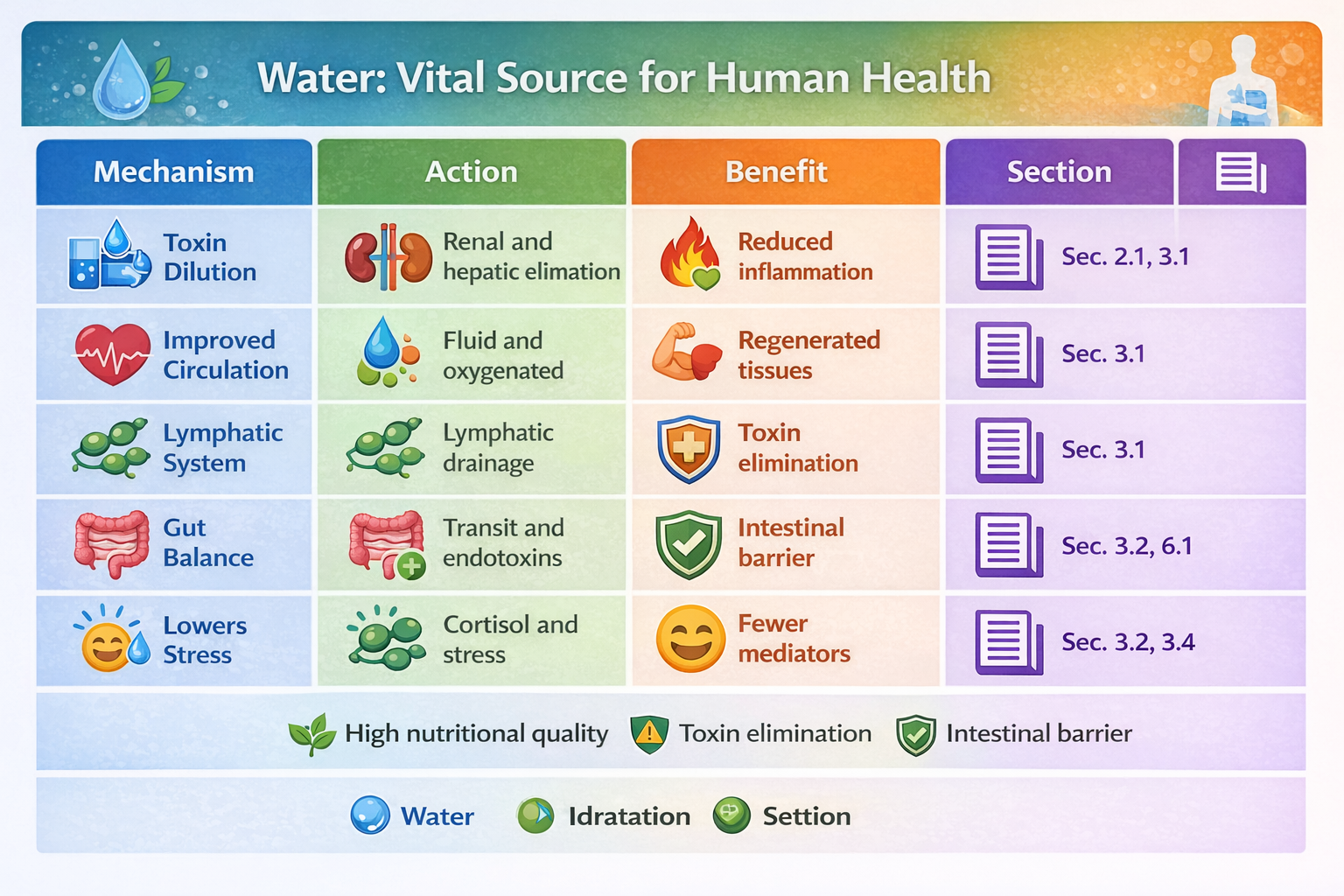
1️⃣ It dilutes and facilitates the elimination of inflammatory substances
(→ see Sec. 2.1; Sec. 3.1)

During an inflammatory state, the body produces:
cytokines
inflammatory mediators
metabolic waste products

Water:
increases plasma volume
facilitates renal filtration function
supports hepatic detoxification
accelerates elimination via urine and bile

⚠️ In conditions of dehydration, these molecules remain more concentrated → persistent inflammation.

2️⃣ Improves circulation and tissue “cleansing”
(→ see Sec. 3.1)

Adequate hydration makes the blood:
less viscous
more fluid
more efficient in transporting oxygen and nutrients

This allows cells to:
repair themselves more effectively
dispose of inflammatory by-products more rapidly

3️⃣ Supports the lymphatic system
(→ see Sec. 3.1)

The lymphatic system is a drainage network for chronic inflammation.
Its function depends critically on the availability of water.

In the case of insufficient water intake:
lymph stagnates
toxins remain in the tissues
low-grade inflammation is amplified

4️⃣ Regulates intestinal balance
(→ see Sec. 3.2; Sec. 6.1)

Low-grade inflammation is frequently associated with:
constipation
intestinal dysbiosis
increased intestinal permeability

Water:
improves intestinal transit
promotes the elimination of endotoxins
reduces systemic inflammatory stimulus

The gut acts as a central hub of systemic inflammation.

5️⃣ Reduces physiological stress
(→ see Sec. 3.3; Sec. 4)

Dehydration is interpreted by the body as biological stress.

Physiological consequences:
increase in cortisol
greater production of inflammatory mediators

Drinking adequately = stress reduction → inflammation reduction.

Effects that go beyond low-grade inflammation
(→ see Sec. 7)

Adequate hydration also contributes to:
reduction of joint and muscle pain
better post-workout recovery
decrease in recurrent headaches
reduction of chronic fatigue
improvement of inflammatory skin conditions

Key concept
(→ see Conclusions)

Water is not a direct anti-inflammatory,
but the necessary condition for the body
to be able to autonomously switch off inflammation.

What makes water even more effective
(→ see Sec. 6; Sec. 7)

drink regularly throughout the day
avoid concentrating all intake in a few moments
combine with minerals, especially in case of sweating
pair it with an anti-inflammatory diet
(vegetables, omega-3s, fiber)

Why water + anti-inflammatory foods work better together

1️⃣ Water is the transport medium for anti-inflammatory nutrients
(→ see Sec. 6.1)

Anti-inflammatory foods provide:
polyphenols
antioxidants
minerals
omega-3s
fiber

In the absence of sufficient water:
intestinal absorption is reduced
blood transport slows down
cellular effectiveness decreases

High nutritional quality, low biological yield.

2️⃣ Fiber + water = calm gut = less inflammation
(→ see Sec. 6.1; Sec. 3.2)

Fiber:
nourishes the microbiota
contributes to the reduction of intestinal inflammation

⚠️ Fiber without water:
slows transit
ferments dysfunctionally
can increase bloating and intestinal stress

Water + fiber = endotoxin elimination → ↓ systemic inflammation.

3️⃣ Water attenuates the post-prandial inflammatory response
(→ see Sec. 6.2)

Even a balanced meal generates:
metabolic heat
temporary by-products

Drinking water:
dilutes metabolites
supports liver and kidneys
reduces the post-meal inflammatory response

Key pairings: what to eat + how to drink
(→ see Sec. 5; Sec. 6)

Healthy fats
(extra virgin olive oil, avocado, nuts)
✔️ Anti-inflammatory
➕ Water:
improves blood fluidity
facilitates the action of omega-3s
Prefer intake before the meal.

Polyphenols
(berries, green tea, unsweetened cocoa)
✔️ Neutralize free radicals
➕ Water:
promotes cellular distribution
accelerates elimination of neutralized radicals

Bitter and cruciferous vegetables
✔️ Support liver function
➕ Water:
stimulates bile production
promotes hepatic detoxification

Anti-inflammatory spices
(turmeric, ginger)
✔️ Inflammatory modulators
➕ Water:
improves bioavailability
reduces gastric irritation
Also ideal in warm water or herbal teas.

⏰ When to drink to enhance the anti-inflammatory effect
(→ see Sec. 7)

upon waking → intestinal activation and drainage
between meals → support for nutrient transport
before meals → modulation of the inflammatory response
❌ avoid large amounts during meals

Sparkling water

Slightly stimulates digestion and may increase satiety.
In some people, it facilitates slow digestion.
However, it can cause bloating and belching.
To be limited in cases of reflux, gastritis, or irritable bowel syndrome.
It hydrates as much as still water, but is less neutral for the stomach.
Recommended in moderation and alternated with still water (→ see Sec. 8)

Final key phrase

Anti-inflammatory foods extinguish the fire.
Water carries away the ash.
Without water, the ash remains.