Header Image - Gluten Light

Monthly Archives

14 Articles

In-Depth: “Oxidative Stress: What It Is, Why It Arises, What It Causes, How to Reduce It”

by luciano

✅ RELATED ARTICLE 1
Mitochondria and Oxidative Stress
Highlight
Mitochondria are the main source of ROS in the body and at the same time one of the primary targets of oxidative damage.

Their efficiency largely determines the level of cellular oxidative stress.

What mitochondria do
Produce ATP via oxidative phosphorylation
Regulate apoptosis
Participate in cellular signaling
Regulate nutrient metabolism
During energy production, a small fraction of electrons escapes from the respiratory chain, forming superoxide.

Why mitochondria produce ROS
In the electron transport chain:
O₂ + electron → O₂•⁻

This is a physiological and unavoidable event.

BOX — Physiological production
A moderate production of mitochondrial ROS is necessary for:

adaptive signaling
Nrf2 activation
mitochondrial biogenesis
What is mitochondrial dysfunction
A condition in which:

ATP production decreases
electron leakage increases
ROS production increases
A vicious cycle is created:

Inefficient mitochondrion → more ROS → mitochondrial damage → even less efficient mitochondrion

Factors that damage mitochondria
chronic hyperglycemia
excess oxidized fats
inflammation
toxins
micronutrient deficiencies
sleep deprivation
Mitochondria and chronic diseases
Mitochondrial dysfunction observed in:

type 2 diabetes
cardiovascular disease
neurodegeneration
sarcopenia
aging
How to improve mitochondrial function
Nutrition

adequate protein intake
micronutrients (B vitamins, iron, copper, magnesium)
polyphenols
Physical activity

aerobic exercise
resistance training
Sleep

regularity
7–9 hours
Stress

reduction of chronic load
BOX — Key concept
Oxidative stress is not reduced by “turning off ROS.”
It is reduced by making mitochondria more efficient.

Conclusion
The mitochondrion is the central hub of redox metabolism.
Protecting mitochondrial function means acting upstream on oxidative stress.

✅ RELATED ARTICLE 2
Circadian Rhythm and Oxidative Stress
Highlight
The circadian rhythm coordinates the expression of genes involved in metabolism, energy production, and antioxidant systems.
When this timing system is altered, ROS production increases and the capacity to neutralize them decreases, promoting chronic oxidative stress.

What is the circadian rhythm
A biological timing system of about 24 hours that regulates:

sleep–wake cycle
hormone secretion
energy metabolism
body temperature
cellular repair activity
The main control center is the suprachiasmatic nucleus of the hypothalamus, mainly synchronized by light.

Central and peripheral clocks
There are:

one central clock (brain)
peripheral clocks (liver, muscle, pancreas, adipose tissue, heart)
These clocks regulate the temporal expression of thousands of metabolic genes.

BOX — Key concept
Not only what you do, but also when you do it influences redox metabolism.

Link between circadian rhythm and antioxidant systems
Many antioxidant enzymes show circadian oscillations:

superoxide dismutase (SOD)
catalase
glutathione peroxidase
Glutathione synthesis also follows a daily rhythm.
If rhythm is disturbed, these oscillations flatten → lower antioxidant defenses.

Circadian rhythm and mitochondria
The biological clock regulates:

mitochondrial biogenesis
fusion/fission dynamics
respiratory chain efficiency
Circadian misalignment → less efficient mitochondria → greater electron leakage → more ROS.

What disrupts circadian rhythm
evening artificial light
nighttime screen exposure
shift work
insufficient sleep
irregular or nighttime meals
social jet lag
Biological effects of misalignment
Chronic misalignment causes:

increased ROS production
reduced antioxidant activity
increased inflammation
altered glucose and lipid metabolism
BOX — Simplified mechanism
Altered rhythm → inefficient mitochondria → ↑ ROS
Altered rhythm → ↓ antioxidant enzymes
Result: oxidative stress

Circadian rhythm and chronic diseases
Associated with higher risk of:

obesity
type 2 diabetes
metabolic syndrome
cardiovascular disease
cognitive decline
Partly through increased systemic oxidative stress.

Sleep: the main redox “reset”
During sleep:

brain metabolism decreases
antioxidant activity increases
DNA repair systems activate
mitochondrial efficiency improves
Sleep deprivation → measurable increase in oxidative stress markers after only a few nights.

Meal timing and oxidative stress
Eating at biologically inappropriate times:

worsens glycemic control
increases mitochondrial ROS production
promotes lipotoxicity
An eating window aligned with the light–dark cycle improves redox balance.

How to protect circadian rhythm
Light

natural light in the morning
reduced blue light in the evening
Sleep

regular schedule
adequate duration
Meals

consistent timing
avoid large nighttime meals
Physical activity

preferably during daytime
BOX — Key concept
Without a functional circadian rhythm, even a perfect diet and good supplements have limited effectiveness on oxidative stress.

Integration with other pillars
Circadian rhythm acts in synergy with:

mitochondrial function
exercise
stress management
Protecting rhythm is a primary lever in oxidative stress prevention.

Conclusion
The circadian rhythm is a fundamental regulator of redox balance.
Its disruption promotes both increased ROS production and reduced antioxidant defenses, creating conditions for chronic oxidative stress.
Preserving the light–dark rhythm is one of the most powerful and underestimated interventions for cellular health.

✅ RELATED ARTICLE 3
Exercise, Hormesis, and Nrf2: Why Movement Reduces Oxidative Stress
Highlight
Exercise transiently increases ROS production, but this controlled stimulus activates powerful adaptive mechanisms that enhance endogenous antioxidant defenses.
This phenomenon is known as hormesis and is largely mediated by the transcription factor Nrf2.

The exercise paradox
During physical activity:

oxygen consumption increases
mitochondrial electron flux increases
ROS production temporarily increases
Yet, in the long term, regularly trained individuals show lower basal oxidative stress.

BOX — Apparent paradox
Exercise produces ROS, but training reduces chronic oxidative stress.

What is hormesis
Hormesis is a biological principle whereby:
A small stress activates protective adaptations that make the organism more resistant.

In exercise:
ROS transients → signal → adaptation → increased antioxidant capacity

Nrf2: the master regulator
Nrf2 (Nuclear factor erythroid 2–related factor 2) is a transcription factor that:

senses oxidative stress signals
migrates to the nucleus
activates antioxidant gene expression
Genes regulated by Nrf2 include:

glutathione synthase
glutathione peroxidase
superoxide dismutase
catalase
phase II detoxification enzymes
BOX — Key concept
Nrf2 does not neutralize ROS directly.
It increases the cell’s ability to defend itself.

What happens with regular training
Over time:

glutathione content increases
antioxidant enzymes increase
mitochondrial efficiency improves
basal ROS production decreases
Result: greater redox resilience.

Types of exercise and redox response
Aerobic

brisk walking
moderate running
cycling
Promotes:
mitochondrial biogenesis
Nrf2 activation
Strength

weights
bodyweight training
Promotes:
increased muscle mass
improved glucose metabolism
lower resting ROS production
HIIT

strong adaptive stimulus
useful if properly dosed
When exercise becomes harmful
Excess volume or intensity without recovery:

persistently elevated ROS
reduced immune function
increased inflammation
BOX — Optimal zone
Too little exercise → oxidative stress
Too much exercise → oxidative stress
Moderate dose → protective adaptation

Antioxidants and exercise: caution
High-dose vitamin C and E supplementation:

may blunt Nrf2 activation
may reduce some metabolic benefits of training
Integration with lifestyle
Exercise protection is maximal when combined with:

adequate sleep
balanced nutrition
stress management
Exercise as “medicine”
Physical activity:

reduces cardiovascular risk
improves insulin sensitivity
protects the brain
slows biological aging
Largely through improved redox balance.

BOX — Final key concept
Exercise does not reduce oxidative stress by eliminating ROS,
but by making the organism better able to handle them.

Conclusion
Physical exercise is one of the most powerful physiological tools for controlling oxidative stress.
Through transient ROS increases, it activates Nrf2 and triggers adaptations that strengthen endogenous antioxidant defenses, improving long-term cellular health.

✅ RELATED ARTICLE 4
Low-Grade Chronic Inflammation and Oxidative Stress
Highlight
Low-grade chronic inflammation is a persistent state of mild immune activation, often asymptomatic, that contributes to the development of many chronic diseases.
It is tightly intertwined with oxidative stress through a mutually amplifying circuit.

What is low-grade chronic inflammation
Unlike acute inflammation (rapid and resolving), it is:

persistent
systemic
low intensity
It does not cause obvious clinical signs but progressively alters tissue physiology.

Difference between acute and chronic inflammation
Acute inflammation

protective response
short duration
promotes healing
Low-grade chronic inflammation

continuous activation
lack of resolution
promotes tissue damage
BOX — Key concept
The problem is not inflammation itself, but its persistence.

Link with oxidative stress
Oxidative stress and inflammation form a bidirectional loop:

ROS activate inflammatory pathways
inflammatory cells produce ROS
BOX — Simplified circuit
ROS → cellular damage → inflammation → ROS production → further damage

Molecular mechanism
ROS activate transcription factors such as:

NF-κB
AP-1
These induce production of:

IL-6
TNF-α
other pro-inflammatory cytokines
Cytokines in turn increase:

oxidase activity
mitochondrial ROS production
Oxidative damage as primary event
Molecular damage caused by ROS can occur:

in absence of immune cells
directly to DNA, lipids, proteins
Inflammation represents a secondary response to damage.

BOX — Crucial point
Oxidative stress can initiate damage.
Inflammation maintains it.

Chronic inflammation and metabolism
Low-grade inflammation:

reduces insulin sensitivity
promotes dysfunctional lipolysis
increases ROS production
Explaining links with:

type 2 diabetes
metabolic syndrome
visceral obesity
Chronic inflammation and target organs
Involved in:

atherosclerosis
fatty liver
neurodegeneration
sarcopenia
Main factors promoting chronic inflammation
caloric excess
ultra-processed diet
sedentary lifestyle
sleep deprivation
psychological stress
gut dysbiosis
How to reduce chronic inflammation
Diet

high nutrient density
fiber
unsaturated fats
Physical activity

regular
Sleep

7–9 hours
Stress management

relaxation practices
BOX — Key concept
Reducing chronic inflammation also reduces oxidative stress.

Integration with other pillars
Inflammation is modulated by:

mitochondrial function
circadian rhythm
physical exercise
No single intervention is sufficient.

Conclusion
Low-grade chronic inflammation and oxidative stress form an integrated system of biological damage amplification.
Interrupting this circuit requires a systemic approach acting on metabolism, lifestyle, and neuroendocrine regulation.

✅ RELATED ARTICLE 5
Biomarkers of Oxidative Stress: What to Measure and How to Interpret
Highlight
Oxidative stress cannot be evaluated with a single test.
A clinically meaningful assessment requires integration of biomarkers of oxidative damage, inflammation, antioxidant capacity, and metabolic context.

Why there is no “perfect marker”
Oxidative stress is a dynamic process involving:

ROS production
molecular damage
antioxidant response
repair
Each biomarker observes only one part.

BOX — Key concept
A panel is more informative than a single value.

1) Direct biomarkers of oxidative damage
F2-isoprostanes

Derived from non-enzymatic lipid peroxidation
Considered gold standard for lipid oxidative damage
Sample: plasma or urine
Interpretation:
High → high lipid oxidative stress
Malondialdehyde (MDA)

Lipid peroxidation product
More variable than isoprostanes
Interpretation:
Useful as orientative indicator
8-OHdG (8-hydroxy-2’-deoxyguanosine)

Marker of oxidative DNA damage
Urine or blood
Interpretation:
High → increased DNA oxidation
2) Antioxidant capacity biomarkers
Reduced glutathione (GSH) and GSH/GSSG ratio

Central redox parameter
Interpretation:
High ratio → good balance
Low ratio → oxidative stress
Total antioxidant capacity (TAC)

Global estimate of ROS-neutralizing ability
Low specificity
Interpretation:
Useful as complement
3) Inflammation-related biomarkers
hs-CRP

Integrated marker of systemic inflammation
Indicative values:
<1 mg/L → low CV risk
1–3 mg/L → intermediate risk
3 mg/L → high risk
IL-6, TNF-α

Pro-inflammatory cytokines
Mainly specialist use
4) Indirect metabolic biomarkers
Glucose, insulin, HOMA-IR
Triglycerides, oxLDL
Ferritin
BOX — Key concept
Metabolic alterations are often the main source of chronic oxidative stress.

5) Advanced mitochondrial biomarkers
Resting lactate
Lactate/pyruvate ratio
CoQ10
Useful in specialist settings.

6) Minimal practical panel
hs-CRP
F2-isoprostanes or MDA
8-OHdG
GSH/GSSG
Glucose + insulin
7) Integrated interpretation example
hs-CRP ↑
MDA ↑
GSH/GSSG ↓

Indicates:

active oxidative stress
associated inflammation
reduced defenses
8) Temporal changes after intervention
Improve first:

GSH/GSSG
hs-CRP
Later:

MDA / F2-isoprostanes
Slowest:

8-OHdG
BOX — Typical sequence
Protection rises → damage falls → DNA improves

9) Common errors
Relying on one marker
Using TAC alone
Interpreting without clinical context
Conclusion
Assessment of oxidative stress requires a multiparametric approach.
Integrating damage, antioxidant capacity, inflammation, and metabolism allows a biologically coherent reading of redox status.

✅ RELATED ARTICLE 6
Antioxidant Supplements: When They Are Truly Needed
Highlight
Antioxidant supplements are not a universal solution to oxidative stress.
In many cases, indiscriminate use is useless or potentially counterproductive.
The most effective strategy remains strengthening endogenous antioxidant defenses.

Why “more antioxidants = less ROS” is wrong
ROS:

are not only toxic byproducts
have essential physiological functions
Indiscriminately eliminating ROS can:

interfere with signaling
reduce beneficial adaptations
BOX — Key concept
The goal is not to suppress ROS, but to restore redox balance.

What dietary antioxidants really do
Dietary antioxidants:

partially buffer ROS
mainly activate signaling pathways (e.g., Nrf2)
Many polyphenols act more as adaptive signals than direct scavengers.

Evidence on high-dose supplements
Chronic high-dose vitamin C and E:

may reduce exercise metabolic benefits
may blunt Nrf2 activation
When supplementation may be useful
Documented deficiencies
vitamin C
vitamin E
selenium
zinc
Increased demand
high stress
infections
toxin exposure
recovery phases
Specific clinical conditions
malabsorption
selected chronic diseases
Types of integrative approach
Direct antioxidants

vitamin C
vitamin E
Glutathione precursors

N-acetylcysteine
glycine
Mitochondrial modulators

CoQ10
alpha-lipoic acid
BOX — Preferred strategy
Better to provide substrates and signals to produce endogenous antioxidants than large doses of external scavengers.

Risks of abuse
reduced training adaptations
possible increased mortality in some populations
false sense of security delaying lifestyle change
Correct intervention sequence
Sleep
Nutrition
Physical activity
Stress management
Only then: targeted supplementation
Supplementation and personalization
Good supplementation:

is temporary
is biomarker-based
is re-evaluated
Conclusion
Antioxidant supplements do not replace a healthy lifestyle.
They may play a targeted role in selected contexts, but the most effective protection against oxidative stress comes from strengthening the body’s intrinsic capacity.


Residual wheat peptides after complete in vitro digestion: type, amount, immunogenicity (and why wheat diversity matters)

by luciano

(in-depth focus 5 of Genetic potential and processing conditions in determining gluten strength, digestibility, and immunogenicity)

Simulated gastrointestinal digestion and gluten residues
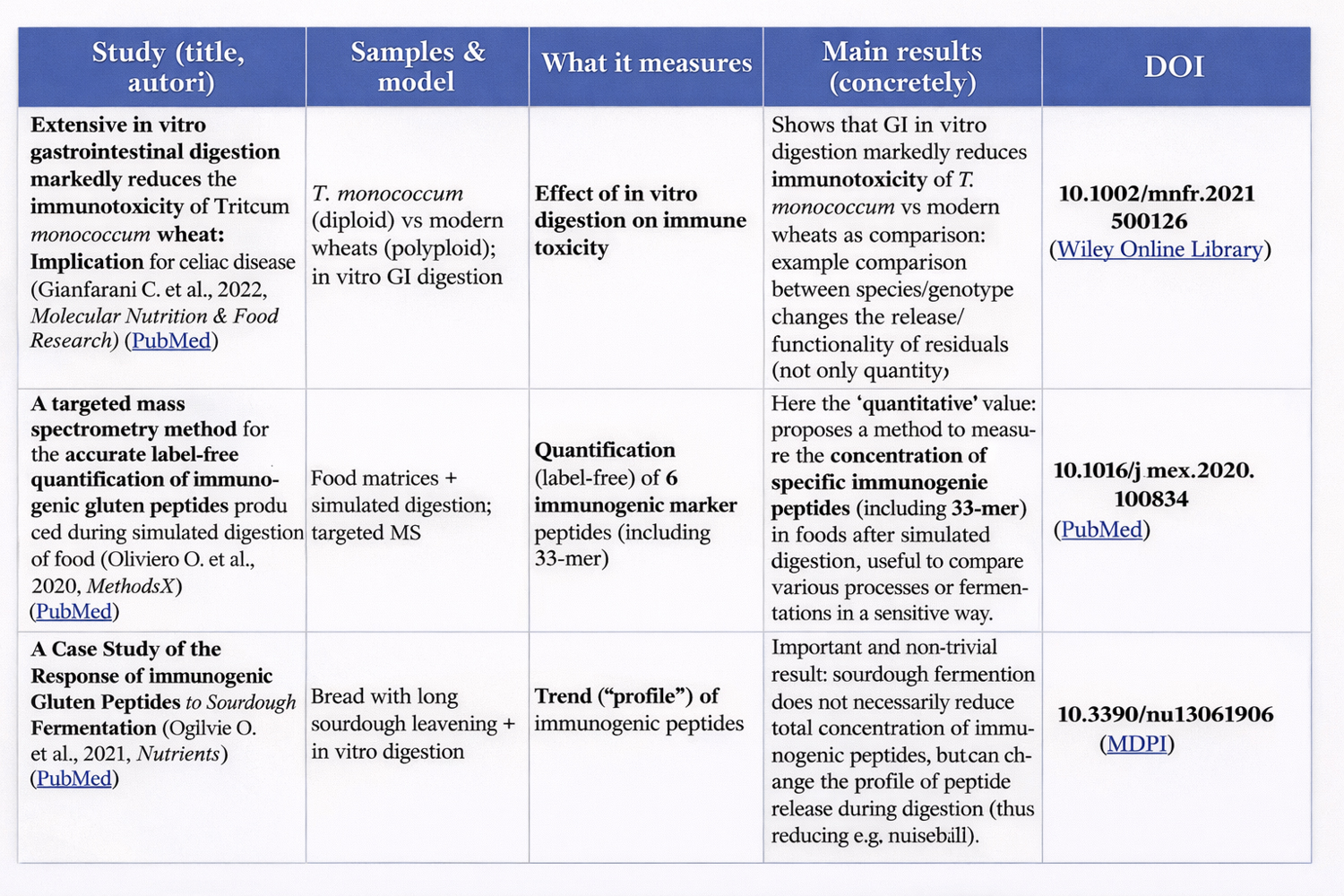
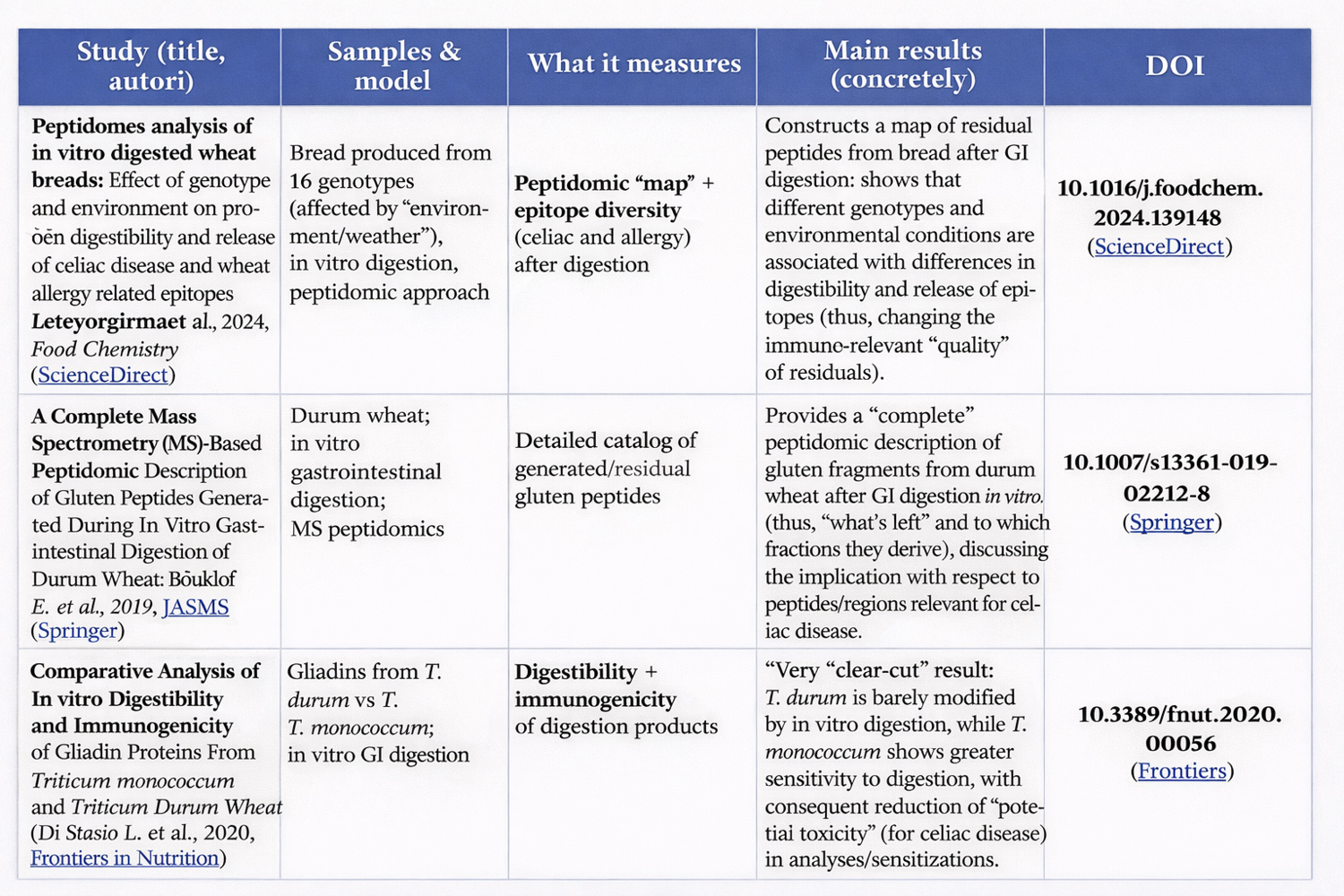
The studies reported below show that, after simulated gastrointestinal digestion, there is not a single “gluten residue,” but rather a peptide profile (“fingerprint”) that varies as a function of:

1 – species/genotype (wheat diversity),
2 – food matrix (flour/bread, etc.),
3 – processing (fermentation, leavening, baking),
4 – digestion conditions (protocol and kinetics),
5 – and type/abundance of epitopes (celiac disease / allergy).
This truly allows one to “build a picture” of how wheat diversity influences digestion and immuno-relevant potential.

Key studies (with concrete results)

Practical note
The 2020 Ogilvie study is often used as a “tool” to put numbers (quantities) on peptide markers, whereas Lavoignat 2024 and Boukid 2019 are more peptidomic “atlases” (quality/type + epitopes).
Di Stasio 2020 and Gianfrani 2015 are excellent for the “wheat diversity → different digestibility/immunogenicity” aspect.

Methodological framework (what “complete digestion” means in a standard way)
Many works use or are inspired by the INFOGEST protocol (international standard), which makes results comparable across studies:

1 – A standardised static in vitro digestion method suitable for food — an international consensus (Minekus M. et al., 2014, Food & Function) — DOI: 10.1039/C3FO60702J
2 – INFOGEST static in vitro simulation of gastrointestinal food digestion (Brodkorb A. et al., 2019, Nature Protocols) — DOI: 10.1038/s41596-018-0119-1
Concluding message to include
The response to gluten exposure does not depend on a single factor (e.g., “gluten strength” or “ancient vs modern wheat”), but on the combination of genotype/species, matrix and technological process, and above all on the final profile of residual peptides after digestion: which peptides (type), how many (abundance/markers), and how immuno-relevant they are (epitopes).

Peptidomic studies and targeted quantification studies show that both composition and release patterns of peptides change as a function of wheat type and processing.

Immunogenicity and resistance to digestion in gluten (and why they do not always coincide)

by luciano

(In-depth article 6 of: Genetic potential and processing conditions in determining gluten strength, digestibility, and immunogenicity)

In gluten (especially gliadins and, partly, glutenins) there is a strong overlap between:

  • resistance to gastrointestinal digestion

  • immunogenic potential (especially in celiac disease)

but the two concepts are not equivalent: resistance is often a facilitating condition, whereas immunogenicity also requires specific rules of immunological recognition.

1) Why many immunogenic sequences are also resistant

The most “problematic” regions of gluten are rich in proline (P) and glutamine (Q). This profile:

  • hampers cleavage by the main human proteases (pepsin, trypsin, chymotrypsin), which have low ability to cut near proline;

  • favors the persistence of long oligopeptides (10–30+ aa) in the intestinal lumen.

This point is well described in reviews and experimental studies on gluten digestion and on the persistence of peptides such as the 33-mer. (Cambridge University Press & Assessment)

2) Why resistance increases the probability of “remaining immunogenic” after digestion

A peptide that resists digestion:

  • remains long enough to contain complete epitopes (or multiple overlapping epitopes);

  • can generate, through partial cleavage, sub-fragments that still retain recognizable sequences.

In other words: it is not just “surviving” digestion, but surviving while maintaining sequence motifs compatible with immune presentation.

Peptidomic/in vitro digestion studies on wheat products show that the residual peptide profile often includes regions known for epitope density and resistance. (ScienceDirect)

3) What makes a peptide truly immunogenic (beyond resistance)

To trigger a T-cell response in celiac disease, a peptide must:

  1. be presentable by HLA-DQ2/DQ8 (sequence constraints and “anchor” residues);

  2. often become more affine through deamidation by tissue transglutaminase (TG2) (conversion of Q→E in specific contexts);

  3. be recognized by specific T cells.

Therefore, it is possible to have highly resistant peptides that nevertheless:

  • do not bind HLA-DQ2/DQ8 efficiently,

  • are not good substrates for TG2, and/or

  • do not correspond to known T-cell epitopes.

A classic reference on HLA-DQ2 presentation of gluten peptides is available on PNAS. (pnas.org)


4) Concrete example: resistant but non-immunogenic peptide

A very useful example (although engineered) is described by Bethune et al.: the authors created analogs of the 33-mer in which some key glutamines are substituted (e.g., NNN-33-mer and HHH-33-mer). These analogs:

  • remain resistant to simulated digestion (pepsin and also duodenal digestion with pancreatic/brush border proteases),

  • but are not appreciably recognized by TG2, HLA-DQ2, or celiac-specific T cells.

This experimentally demonstrates that resistance to digestion ≠ immunogenicity, even when length and “proline-richness” remain similar. (PMC)

Note: this is a “clean” example because it preserves the resistance feature while breaking (through targeted modifications) the immunological recognition requirements.

5) Summary

Immunogenic gluten sequences tend to be overrepresented among digestion-resistant fragments because resistance allows the persistence of sufficiently long, epitope-rich peptides; however, immunogenicity also requires compatibility with HLA-DQ2/DQ8 presentation and often TG2-mediated modification (deamidation).

Further discussion

So far, the genetic and technological variability of the entire pool of digestion-resistant fragments has not been explored in a systematic and in-depth manner, because most studies focus on known immunogenic peptides rather than on the complete repertoire of proteolysis-resistant fragments in relation to genotype/process. (Frontiers)

Read more

Key evidence-supported points:

1. Peptidomic studies show richness of resistant peptides, but rarely investigate non-immunogenic ones

Analyses based on simulated digestion and mass spectrometry (LC-MS/MS) reveal hundreds or thousands of peptides after gluten digestion. Only a minority of these coincide with known immunogenic epitopes; most resistant peptides identified in digests are not directly associated with immunogenicity in published studies. (Frontiers)

2. The prevailing interpretation is still “epitope-focused”

Recent literature summarizes the state of the art of methodologies to assess potential immunogenicity (digestion + peptide profiling); however, these reviews also underline that analytical techniques tend to isolate and quantify immunogenic epitopes rather than delineate a complete catalog of persistent, non-immunogenic peptides. (Frontiers)

3. Genotypic variability has been analyzed, but with focus on immunogenic epitopes

Studies on different wheat genotypes show that:

  • digestion and peptide-release profiles vary with genotype,

  • some genotypes show differences in the amount of immunogenic epitopes released,

  • but the pool of resistant non-immunogenic peptides is rarely systematically characterized. (ScienceDirect)

This means that, even though very large peptidomic datasets exist, studies have so far not exploited the “non-immunogenic” component—i.e., digestion-resistant residues lacking immune-presentation motifs—as an object of genotypic and technological comparison aimed at reducing overall biological impact.

4. Research concentrates on clinically relevant immunogenicity

Much of the literature (and analytical strategies) focuses on identification or quantification of so-called Gluten Immunogenic Peptides (GIP), which are fragments detectable in digests and biological matrices that correlate with immune responses in celiac patients and also serve as diagnostic/monitoring markers. (ResearchGate)

This directs attention toward what activates the immune system rather than toward the full profile of non-activating fragments.

Summary

✔ Digestion-resistant but non-immunogenic peptides exist in in vitro digests
✔ There are studies that observe them indirectly (as part of the total peptidome)
❌ There is not yet a systematic body of research that:

  • exhaustively maps resistant non-immunogenic peptides,

  • compares this variability among genotypes,

  • explores how different processes (fermentation, enzymes, baking) quantitatively influence the overall pool of resistant peptides.

In other words: research has the tools (in vitro digestion + LC-MS/MS) to do this, and some preliminary data indicate genotypic variability in digestion profiles, but a comprehensive evaluation of the biological weight of resistant non-immunogenic peptides in relation to genotype/technology has not yet been completed. (ScienceDirect)

Useful references

Boukid, F. et al. (2019) – A Complete Mass Spectrometry (MS)-Based Peptidomic Description of Gluten Peptides Generated During In Vitro Gastrointestinal Digestion of Durum Wheat. J. Am. Soc. Mass Spectrom. DOI:10.1007/s13361-019-02212-8 — describes the complete peptidome after digestion of durum wheat, highlighting many resistant sequences without focusing only on immunogenic epitopes. (Springer Nature)

Lavoignat, M. et al. (2024) – Peptidomics analysis of in vitro digested wheat breads: Effect of genotype and environment on protein digestibility and release of celiac disease and wheat allergy related epitopes — lays the groundwork for studying genotypic variability in production of resistant peptides and epitopes, but does not yet provide an exhaustive classification of non-immunogenic ones. (ScienceDirect)

Mamone, G. et al. (2023) – Analytical and functional approaches to assess the immunogenicity potential of gluten proteins. Front. Nutr. — methodological review reflecting the current epitope-oriented approach. (Frontiers)

Concise conclusion

Robust peptidomic data show the abundance of proteolysis-resistant fragments in digested gluten; however, the literature has so far prioritized identification and quantification of immunogenic peptides only, leaving largely unexplored the genetic and technological variability in the overall production of resistant non-immunogenic residues and their possible biological role. (Frontiers)

Grains, Immunogenicity, and Gluten Strength: Genetic Bases and Applied Markers

by luciano

(In-depth article 4 of: Genetic potential and processing conditions in determining gluten strength, digestibility, and immunogenicity)

When creating a new wheat cultivar, breeders aim to obtain strong wheats.

In breeding, this becomes central because:

  • if you want to increase the probability of obtaining “strong” lines, you select parents with favorable alleles/subunits;

  • then, in the progeny, you use rapid tests (and increasingly molecular markers / rapid proteomics) to choose the best lines.

Clear examples:

  • Near-isogenic lines (NILs) or lines with targeted deletions: these are specifically used to isolate the effect of a single HMW-GS on dough strength/elasticity. A recent study shows that the absence of individual HMW-GS reduces elasticity/strength and alters alveographic parameters. (ScienceDirect)

  • Studies on populations (DH lines) comparing combinations of HMW-GS and their effect on quality traits: they show that the effect is not only “presence/absence,” but also depends on interactions among subunits. (PLOS)

  • Accelerated screening of breeding lines with rapid gluten-strength tests: useful because breeding programs must evaluate thousands of samples. (MDPI)

Wheats with lower genetic potential but greater ability to create new bonds.

The “genetic potential” (subunits, cysteines, fraction ratios) sets an upper limit: if certain structural components are missing, you cannot build a large network from nothing.
However, the “capacity to express” that potential also depends on factors that vary among varieties and lots: accessibility of reactive groups, thiol–disulfide exchange kinetics, initial distribution of polymeric fractions, etc.
This is why, in practice, proxies such as GMP and polymeric fraction analyses are also used to understand how much the network actually develops. (ResearchGate)

These biological differences translate into the possibility of using specific genetic and proteomic markers as predictive tools.

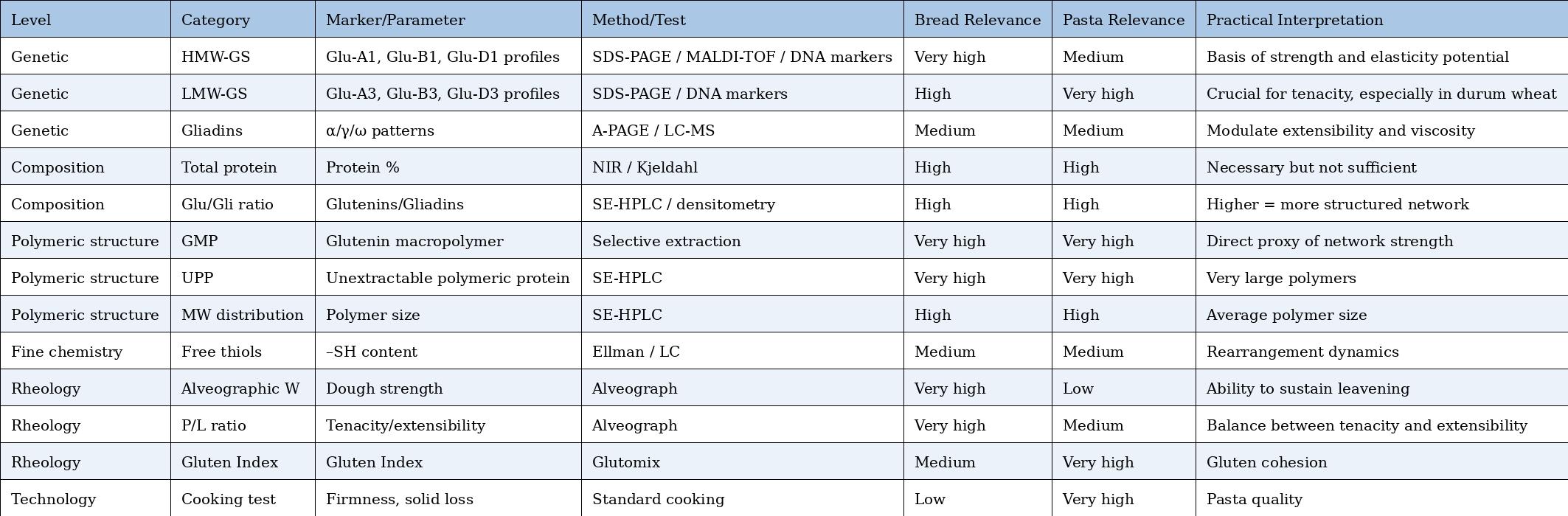
Comparative Table – Markers and Tests for Bread vs. Pasta

Practical markers (also usable in professional contexts)

1) HMW-GS profile at Glu-1 loci (Glu-A1 / Glu-B1 / Glu-D1)

  • What it is: which HMW-GS subunits are present (e.g., at Glu-D1: 5+10 vs 2+12).

  • Why it matters: some combinations are repeatedly associated with better rheological and baking properties; in particular, allele 5+10 (Glu-D1d) and 17+18 (Glu-B1i) are often reported among the most “effective.” (PMC)

  • How it is measured (practical): SDS-PAGE; in screening contexts also MALDI-TOF. (PMC)

2) “Polymeric vs monomeric” ratio (P/M) or proportion of high-MW polymers (SE-HPLC / extractability)

  • What it is: how much protein is in polymeric form (glutenins, especially high MW) relative to smaller/monomeric fractions.

  • Why it matters: higher polymeric fraction (and especially large polymers) → greater potential elastic “framework.”

  • How it is measured: SE-HPLC (size distribution) or extractability proxies (SDS-soluble vs SDS-insoluble).

3) GMP / UPP (glutenin macropolymer; unextractable polymeric protein)

  • What it is: fraction of very large polymers (often SDS-insoluble) considered tightly linked to network strength.

  • Why it matters: one of the most widely used proxies for “how much polymeric network” can be built and expressed.

4) Free thiol (–SH) content and redox state

  • What it is: how many –SH groups are free (and therefore potentially involved in thiol–disulfide exchange).

  • Why it matters: it does not indicate “how high W will be,” but helps explain disulfide reorganization dynamics (expressibility of potential), i.e., how easily the network can remodel.

Documented examples

A) Example (bread): cultivars named in a study with moderate-to-strong gluten

A study on Indian varieties combining markers and rheological evaluations reports that only four varieties among those analyzed combined high protein content and moderately strong gluten: K307, DBW39, NI5439, DBW17. (PMC)
Note: this is a “named” example within a specific study (useful as proof that literature lists cultivars), but obviously relative to the germplasm and context of that work.

B) Example (Italy, durum): named varieties and differences in composition (glutenins/gliadins)

In a study on durum wheat genotypes, varieties such as Svevo and Saragolla are reported (higher in glutenins and lower in gliadins in the considered set) and Cappelli shows opposite behavior in the reported comparison. (doi.org).

This type of evidence links starting composition (fraction ratios) to a potentially more or less favorable profile for “strong gluten.”

C) Example (Italy, durum): technological quality and W in “old cultivars”

A study evaluates “historical” durum cultivars with technological measurements including W (alveograph) to discuss whether the quality of old cultivars is comparable to modern ones. (PMC)
(The study is useful because it shows that the question “which cultivars have high W” is addressed experimentally on real varietal sets.)

Existing “strong” cultivars and new ones

  • Screening of existing cultivars: HMW-GS genotyping/profiling and measurement of rheology or polymeric proxies. (PMC)

  • Breeding (hybridization/new lines): the same scheme is used as a selection criterion, but it does not originate “only” there. (PMC)

SOFT wheats (bread) — cultivars with HMW-GS profiles associated with high quality

Examples from studies on glutenin alleles and profiles associated with quality traits (mainly for bread) (ResearchGate)

Cultivar/Genotipo

Combinazione HMW-GS Glu-1

Nota sul potenziale di qualità

Fonte

Genotipo con “1, 7+9, 5+10”

1 (Glu-A1), 7+9 (Glu-B1), 5+10 (Glu-D1)

Combinazione associata a migliori qualità di grano (contenuto proteico, WGC ecc.)

Wang et al. (2024) (MDPI)

Genotipo con “1, 7, 5+10”

1, 7, 5+10

Effetti positivi su parametri qualitativi del grano

Wang et al. (2024) (MDPI)

Genotipo con “1, 14+15, 2+12”

1, 14+15, 2+12

Buone correlate a qualità (proteine, WGC)

Wang et al. (2024) (MDPI)

Genotipo con “1, 6+8, 5+10”

1, 6+8, 5+10

Correlazione positiva con qualità

Wang et al. (2024) (MDPI)

GW-273

profilo HMW-GS non esplicitato

Glu-1 score alto (10/10), indicativo di superiori caratteristiche di impasto per pane

Patil (2015) (Tandfonline)

GW-322

profilo HMW-GS non esplicitato

Glu-1 score elevato (10/10)

Patil (2015) (Tandfonline)

What do these data indicate?

  • HMW-GS allele combinations with 5+10 and certain Glu-B1 variants (such as 7+9, 14+15) are frequently associated with better qualitative parameters (e.g., WGC, dough performance) in studies on many soft wheat genotypes.

  • Some genotypes have very high “Glu-1 scores” (≈ 9–10), a phenomenon correlated with higher genetic potential for strong gluten quality. (ResearchGate)

DURUM wheats (pasta / durum bread) — examples and considerations (protein profile and quality)

For durum wheat (Triticum durum), the literature is more variable and often focuses on local collections or genetic variability rather than on specific cultivar names “classified by gluten quality.” However, useful documentation exists on glutenin allelic profiles in durum lines and their relationship with quality traits (including uses other than pasta). (Springer Nature Link)

Creso (historical Italian durum wheat cultivar)
Cultivar obtained in the 1970s through mutagenesis and selection, widely used as a parent in breeding programs to combine yield, adaptation, and technological quality.

Scientific references:

  • De Vita, P., et al. (2007). Genetic improvement effects on yield stability in durum wheat cultivars grown in Italy. Euphytica.

  • De Vita, P., et al. (2010). Effects of genetic improvement on protein content and gluten quality in durum wheat grown in Italy. European Journal of Agronomy.

  • Laidò, G., et al. (2013). Genetic diversity and population structure of durum wheat (Triticum durum) landraces and cultivars using SSR markers. Genetic Resources and Crop Evolution.

Why relevant here:

Creso often appears as a parent or reference in studies analyzing progressive improvement of parameters such as protein content, gluten index, and dough characteristics, showing how breeding has increased technological quality in durum wheat.

Simeto (modern Italian durum wheat cultivar)

Variety selected in Italy and widely cultivated, used as a reference for good semolina quality and balanced technological performance.

Scientific references:

  • De Vita, P., et al. (2007). Euphytica.

  • Troccoli, A., et al. (2000). Variation in grain quality traits among durum wheat cultivars grown in southern Italy. Cereal Chemistry.

  • Ficco, D. B. M., et al. (2014). Genetic variability in quality traits of durum wheat for pasta making. Journal of Cereal Science.

Why relevant here:

Simeto is frequently included in comparisons among modern cultivars, showing good levels of protein, gluten index, and semolina quality, parameters that can also be linked to glutenin composition.

Varietà / linea (durum)

Nota qualitativa / genotipica

Fonte

Varietà marocchine (Henkrar et al.)

Diverse combinazioni alleliche HMW-GS correlate a qualità di trasformazione

Henkrar et al., 2017

Isly, Massa, Anouar, Sboula, Chaoui

Profili variabili di glutenine HMW

Henkrar et al., 2017

Creso

Cultivar storica, genitore chiave nel breeding italiano; miglioramento progressivo di proteine e qualità glutine

De Vita et al., 2007; De Vita et al., 2010

Simeto

Cultivar moderna, buona qualità semola/pasta; riferimento in studi su qualità tecnologica

Troccoli et al., 2000; Ficco et al., 2014

In durum wheats, the association between glutenin allelic profile, protein composition, and technological quality is documented mainly through comparative studies on varietal collections and reference cultivars such as Creso and Simeto. This allows these cultivars to be used as scientific benchmarks, not merely as commercial names.

Important note on gluten quality in durum wheat:

For durum wheat, superior technological quality is not always defined by the same “strength” parameters used for bread (W, alveograph); often the focus is on viscoelasticity, tenacity, extensibility, and ability to form semolina/pasta. Nevertheless, the presence of certain HMW-GS combinations (also in tetraploids) has been documented and correlated with grain quality (total proteins, glutenin content, etc.). (Springer Nature Link)


What these examples tell us

✅ In soft wheats, certain HMW-GS profiles combined with specific subunits (e.g., 5+10 and Glu-B1 variants) are scientifically associated with better gluten quality parameters (and thus higher genetic potential). (MDPI)

✅ Some genotypes (such as GW-273 and GW-322) show very high quality scores, used as reference examples in technical publications. (Tandfonline)
✅ In durum wheats, the literature often includes lists of cultivars/lines with glutenin allelic profiles, useful for breeding and for correlating genetic profiles with quality (even if data are not always reported with standardized “commercial” names). (Springer Nature Link)

The Meaning of Flour Strength “W” Value

by luciano

(Insight 3 of Genetic Potential and Process Conditions in Determining Gluten Strength, Digestibility, and Immunogenicity)

The W value does not directly reflect the number or strength of the intrinsic bonds of wheat proteins, but rather represents a functional measure of the resistance of the protein network formed during dough mixing.
This network is the result of the interaction between genetic polymerization potential and the ability of proteins to reorganize and establish new intermolecular bonds under processing conditions.

Does the W value measure the “strength of wheat proteins”?
No.

The W value (Chopin alveograph) measures the energy required to deform and rupture a dough bubble, therefore describing the mechanical resistance of the protein network formed after hydration and mixing. It does not directly measure either the structure of individual proteins or the strength of their internal bonds.

Does the W value represent the strength of bonds present in gliadins and glutenins in the grain?
No.

In the grain, gliadins mainly contain intramolecular disulfide bonds, while glutenins are partially polymerized through intermolecular disulfide bonds. However, these bonds mainly stabilize individual molecules or small aggregates and do not correspond to the network responsible for dough strength.

Functional gluten is built mainly during mixing.

So what does the W value really reflect?
The W value reflects the overall resistance of the protein network formed during mixing, namely:

1 – how much network has been built
2 – how continuous the network is
3 – how capable it is of opposing deformation
In other words, W is a functional measure of the network, not a chemical measure of bonds.

How does wheat genetics influence W?
Genetic makeup influences:

1 – type and quantity of glutenin subunits
2 – number and position of cysteine residues
3 – glutenin/gliadin ratio
These factors determine polymerization potential, i.e., the theoretical ability of proteins to participate in forming intermolecular bonds during mixing. Thus, genotype establishes how large and complex the network can become, not how large it already is in the grain.

Does W depend only on genetic potential?
No.

W depends both on genetic potential and on the ability of proteins to reorganize and create new bonds during mixing.

This ability is influenced by:

1 – mobility of protein chains
2 – accessibility of reactive groups
3 – rate of thiol–disulfide exchange
4 – hydration, mechanical energy, temperature, and redox conditions
Two wheats with similar genetic potential may therefore develop networks of different strength.

Can a wheat with lower genetic potential develop a higher W?
Yes, within limits.

A wheat with fewer theoretical cross-linking sites but more mobile and reactive proteins may exploit its potential better and form a more efficient network than a wheat with higher theoretical potential but poor utilization of that potential.

Is there a maximum limit to this compensation?
Yes.

A wheat poor in polymerizable glutenins will never reach the W values typical of strong wheats, even under ideal processing conditions. Genetic potential therefore imposes an upper ceiling, while the process determines how close one comes to that ceiling.

Can W be said to measure the “number of bonds”?
No.

W does not measure the number of bonds, but the collective mechanical effect of the network that those bonds help stabilize.

✅ Conclusion
The W value does not reflect either the strength of internal bonds in gliadins and glutenins or the number of bonds present in the grain. It represents a functional measure of the resistance of the protein network that forms during mixing.

This network results from the interaction between:

1 – genetic polymerization potential (what can be built)
2 – capacity for reorganization and new bond formation under processing conditions (what is actually built)
In summary:

✔ What matters most is the network that forms in gluten
✔ But this network is limited by what exists at the origin

In-Depth
What Determines the Genetic Starting Potential of Wheat
The genetic starting potential of a wheat, understood as the intrinsic capacity of its proteins to form an extended and structurally effective gluten network, is mainly determined by the composition and molecular organization of storage proteins. Four factors play a central role.

1 – Type of HMW-GS and LMW-GS Subunits
High-molecular-weight glutenin subunits (HMW-GS) form the main backbone of glutenin polymers. Different allelic variants encode subunits with different length, conformation, and number of cysteine residues.

Some subunits promote longer and more branched chains, while others lead to shorter polymers. Consequently, the type of HMW-GS present directly influences the ability to build a continuous elastic framework.

Low-molecular-weight glutenin subunits (LMW-GS) play a complementary role, acting as connectors and branching points between main chains. The HMW-GS/LMW-GS combination therefore defines the basic polymer architecture.

Impact on potential: determines the load-bearing structure of the network.

2 – Number and Position of Cysteines
Cysteine residues are the chemical sites through which disulfide bonds form.

Not only how many cysteines are present matters, but also where they are located in the protein sequence. Cysteines in exposed regions favor intermolecular bonding, while cysteines in sterically shielded regions tend to form intramolecular bonds.

Impact on potential: defines how many connection points are theoretically available to build the network.

3 – Glutenin/Gliadin Ratio
Glutenins mainly provide elasticity and strength, whereas gliadins mainly contribute viscosity and extensibility. A ratio shifted toward glutenins favors stronger networks; a relative excess of gliadins tends to dilute network continuity.

Impact on potential: determines how much “scaffolding” versus “fluid phase” is available.

4 – Polymer Size Distribution
Even in flour, glutenin polymers exist in a size distribution. Some wheats show a higher proportion of very large polymers (often called glutenin macropolymer, GMP). An initial distribution oriented toward larger polymers favors formation of a continuous network during mixing.

Impact on potential: indicates the level of pre-organization toward extended structures.

Summary
Genetic starting potential does not correspond to the number of bonds already present in the grain, but to the intrinsic capacity of proteins to participate in building an extended network during mixing.

It is mainly determined by:

✔ Type of HMW-GS and LMW-GS subunits
✔ Number and position of cysteines
✔ Glutenin/gliadin ratio
✔ Polymer size distribution

These factors define what is chemically and structurally possible. Processing conditions determine how much of this potential will actually be expressed in the final gluten network.

4

4